

How Hockey's Lost-Helmet Rule Works Explainer
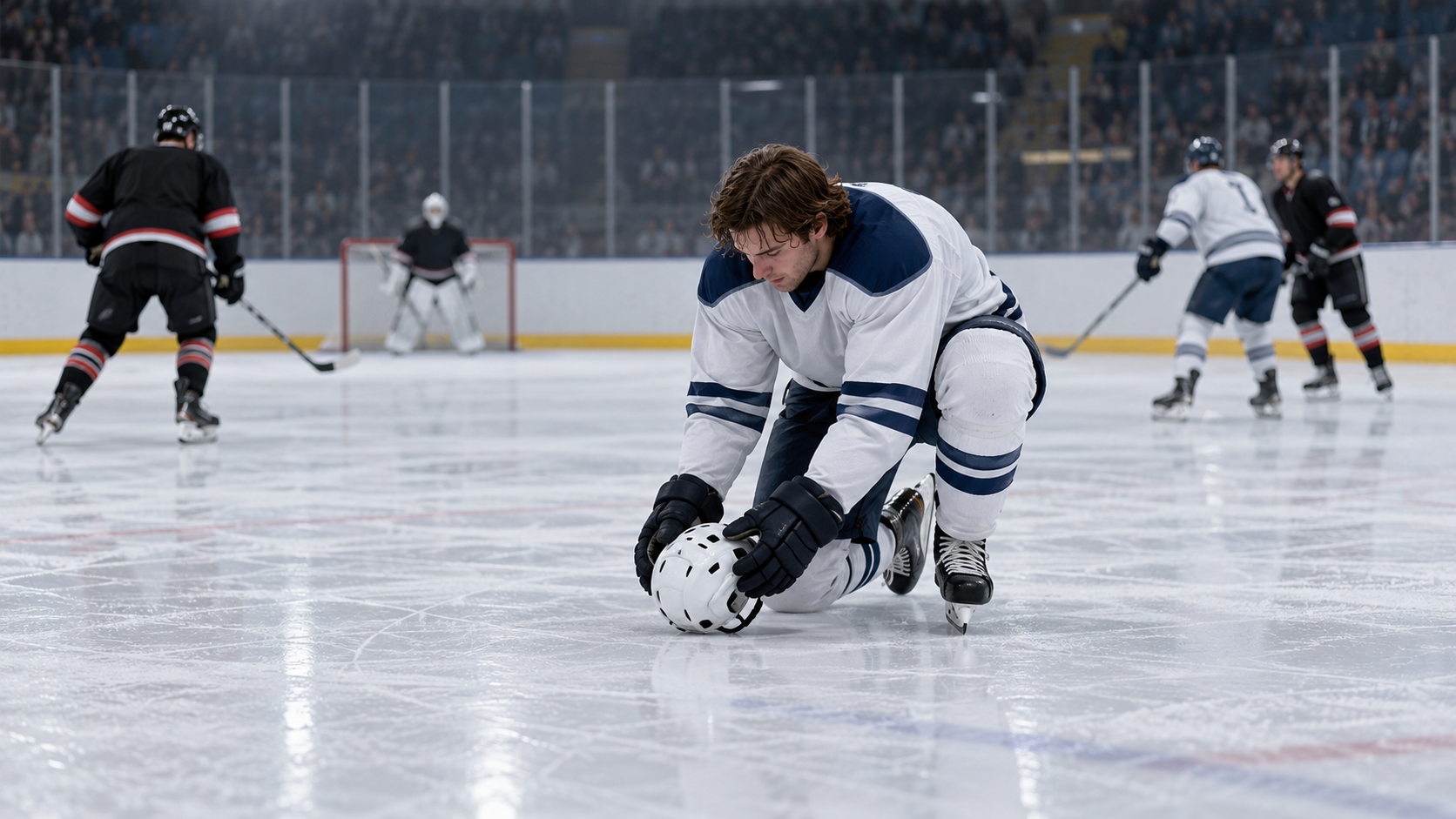
When an NHL skater's helmet comes off during play, the player must leave the ice or retrieve and properly replace the helmet immediately. The skater may not continue participating bareheaded. Failing to comply can result in a minor penalty, even if the helmet was lost accidentally.
The rule does not normally stop play just because a skater's helmet is on the ice. The player has a moment to make a direct choice: secure it correctly, or go straight to the bench. Chasing the puck, checking, or joining the play first is not permitted.
An opponent who deliberately removes a helmet can receive a penalty of their own. Officials distinguish ordinary contact that dislodges equipment from an intentional act. A player who deliberately removes an opponent's helmet during an altercation is treated more seriously than a routine equipment loss.
Goalkeepers follow separate mask and helmet provisions because continuing without facial protection creates immediate danger and can affect an active scoring chance. The referee's stoppage depends on possession and the developing play. For skaters, the simple principle is immediate replacement or immediate exit.
Usually no. The skater must immediately replace it properly or leave the ice.
No. Continuing to participate can bring a minor penalty.
No. Goalkeepers have separate safety and stoppage provisions.
Explore more "Explainers"
Discover additional explainers across politics, science, business, technology, and other fields. Each explainer breaks down a complex idea into clear, everyday language—helping you better understand how major concepts, systems, and debates shape the world around us.