

How Basketball Throw-Ins Work Explainer
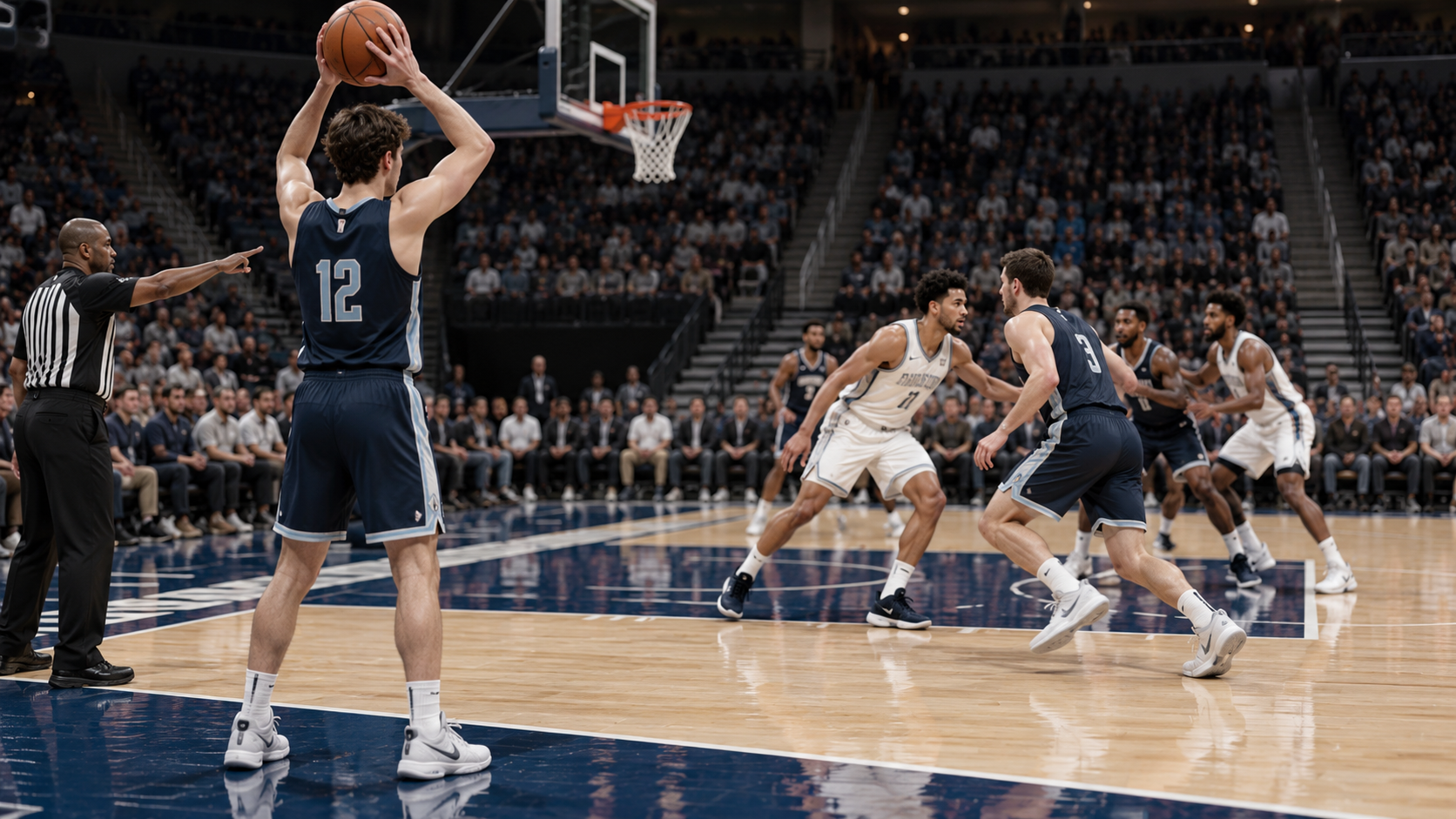
A basketball throw-in returns the ball to play from outside a boundary line. The official designates the spot or area, hands or bounces the ball to the inbounder, and begins a five-second count. The pass must be released toward the court before that count expires.
On most spot throw-ins, the inbounder may move a limited distance laterally but cannot run freely along the entire baseline. After a made basket, however, the team may use the full end line, and teammates can pass the ball to one another out of bounds before it is thrown onto the court.
The inbounder cannot step onto the court before releasing the pass, carry the ball through the boundary plane in a prohibited way, or be the first player to touch the pass in bounds without another touch. Defenders also may not illegally cross the boundary to delay or interfere.
The location can determine an entire play. Sideline and baseline options create different passing angles, while late-game advancement rules can place the throw-in in the frontcourt after a timeout. Teams design screens and cuts around the exact spot, but every option begins with the same five-second pressure.
Five seconds to release the throw-in.
After a made basket, yes; most other throw-ins use a designated spot with limited movement.
Not before another player touches it.
Explore more "Explainers"
Discover additional explainers across politics, science, business, technology, and other fields. Each explainer breaks down a complex idea into clear, everyday language—helping you better understand how major concepts, systems, and debates shape the world around us.