

On This Day in Pop: May 21, 1980
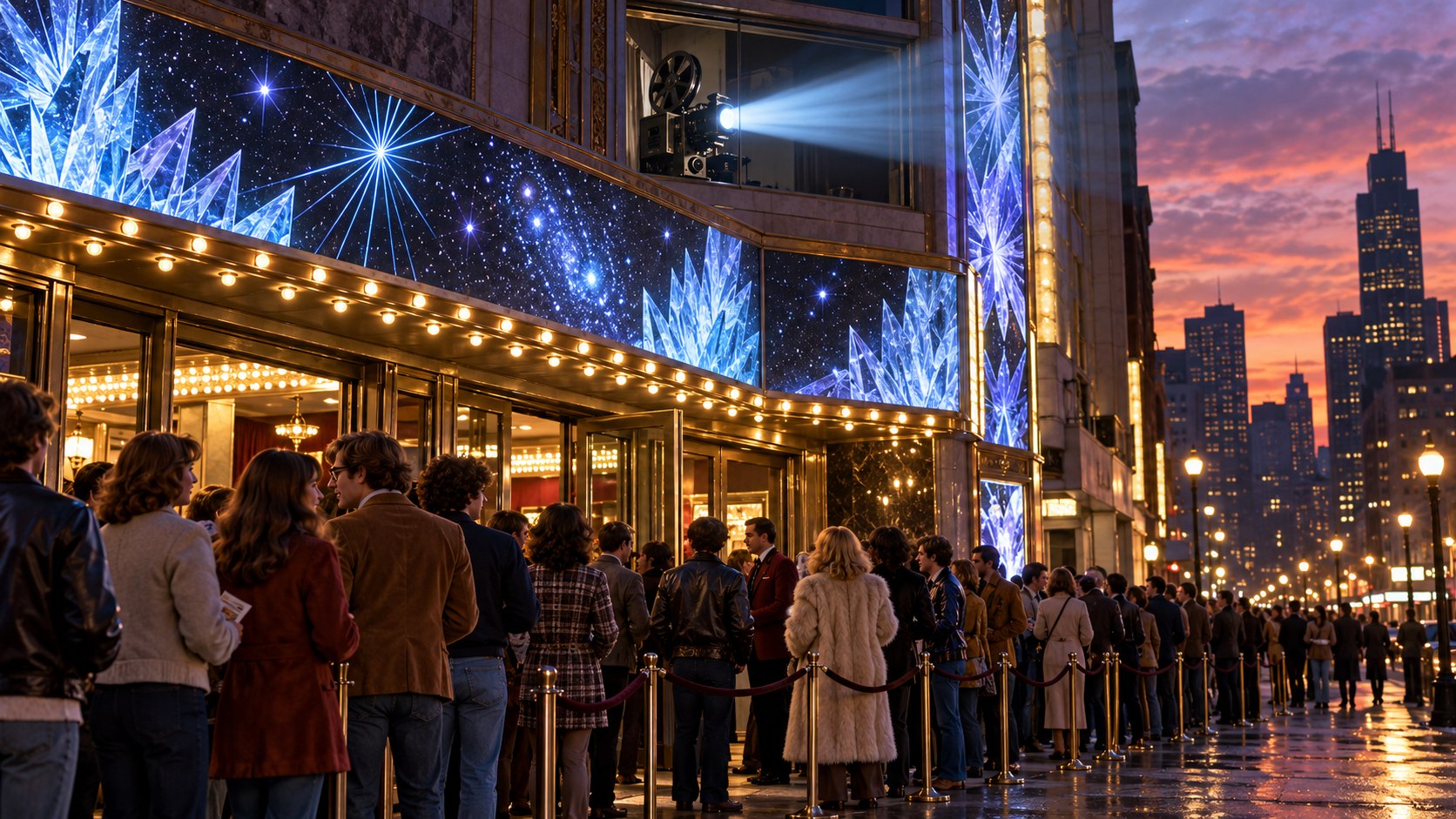
On May 21, 1980, The Empire Strikes Back began its initial 70mm run in forty-one theaters across sixteen cities. Irvin Kershner directed the sequel to Star Wars from a screenplay credited to Leigh Brackett and Lawrence Kasdan, based on George Lucas’s story. Mark Hamill, Harrison Ford and Carrie Fisher returned as Luke Skywalker, Han Solo and Leia Organa, while Frank Oz performed the new Jedi teacher Yoda through a puppet operated with an expert team. The story separated its heroes, allowed the Empire to win decisive victories and ended with relationships unresolved. A midnight opening at Los Angeles’s Egyptian Theatre helped turn the launch into an event, but the limited 70mm engagement meant many audiences waited for the wider release that followed.
Lucas financed much of the production himself, seeking independence after the first film’s success. The choice increased creative control and financial risk as difficult location work, complex effects and schedule pressure pushed costs upward. Industrial Light & Magic expanded miniature photography, stop-motion animation and compositing for the ice battle, asteroid field and Cloud City. Kershner emphasized character tension and quieter reactions, giving the spectacle emotional weight. Yoda was especially risky: the film required audiences to accept a small foam-and-latex puppet as a wise teacher capable of carrying serious scenes. Early reviews were not uniformly enthusiastic, and some critics found the middle chapter incomplete or darker than expected. Its later reputation developed through repeated viewing and the completion of the trilogy.
The Empire Strikes Back became a central reference point for sequels that deepen conflict rather than merely repeat a hit. Its revelation about Darth Vader altered the saga’s family structure, while Han’s carbon-freezing and the unfinished romantic story gave the ending unusual vulnerability for a blockbuster. John Williams expanded the musical language with the Imperial March, and the film’s design defined locations and machines revisited across decades of Star Wars storytelling. May 21 marks the first public encounter with a work now frequently described as the series’ high point, but the date also restores its uncertainty. Audiences entered without knowing which images or lines would become permanent. The film’s lasting power comes from that refusal to close every door: defeat creates space for later action, and revelation makes earlier scenes look different. The initial 70mm presentation mattered aesthetically as well as commercially. Large-format prints and selected theaters made the opening feel prestigious, while the staged rollout let anticipation continue until the wider audience could enter the story.
The initial 70mm run opened in forty-one theaters in sixteen cities on May 21, 1980.
Irvin Kershner directed; Leigh Brackett and Lawrence Kasdan received screenplay credit.
Frank Oz and a puppet team made Yoda a credible central character.
George Lucas's self-financing brought both independence and significant risk.
The darker, unresolved ending divided some early reviewers.
Later audiences made the film a model for sequels that complicate rather than repeat an original.
Explore more of "On This Day ..."
Discover more events from the same date across news, politics, technology, sports, and other fields. Each link highlights significant moments that shaped history on different fronts.