

On This Day in Pop: May 27, 1933
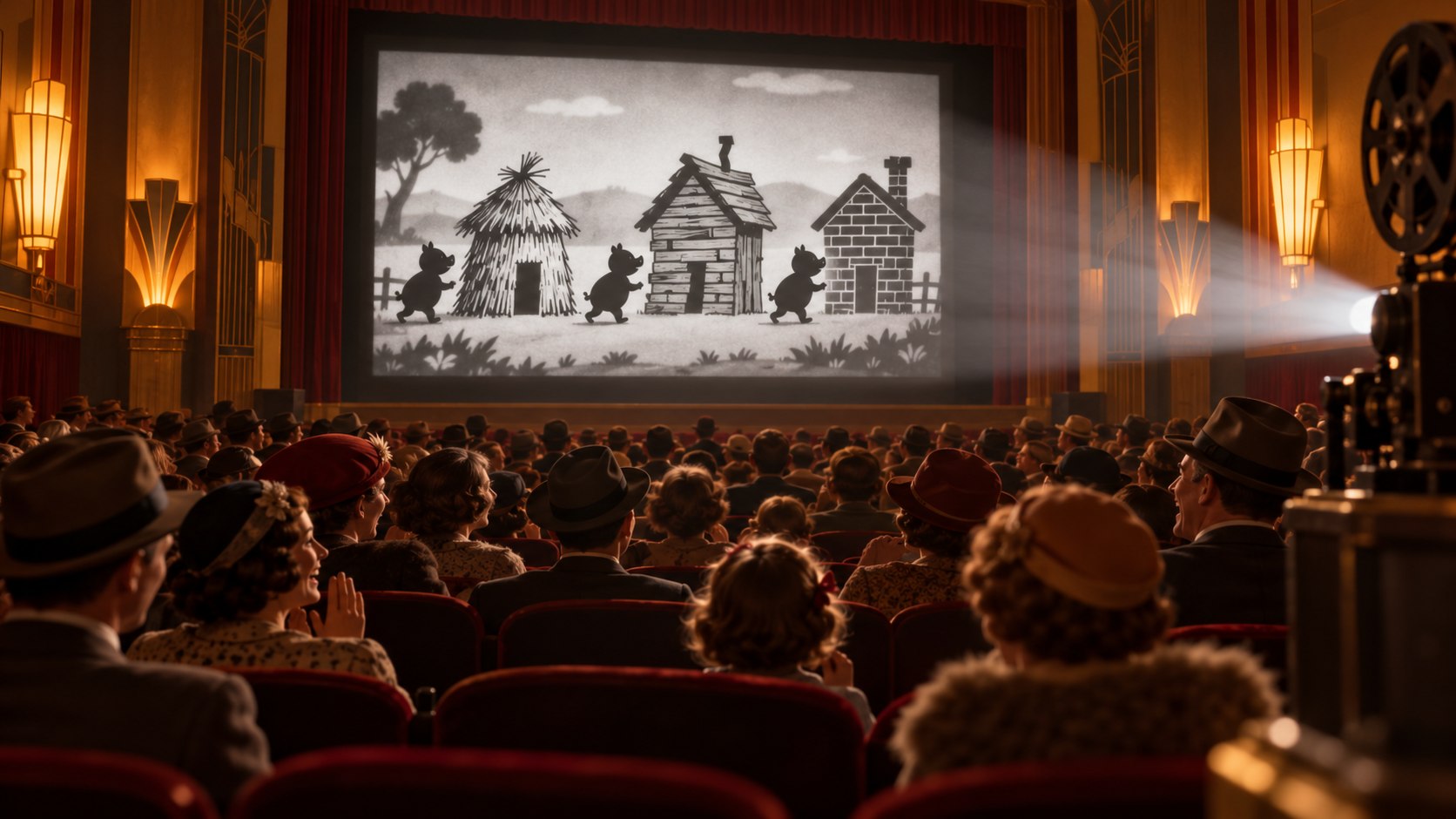
On May 27, 1933, Disney released Three Little Pigs, a Silly Symphony cartoon directed by Burt Gillett. The short follows Fifer Pig and Fiddler Pig as they build quickly with straw and sticks, while Practical Pig constructs a brick house strong enough to resist the Big Bad Wolf. Frank Churchill’s song Who’s Afraid of the Big Bad Wolf? gave the characters a refrain that audiences could carry out of the theater. Animator Fred Moore helped give the three pigs distinct personalities even though their basic designs were similar, an achievement Walt Disney emphasized with pride. The cartoon arrived during the Great Depression, and its image of cheerful defiance against a threatening wolf acquired a meaning larger than the compact fable.
Silly Symphonies allowed Disney artists to experiment with color, music and character outside the continuing Mickey Mouse series. Three Little Pigs used Technicolor and synchronized action, but its most important advance was dramatic differentiation: posture, timing and behavior made each pig readable as an individual. The wolf moved between menace and comic frustration, while the song linked scenes and encouraged audience participation. The original film also contained a disguise sequence built on an antisemitic stereotype; Disney altered it in later versions. That history should not be omitted when celebrating technical innovation. Popular animation carried the prejudices of its era as well as its craft, and preservation allows viewers to study how studios revised troubling imagery for later circulation.
Three Little Pigs won the Academy Award for Best Cartoon, inspired three sequels and generated extensive merchandise. The theme song became a national hit and was often interpreted as an anthem of confidence during economic hardship, although that symbolic reading grew through publicity and repetition rather than from one universal audience response. The film’s success strengthened Disney’s investment in character animation and helped prepare the studio for longer narrative projects. May 27 marks the release of a short that could reportedly outlast feature films on theater programs because audiences wanted it retained. Its legacy combines memorable craft, industrial momentum and material that requires critical context. The cartoon shows how six or seven minutes of music and movement can create personalities that survive for generations—and how enduring popularity makes careful historical viewing more necessary, not less. The short’s success also demonstrated that audiences could become attached to characters distinguished by performance rather than detailed appearance. That lesson shaped Disney’s continuing pursuit of personality animation in features.
D23 dates the release to May 27, 1933.
Burt Gillett directed and Frank Churchill wrote the famous theme song.
Fred Moore's animation differentiated the pigs through personality and movement.
The cartoon won the Academy Award for Best Cartoon.
A disguise gag used an antisemitic stereotype and was revised in later versions.
The film's commercial success produced sequels, merchandise and wider confidence in character animation.
Explore more of "On This Day ..."
Discover more events from the same date across news, politics, technology, sports, and other fields. Each link highlights significant moments that shaped history on different fronts.