

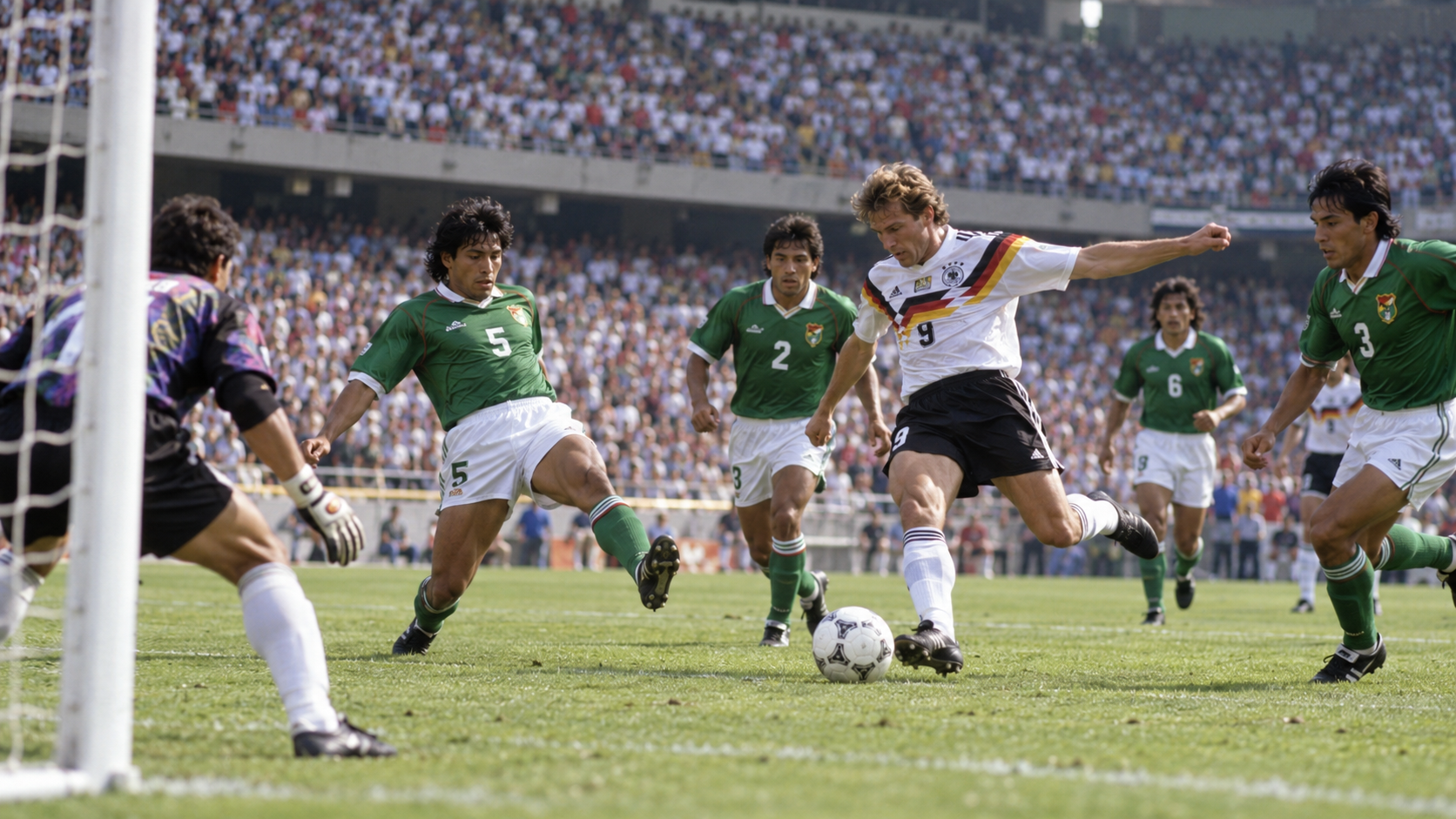
On This Day in Sports: June 17, 1994
On June 17, 1994, the FIFA World Cup opened in the United States with defending champion Germany defeating Bolivia 1-0 at Soldier Field in Chicago. Jürgen Klinsmann scored the only goal early in the second half. The match began a month-long test of whether soccer’s largest tournament could thrive in a country without a top domestic league. The public record fixes the central details with unusual clarity: Germany beat Bolivia 1-0. Jürgen Klinsmann scored the goal. Together, those facts explain why June 17, 1994 stands apart from the ordinary flow of a season and deserves to be remembered as a distinct historical moment.
A colorful opening ceremony preceded kickoff, and President Bill Clinton joined FIFA officials in attendance. Bolivia defended stubbornly until Marco Etcheverry was sent off shortly after entering as a substitute. Germany’s narrow victory lacked the drama of later matches, but it formally launched a competition staged across nine enormous American venues. Two further details help reconstruct how the achievement unfolded: Soldier Field hosted the opener. Marco Etcheverry was sent off. They move the story beyond a headline by showing the pressure, setting and competitive choices that shaped the decisive action in real time.
The tournament produced record total attendance of more than 3.5 million, a mark that endured for decades despite the 24-team format. Brazil defeated Italy on penalties in the final at the Rose Bowl. The U.S. team advanced from its group and beat Colombia, giving local audiences a sustained emotional connection to the event. The wider context is equally important. Brazil won the tournament. Total attendance exceeded 3.5 million. Those points connect one day’s performance to a longer career, institution or rivalry and clarify why the event continued to matter after the immediate celebration had ended.
The World Cup accelerated soccer’s long-term growth in the United States and helped satisfy the requirement to establish a new professional league. Major League Soccer began play in 1996. The opening afternoon in Chicago therefore mattered beyond one result: it started a tournament that altered the commercial and cultural foundation of American soccer. Seen from today, the milestone remains compelling because it joins a measurable result with the uncertainty of live competition. Nothing about the outcome was guaranteed beforehand. That combination of preparation, opportunity and execution is what transformed the date from another entry on the schedule into lasting sports history. It also reveals how records and championships depend on teammates, opponents, officials, venues and rules that shape the opportunity. Preserving those surrounding details helps explain both the achievement itself and the reason later generations still discuss it.
Germany beat Bolivia 1-0.
Jürgen Klinsmann scored the goal.
Soldier Field hosted the opener.
Marco Etcheverry was sent off.
Brazil won the tournament.
Total attendance exceeded 3.5 million.
Explore more "On This Day in Sports"
Discover more landmark games, records, championships, and turning points from sports history. Each day revisits the athletes, teams, and moments that shaped competition and culture.