

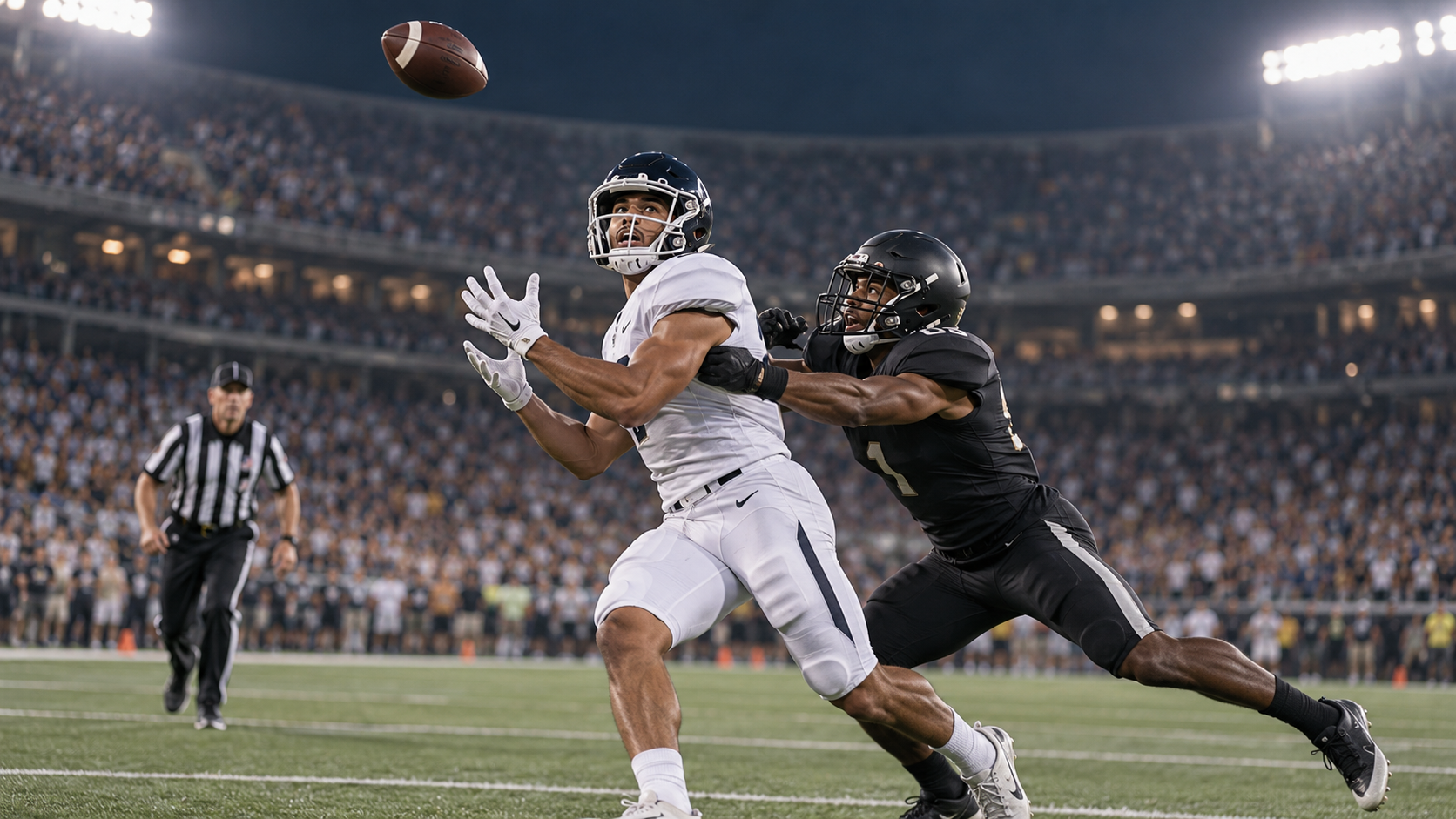
How NFL Defensive Pass Interference Works Explainer
NFL defensive pass interference occurs when a defender significantly hinders an eligible opponent's opportunity to catch a forward pass thrown from behind the line of scrimmage. The defensive restriction begins when the pass leaves the passer's hand and ends when any player touches the ball. Contact must occur more than one yard beyond the line.
Common examples include playing through a receiver's back, grabbing an arm, hooking the body, cutting off the receiver with contact, or extending an arm across the receiver without making a legitimate play on the ball. The defender has an equal right to the ball, but that right does not permit restrictive contact.
Incidental contact while both players compete for the ball is not automatically a foul, nor is inadvertent tangling of feet. There is also no pass interference when the pass is clearly uncatchable by the involved players. Contact at or behind the line may instead qualify as holding or another foul.
The accepted penalty is an automatic first down at the spot of the foul. If the foul occurs in the end zone and the previous spot is outside the two-yard line, the offense receives the ball at the one. When the previous spot is already inside the two, enforcement is half the distance to the goal.
For the defense, it begins when the forward pass leaves the passer's hand.
No. Incidental contact and legitimate simultaneous attempts to play the ball can be legal.
The offense receives an automatic first down at the spot of the foul, with special end-zone enforcement.
Explore more "Explainers"
Discover additional explainers across politics, science, business, technology, and other fields. Each explainer breaks down a complex idea into clear, everyday language—helping you better understand how major concepts, systems, and debates shape the world around us.