

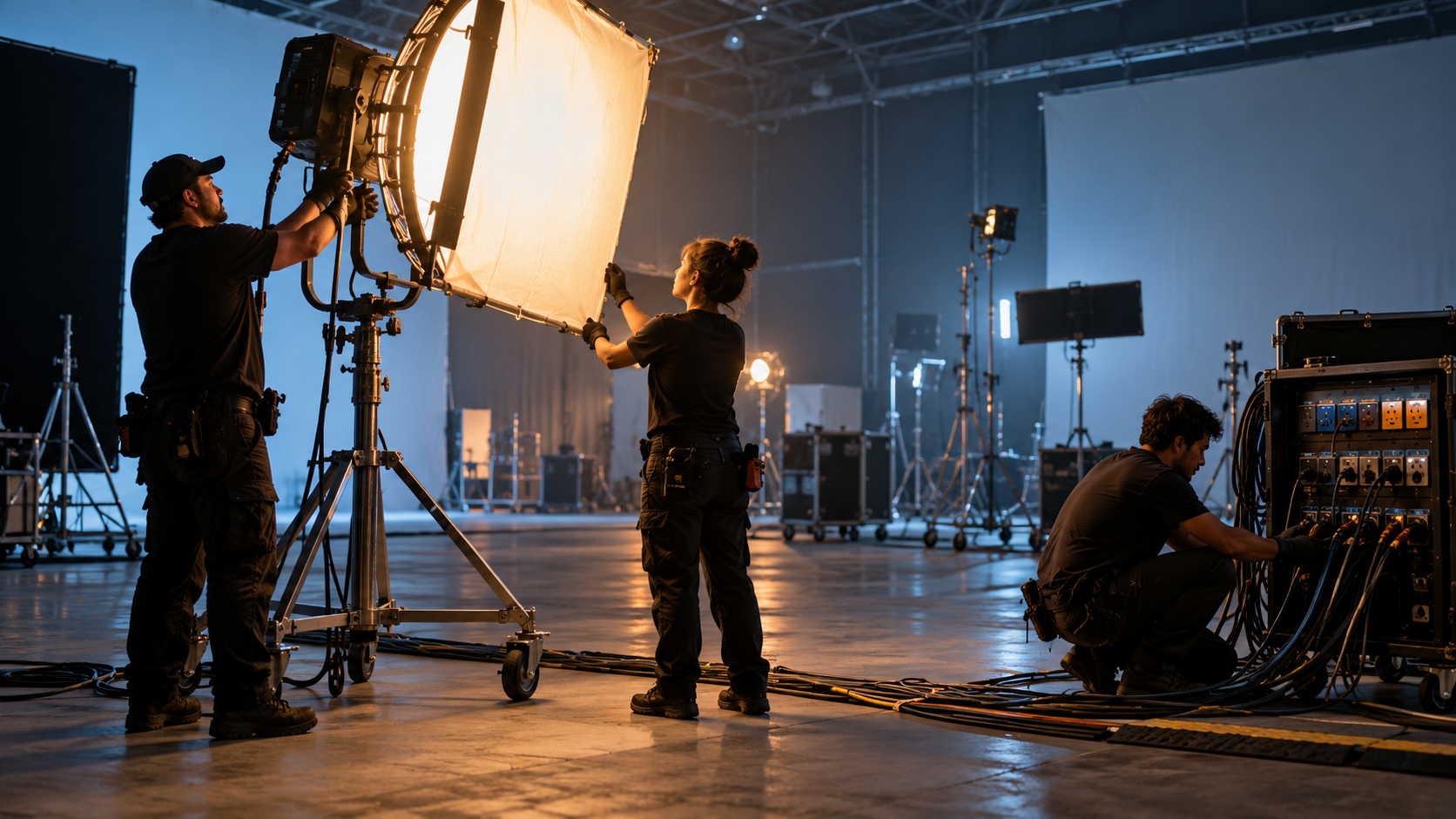
Gaffers Explainer
The gaffer is the head of the lighting crew on a film or television production. Working closely with the director of photography, the gaffer turns a desired look into practical fixtures, positions, power plans, diffusion, control, and labor. The cinematographer remains responsible for the photographic approach, while the gaffer helps determine how to build it efficiently and safely. The term can cover somewhat different arrangements across production cultures.
Planning starts with the script, locations, camera requirements, and visual references. A gaffer may join technical scouts to study available power, ceiling height, windows, sun direction, rigging points, and limits imposed by a location. From that information the electrical team can prepare lamps, cable, distribution, dimming, generators, lifts, diffusion, flags, and backup options. Modern work can combine conventional fixtures with LEDs, wireless control, practical lights, and programmed cues.
On the shooting day, the gaffer communicates the cinematographer's requests to lighting technicians and coordinates closely with the key grip, whose department handles many non-electrical supports and light-control tools. The crew must place equipment without blocking camera movement or creating avoidable hazards. Every repositioning affects time, exposure, color, reflections, heat, load, and access, so the job involves constant small judgments rather than simply making a set brighter.
Electrical safety is central. Production power can involve high-current services, long cable runs, wet conditions, elevated fixtures, generators, and equipment from several vendors. Qualified workers follow applicable codes, load calculations, grounding practices, inspection routines, and production safety rules. A creative request never cancels those requirements. The gaffer organizes the lighting department, but local law and the production's designated safety responsibilities still govern who may perform specialized work. A successful lighting setup is repeatable enough for editing and flexible enough for performance. It must survive coverage, schedule changes, weather, and movement while preserving the intended mood and skin tones. Viewers notice the result as atmosphere, time of day, texture, or focus, not as a list of fixtures. That invisibility is part of the craft: the gaffer translates visual language into a system that a crew can build, adjust, and reproduce. A practical way to read or discuss Gaffers is to begin with the basic definition and then identify the choices made in a particular example. The gaffer leads the lighting department and translates the cinematographer's visual intent into practical illumination. Next, ask who sets the relevant rules, who performs the work, and which results follow from creative judgment, law, contracts, technology, budget, or production limits. Similar-looking examples can operate differently because their audience, market, format, timing, and agreements are different. The gaffer and key grip collaborate closely, but lighting and grip departments have different responsibilities and expertise. It also helps to distinguish a formal industry category from an informal critical label or one organization's current practice. That separation keeps a memorable anecdote from becoming a false universal rule. Dates and territories matter: tools, distribution systems, audience behavior, and standard agreements change, while older examples can preserve assumptions that no longer apply everywhere. Because the concept sits inside a larger workflow, examine what comes before and after it, which records move between stages, and where responsibility changes hands. This broader view prevents one visible task from being mistaken for the entire system. When a claim sounds absolute, compare it with a second kind of source and look for the conditions under which the claim is true. Then trace the process from the visible result back through the less visible decisions, handoffs, and quality checks that produced it. The goal is a controllable, repeatable system that preserves the photographic idea as cameras and performances change. Finally, compare the example with a contrasting case and note which part of the definition still holds. This method keeps the explanation grounded, highlights the people and systems behind the outcome, and leaves room for reasonable disagreement about hybrid or borderline cases.
The gaffer leads the lighting department and translates the cinematographer's visual intent into practical illumination.
Technical scouts reveal power, rigging, daylight, space, access, and equipment constraints before the crew arrives.
Lighting plans can combine fixtures, practical sources, diffusion, color control, dimming, generators, and programmed cues.
The gaffer and key grip collaborate closely, but lighting and grip departments have different responsibilities and expertise.
Electrical loads, cable routing, weather, height, heat, and local regulations make safety inseparable from lighting design.
The goal is a controllable, repeatable system that preserves the photographic idea as cameras and performances change.
Explore more "Explainers"
Discover additional explainers across politics, science, business, technology, and other fields. Each explainer breaks down a complex idea into clear, everyday language—helping you better understand how major concepts, systems, and debates shape the world around us.