

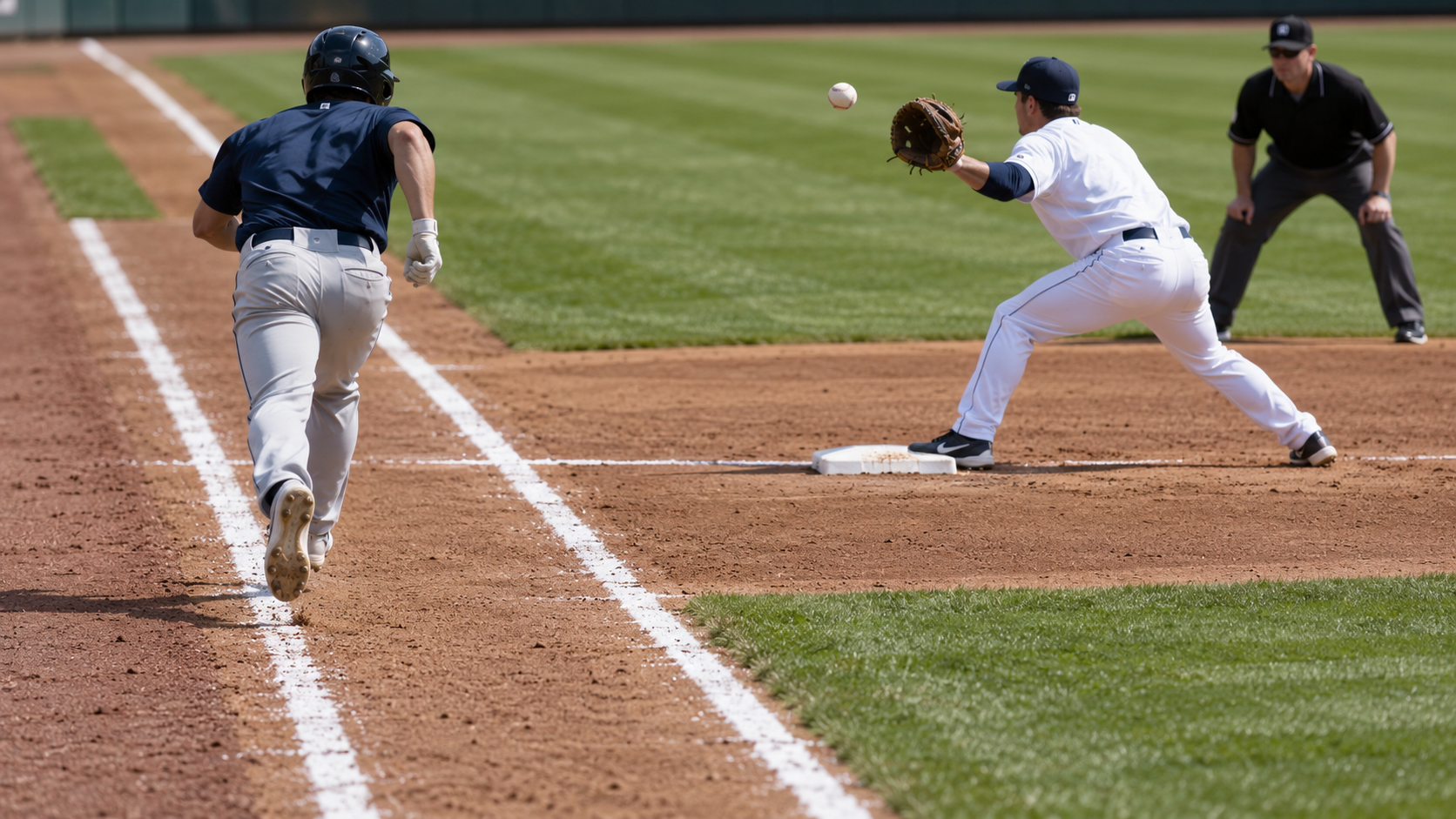
How Baseball's Running Lane Rule Works Explainer
Baseball's running lane governs the batter-runner during the last half of the trip from home plate to first base while a throw is being fielded there. Under the modern Major League rule, the legal lane includes the dirt area between the foul line and the infield grass, plus the traditional marked lane in foul territory.
A runner may leave the lane for the final step, stride, reach, or slide needed to touch first base. The runner can also move outside it to avoid a fielder attempting to field a batted ball. Merely running outside the lane does not create an automatic out.
Interference requires more: the runner must be outside the permitted area and, in the umpire's judgment, interfere with the fielder receiving the throw at first. If called, the batter-runner is out and the ball is dead. Other runners return to the bases they last legally occupied.
The rule protects a catch opportunity rather than guaranteeing a clear throwing lane. A wild throw that never had a realistic chance to be caught generally cannot support the same ruling. Umpires track the runner's position, the quality of the throw, and the first baseman's attempt as one continuous play.
No. An out requires interference with the fielder receiving a throw at first base.
Yes. The runner may step, stride, reach, or slide outside the lane for the purpose of touching the base.
It applies during the last half of the distance from home plate to first while the ball is being fielded to first.
Explore more "Explainers"
Discover additional explainers across politics, science, business, technology, and other fields. Each explainer breaks down a complex idea into clear, everyday language—helping you better understand how major concepts, systems, and debates shape the world around us.