

How Baseball Lodged-Ball Awards Work Explainer
A baseball can become lodged in fencing, padding, a scoreboard, rotating signage, or another feature that the rules or park's ground rules treat as out of play. Once the ball is genuinely stuck, an umpire calls it dead and awards bases rather than allowing fielders to pull it free.
A fair batted ball that lodges in designated outfield structures ordinarily produces a two-base award, commonly called a ground-rule double. Every runner, including the batter-runner, advances two bases from the base occupied at the time of the pitch. Local ground rules identify unusual park features.
A thrown ball that lodges out of play also brings a two-base award, but the reference time can differ. On the first play by an infielder, awards are generally measured from the time of the pitch; on later throws, they are measured from the runners' positions when the throw left the fielder's hand.
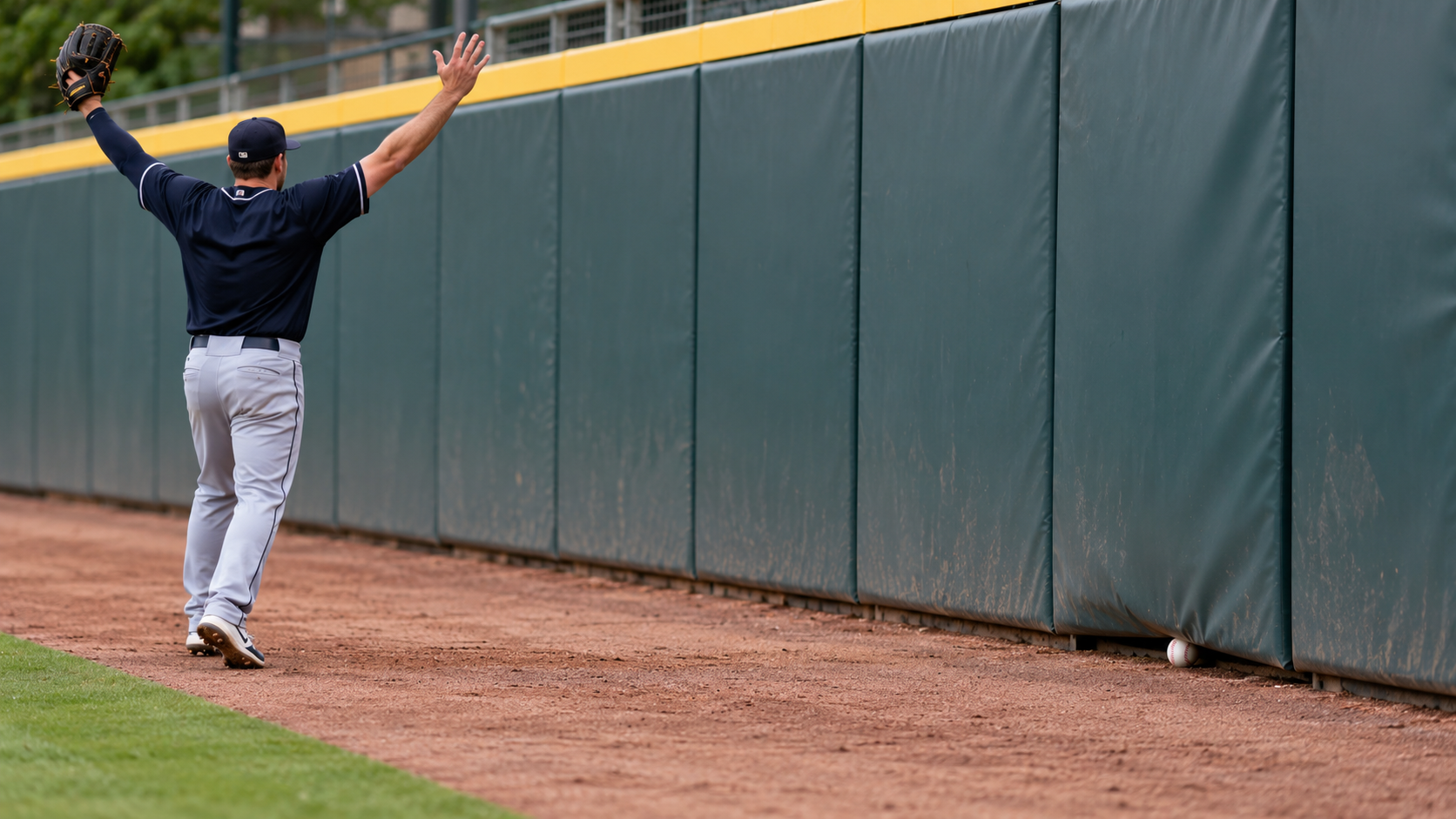
Players should not assume every ball under padding is dead. An outfielder normally raises both hands and avoids touching it while an umpire inspects whether it is actually lodged. If the ball remains playable, runners continue at their own risk and the fielder must retrieve it.
No. The ball must enter a designated out-of-play area or become genuinely lodged under the applicable rules.
Two bases from the time of the pitch.
They are signaling that the ball may be lodged so an umpire can inspect it before anyone disturbs it.
Explore more "Explainers"
Discover additional explainers across politics, science, business, technology, and other fields. Each explainer breaks down a complex idea into clear, everyday language—helping you better understand how major concepts, systems, and debates shape the world around us.