

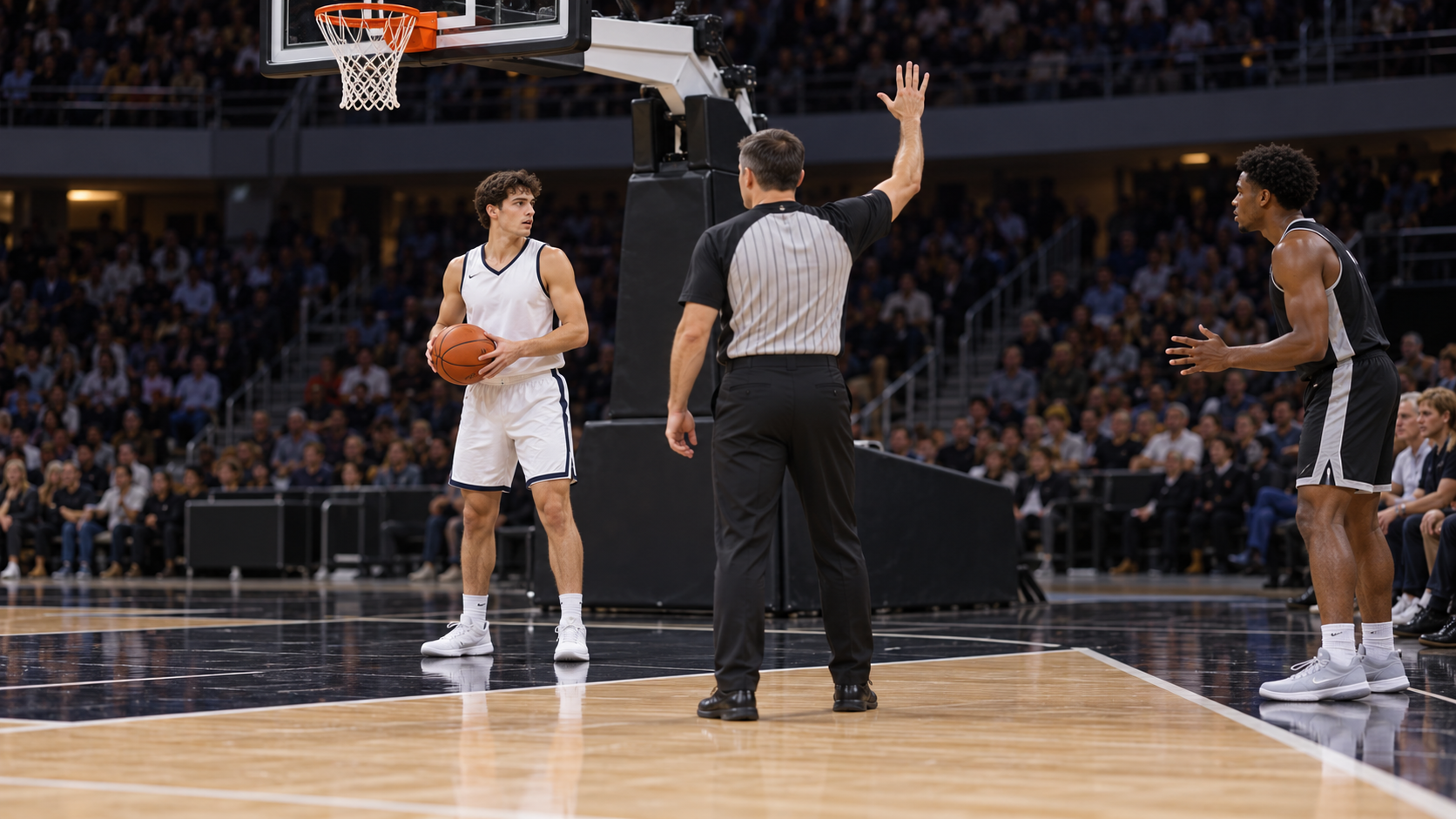
How NBA Delay-of-Game Warnings Work Explainer
NBA delay-of-game rules target actions that slow or disrupt a prompt restart. Examples include interfering with the ball after a successful field goal or free throw, preventing a throw-in from being promptly put into play, entering the court improperly, or using certain unauthorized acts during play.
The first delay by a team is normally recorded as a warning. The warning applies to the entire team for the rest of the game, not just to the player who caused it. Officials notify the scorer and both teams so the next qualifying act has a clear consequence.
A second or subsequent delay by the same team results in a technical foul. The opponent receives the applicable technical-foul free throw, and play resumes according to the interruption. The technical is treated as an administrative team act rather than an unsportsmanlike act charged to an individual.
Some urgent conduct can be penalized immediately under another rule instead of progressing through a warning. Officials also distinguish harmless contact from interference that actually delays availability of the ball. The structure discourages repeated gamesmanship without turning every minor moment into an individual technical foul.
The warning is charged to the team and remains in effect for that game.
A technical foul is assessed and the opponent receives the prescribed free throw.
Yes, when the action interferes with the opponent's ability to put the ball promptly into play.
Explore more "Explainers"
Discover additional explainers across politics, science, business, technology, and other fields. Each explainer breaks down a complex idea into clear, everyday language—helping you better understand how major concepts, systems, and debates shape the world around us.