

How Handball Passive Play Is Judged Explainer
Indoor handball prohibits a team from keeping possession without a recognizable attempt to attack or shoot. Referees evaluate tempo, movement toward goal, repeated lateral passing, player substitutions, and whether the offense is genuinely building a chance rather than simply consuming time.
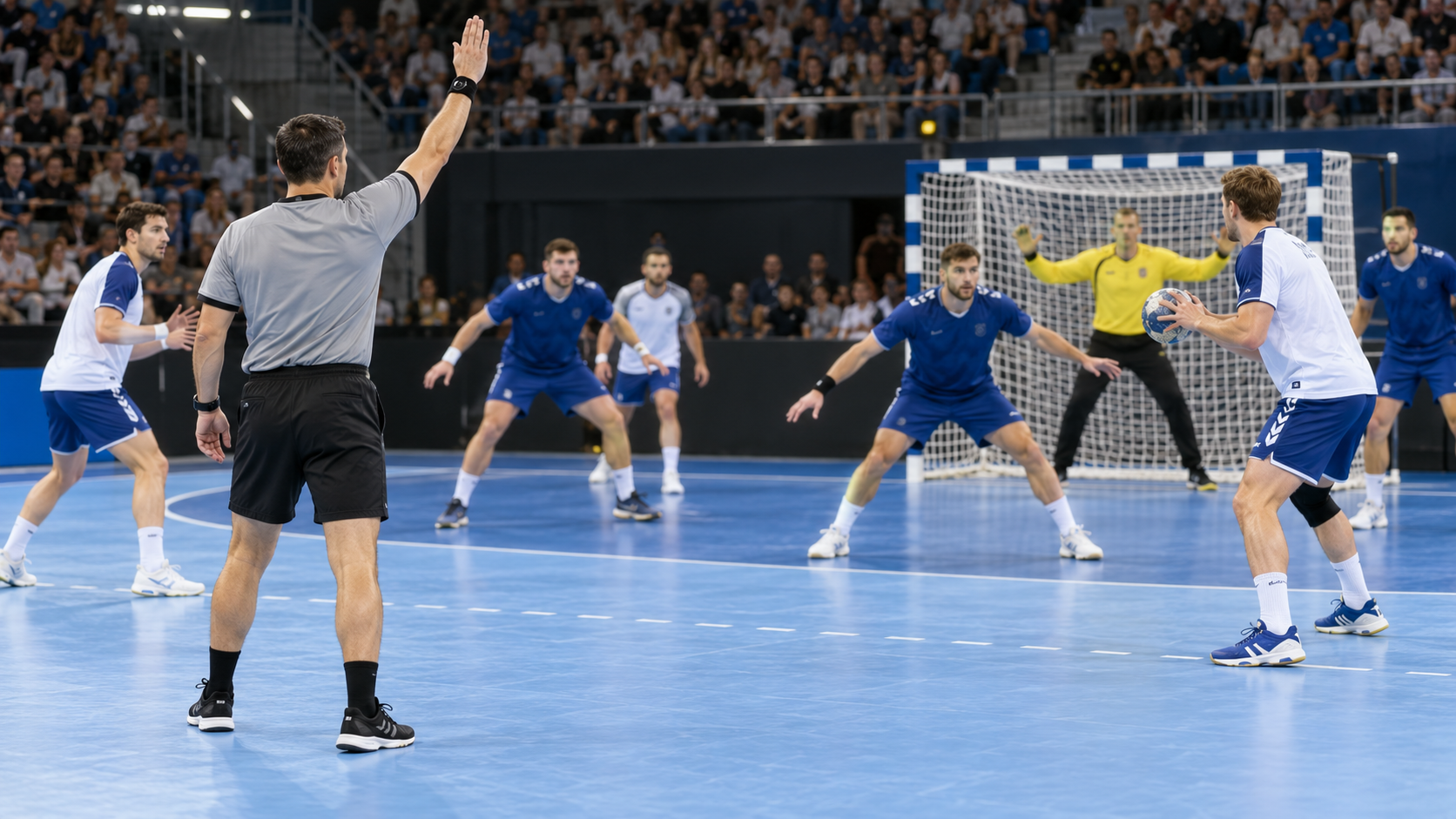
When a passive tendency appears, the referees raise the forewarning signal. That visible arm gesture gives the attacking team a chance to change its behavior. The team does not automatically lose the ball at the signal, but its remaining possession is now closely limited.
After the warning, the offense has a maximum of four passes to produce a shot. When a teammate receives the fifth pass without a qualifying shot, the referees award a free throw to the defending team. Special interruptions and formal throws affect how the count is administered.
Referees may whistle passive play sooner if the team clearly refuses an open scoring chance or deliberately delays a restart. The rule combines judgment with a count: officials first recognize the lack of attacking intent, then use the pass limit to make the ending predictable for both teams.
It warns the attacking team that officials see no recognizable effort to attack and that the pass count is active.
The team has a maximum of four passes to take a shot; receiving a fifth without one brings a free throw against it.
Yes, in certain clear situations such as intentionally refusing an obvious scoring chance.
Explore more "Explainers"
Discover additional explainers across politics, science, business, technology, and other fields. Each explainer breaks down a complex idea into clear, everyday language—helping you better understand how major concepts, systems, and debates shape the world around us.