

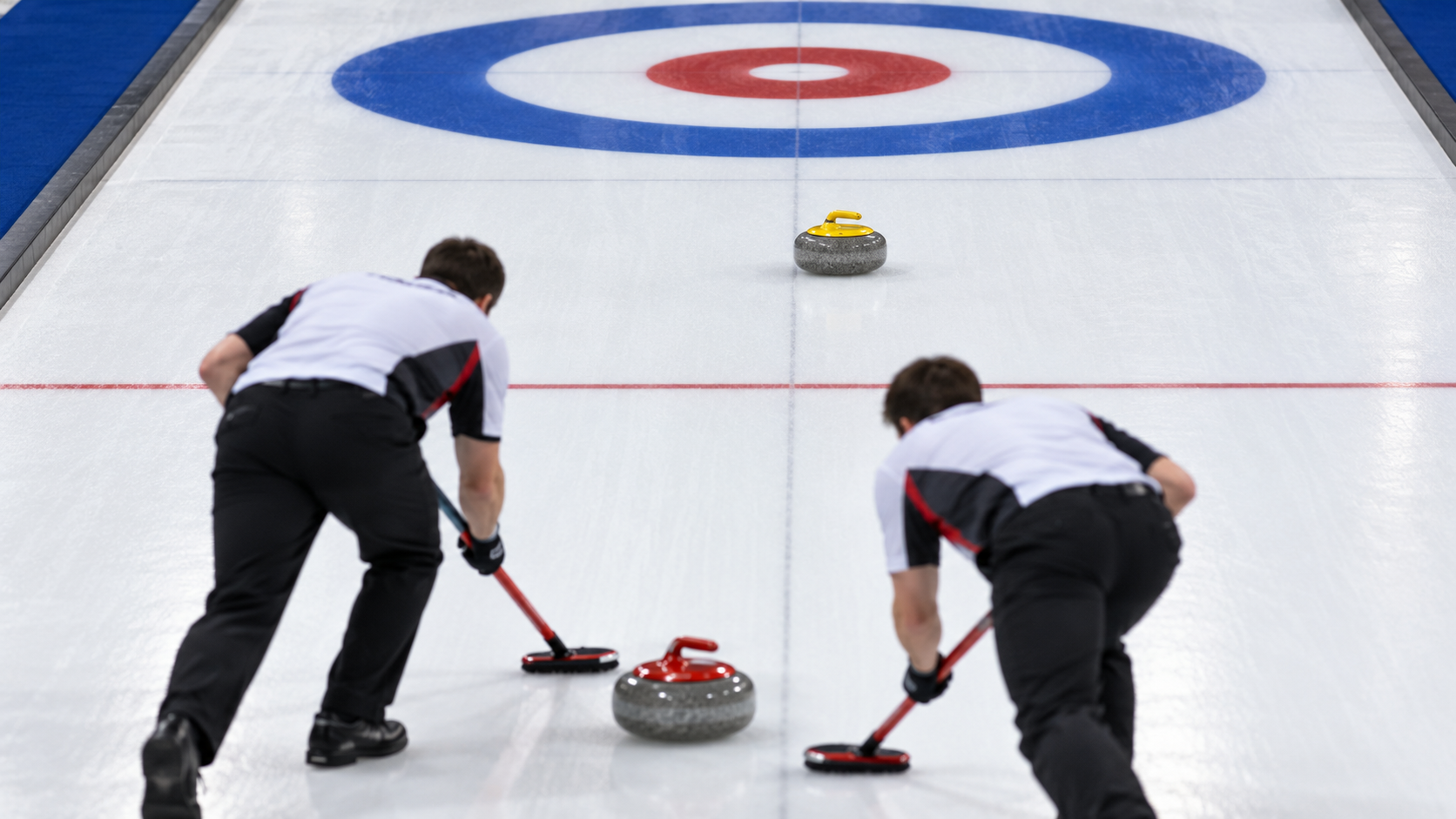
How Curling's Free Guard Zone Works Explainer
The free guard zone is the area between the hog line and the tee line, excluding the house. A stone belonging to the non-delivering team that comes to rest there is protected from being taken out of play during the early stones of an end.
In standard team curling, an opponent cannot remove such a guard from play before the sixth stone of the end. A delivered stone may touch or move the guard, but if the protected stone is knocked completely out of play, the non-offending team restores the original situation.
The delivered stone that caused an illegal removal is taken out, and displaced stones are returned as closely as possible to their previous positions. The rule therefore reverses the advantage gained rather than simply adding a penalty point. Once protection expires, takeouts become legal.
The free guard zone encourages stones to remain in front of the house, creating later draws, raises, freezes, and multiple scoring paths. Without it, a team with last-stone advantage could repeatedly clear every early guard and reduce the end to a simpler exchange of open takeouts.
No. It lies between the hog line and tee line but excludes stones in the house.
The protection ends when the sixth stone of the end is delivered.
The offending delivered stone is removed and the displaced stones are restored to their previous positions.
Explore more "Explainers"
Discover additional explainers across politics, science, business, technology, and other fields. Each explainer breaks down a complex idea into clear, everyday language—helping you better understand how major concepts, systems, and debates shape the world around us.