

How Field Hockey Penalty Corners Work Explainer
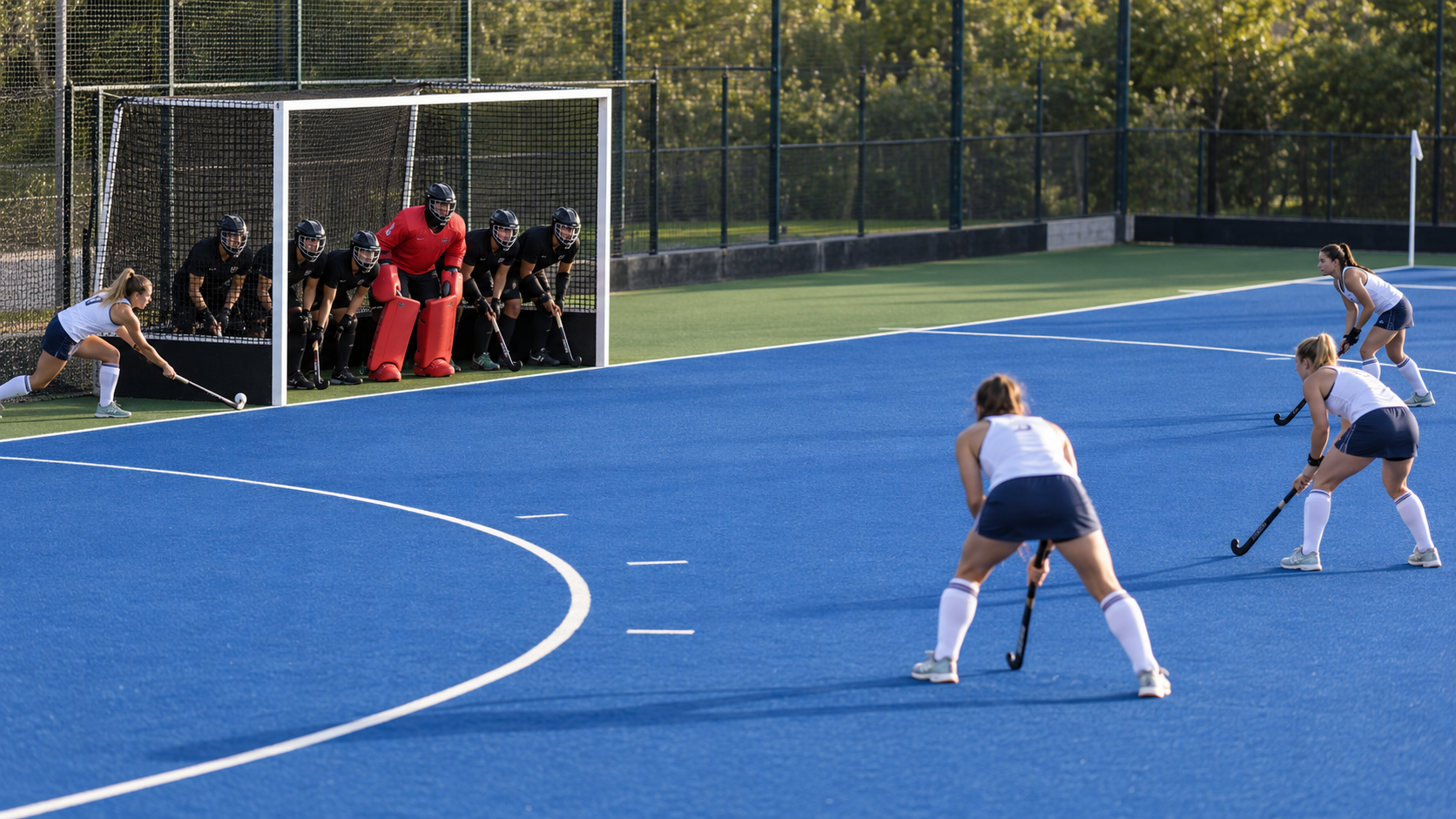
A field hockey penalty corner is awarded for specified defensive offences in or near the shooting circle. Play begins with an attacker pushing or hitting the ball from a mark on the back line. The other attackers wait outside the circle until the ball is played.
No more than five defenders, including the goalkeeper, may begin behind the goal line, with the remaining defenders beyond the center line. At FIH events, defending field players wear approved face protection, and tournament procedures provide preparation time before the injection.
The injected ball must travel outside the circle before a goal can be scored. For the first shot at goal, a hit must cross the goal line no higher than 460 millimetres unless it is deflected; flicks, scoops, and later shots are judged primarily for danger rather than that same board-height limit.
The corner continues through rebounds and brief movement outside the circle until a rule-defined ending, such as a goal, defensive clearance beyond the specified distance, or another stoppage. Teams rehearse injections, traps, drag flicks, and defensive runs because every starting position and first contact is tightly controlled.
Yes. The injected ball must travel outside the circle before a scoring shot can count.
No more than five, including the goalkeeper.
A first hit at goal must cross at no more than 460 millimetres, subject to the rules for deflections and other shot types.
Explore more "Explainers"
Discover additional explainers across politics, science, business, technology, and other fields. Each explainer breaks down a complex idea into clear, everyday language—helping you better understand how major concepts, systems, and debates shape the world around us.