

How Archery Shoot-Offs Break Ties Explainer
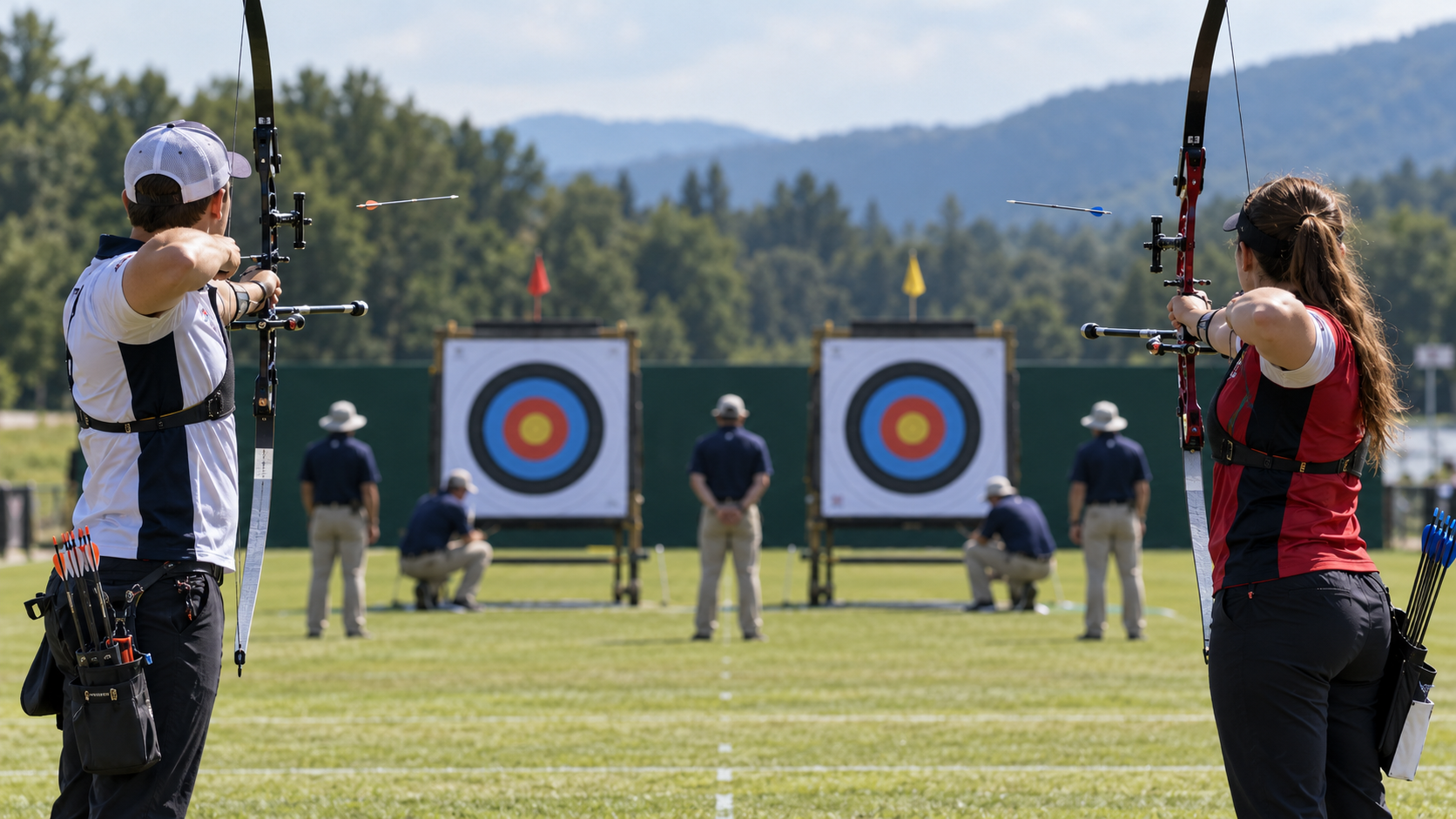
When an individual target-archery elimination match remains tied after regulation, each archer shoots one arrow. The higher scoring arrow wins. If both arrows receive the same score, officials compare their measured distance from the center and award the match to the closer arrow.
If the judge cannot distinguish the distances, the archers shoot successive single-arrow shoot-offs until the tie breaks. Timing follows the match format, commonly 20 seconds per arrow during alternate shooting at World Ranking events. The archer or team that shot first in the match starts the shoot-off.
A team shoot-off uses one arrow from each team member. The higher combined score wins. If totals remain equal, the closest individual arrow to the center decides; if those are equally close, officials compare the second-closest and then the third-closest arrows as needed.
Shoot-offs test both accuracy and immediate composure because previous totals no longer provide a cushion. Judges verify arrow values and measure center distance before declaring the result. The procedure produces a clear winner while using the same target, equipment, and shooting order as the match.
One arrow.
The arrow closest to the center wins; an indistinguishable distance produces another shoot-off.
Each member shoots one arrow, with total score first and closest-to-center arrows used if the total remains tied.
Explore more "Explainers"
Discover additional explainers across politics, science, business, technology, and other fields. Each explainer breaks down a complex idea into clear, everyday language—helping you better understand how major concepts, systems, and debates shape the world around us.