

On This Day in Pop: June 2, 1953
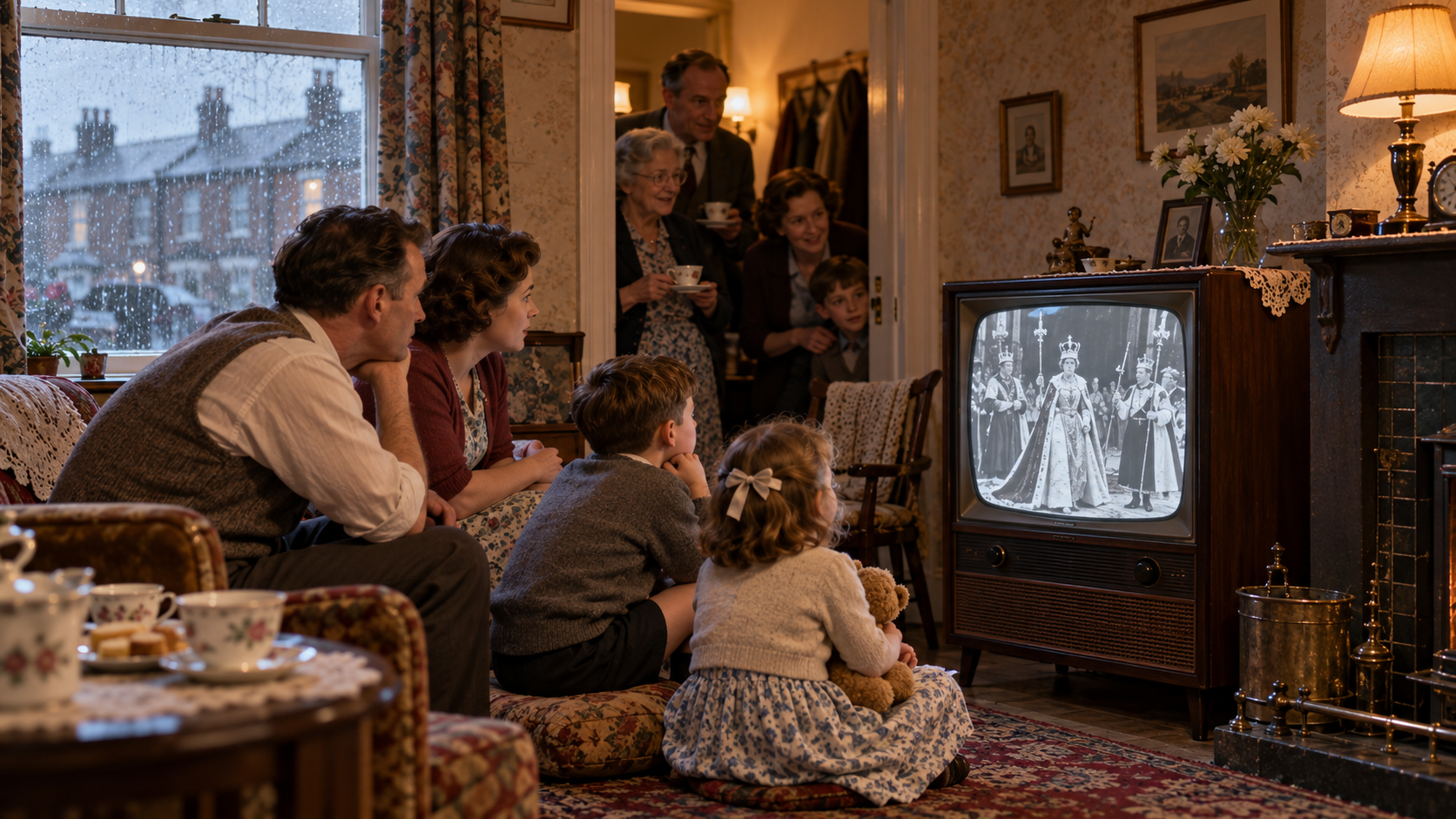
On June 2, 1953, Queen Elizabeth II was crowned at Westminster Abbey in a ceremony that joined ancient ritual to the newest mass medium. Television cameras were admitted to the Abbey after prolonged debate, allowing viewers to see most of the service rather than hear it only by radio or encounter it later in newsreels. Rain fell across London, but crowds lined the route and neighbors gathered around the relatively few household television sets then in use. In Britain, an estimated 27 million people watched on television and another 11 million listened by radio. Film recordings were flown across the Atlantic so North American broadcasters could show the ceremony the same day. For many viewers, the intimate black-and-white images of crowns, robes and processions were their first experience of a live national occasion entering the home.
The broadcast mattered because it accelerated television’s transition from curiosity to social necessity. Families who did not own sets visited friends, pubs or specially arranged public rooms, turning private screens into neighborhood gathering places. The BBC mounted its largest outside broadcast to date, coordinating cameras and transmitters around a ceremony whose choreography had evolved over centuries. Television did not merely observe the ritual; framing, commentary and close views changed how audiences understood it. That tension between pageantry and mediation became a model for later royal weddings, funerals, sporting events and political ceremonies. The coronation also demonstrated that a geographically scattered public could experience a single moment together, a promise that would define network television at its mid-century peak.
In the years that followed, British television ownership expanded rapidly, and the coronation remained one of the medium’s founding memories. It helped establish expectations for respectful live coverage while showing institutions that controlled access could gain, rather than lose, authority through visibility. The event also carried the contradictions of its time: it projected continuity during postwar austerity and presented imperial pageantry as the British Empire was becoming a Commonwealth of independent nations. Modern viewers therefore see both a technical breakthrough and a carefully staged expression of national identity. Every later discussion about cameras inside ceremonial spaces echoes the questions argued in 1953—who may look, what the lens should reveal, and whether a broadcast preserves tradition or quietly transforms it.
Remembering elizabeth ii’s coronation becomes a television landmark on June 2 is valuable because anniversaries turn a familiar cultural object back into a specific decision, release or broadcast. The surrounding technology, business and audience conditions explain why the moment could happen then, while its later uses show that meaning never stops changing. Seen at that scale, the date is not trivia. It is a checkpoint between creation and memory: a place to separate what occurred from the legend accumulated around it and to ask why the work still attracts attention.
Elizabeth II was crowned at Westminster Abbey on June 2, 1953, with television cameras inside the Abbey.
The moment reached audiences through the media and distribution systems of 1953, influencing how the initial response developed.
About 27 million people in Britain watched on television and 11 million listened on radio.
Its early impact was substantial but not universal, and later retellings sometimes compressed a more complicated contemporary response.
The broadcast helped turn television ownership and communal viewing into defining features of postwar life.
Anniversary coverage continues to place Coronation Goes Live within the broader history of popular culture while distinguishing documented evidence from later legend.
Explore more of "On This Day ..."
Discover more events from the same date across news, politics, technology, sports, and other fields. Each link highlights significant moments that shaped history on different fronts.