

On This Day in Pop: June 5, 1956
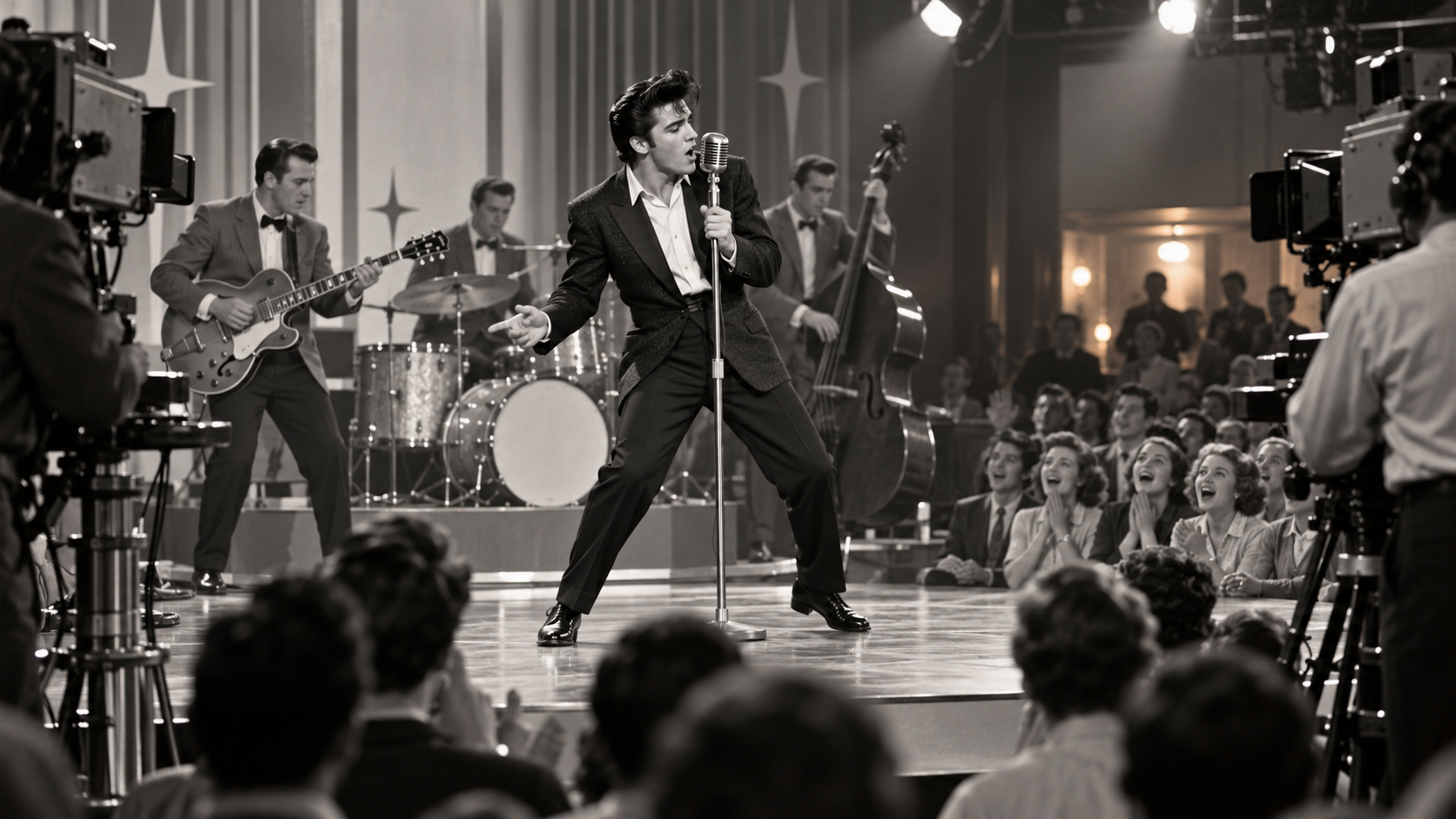
On June 5, 1956, Elvis Presley appeared on NBC’s The Milton Berle Show and performed Hound Dog before a national television audience. He had sung the song in concert but had not yet recorded the hit studio version that would be released later that summer. During the broadcast, Presley slowed the final section and emphasized the blues rhythm with loose, exaggerated movements that television cameras carried into American living rooms. The studio audience responded loudly; many critics responded with alarm. Newspaper columnists attacked his dancing as vulgar, and the performance quickly became evidence in a larger argument about rock and roll, youth behavior, race, sexuality and the power of television. What lasted was not simply a song but a visual event: sound and movement arriving together through a medium capable of making private discomfort national news.
The appearance mattered because Presley was becoming the figure through whom mainstream America negotiated the new music. Hound Dog had been recorded earlier by blues singer Big Mama Thornton, and Presley’s version emerged from a culture in which white performers and companies often received disproportionate reward for music rooted in Black traditions. His performance did not invent rhythm and blues stagecraft, but its mass visibility challenged the restrained body language expected on variety television. The controversy made Presley more famous while revealing the generational and racial anxieties attached to his success. Broadcasters soon tried to manage the risk: later television appearances used safer framing, most famously showing him from the waist up. The attempt to contain him only confirmed that camera angles had become part of the cultural battle.
Within weeks, Presley recorded Hound Dog with Don’t Be Cruel, and the single became one of the era’s defining releases. His film career, army service and later Las Vegas years would repeatedly change his image, but the Berle performance remained shorthand for the instant television recognized rock and roll as a force it could neither ignore nor comfortably control. Later artists inherited both sides of that moment: the opportunity to use televised performance as self-invention and the likelihood that movement, clothing or attitude would be judged as social evidence. Looking back also invites fuller credit for the Black musicians, songwriters and performance traditions that made the breakthrough possible. The broadcast endures because it captures fame being accelerated by controversy in real time, a pattern pop culture has never stopped repeating.
Remembering elvis presley performs hound dog on milton berle’s show on June 5 is valuable because anniversaries turn a familiar cultural object back into a specific decision, release or broadcast. The surrounding technology, business and audience conditions explain why the moment could happen then, while its later uses show that meaning never stops changing. Seen at that scale, the date is not trivia. It is a checkpoint between creation and memory: a place to separate what occurred from the legend accumulated around it and to ask why the work still attracts attention.
Elvis Presley performed Hound Dog on The Milton Berle Show on June 5, 1956 before recording his hit version.
The moment reached audiences through the media and distribution systems of 1956, influencing how the initial response developed.
His movements drew intense press criticism and made television framing part of the debate over rock and roll.
Its early impact was substantial but not universal, and later retellings sometimes compressed a more complicated contemporary response.
The song had previously been a rhythm-and-blues hit for Big Mama Thornton, highlighting rock's debt to Black music.
Anniversary coverage continues to place Elvis Shakes TV within the broader history of popular culture while distinguishing documented evidence from later legend.
Explore more of "On This Day ..."
Discover more events from the same date across news, politics, technology, sports, and other fields. Each link highlights significant moments that shaped history on different fronts.