

On This Day in Pop: June 3, 1949
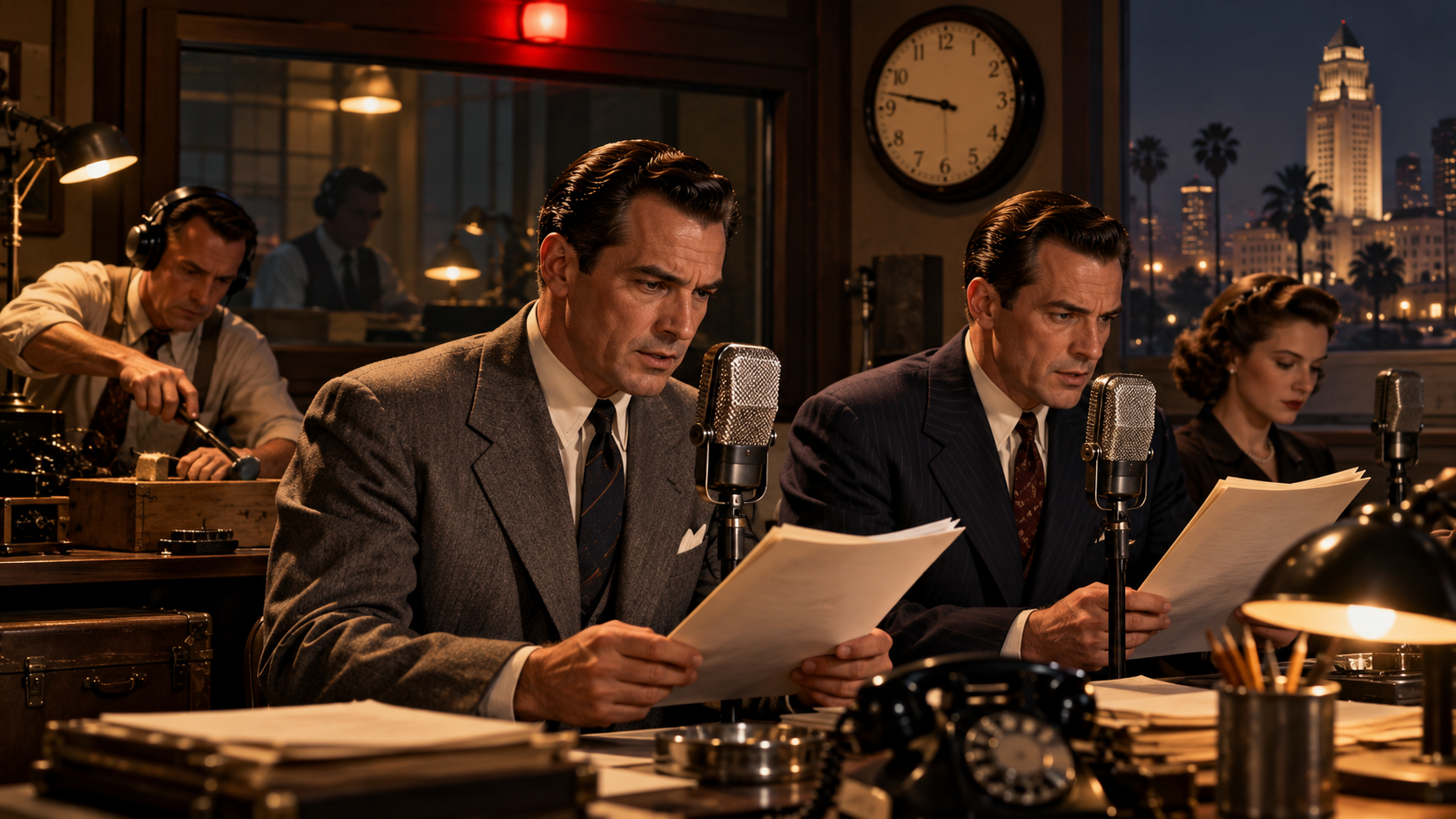
On June 3, 1949, NBC radio broadcast the premiere of Dragnet, a Los Angeles police drama created by and starring Jack Webb. The opening case, commonly identified as Robbery, introduced listeners to Sergeant Joe Friday and to a style that sounded unlike the flamboyant detective adventures surrounding it. Webb favored clipped dialogue, procedural detail and an impersonal narrator who located scenes with the precision of a report. He drew on cooperation from the Los Angeles Police Department and adapted case material to give investigations the texture of routine work: interviews, paperwork, telephone calls and patient accumulation of evidence. The famous four-note brass theme made the program instantly recognizable, but the deeper innovation was tonal. Dragnet treated police work as a system of method rather than a string of dazzling deductions.
That approach mattered because radio drama had to build an entire city from voices and sound. Dragnet’s microphones captured footsteps in corridors, ringing telephones, squad-room murmur and the measured cadence of official speech. Its documentary pose reassured audiences that they were hearing something close to fact, even though cases were shaped for entertainment and the series reflected the department’s preferred image of itself. Webb’s Joe Friday rarely indulged in romantic backstory or heroic flourish; authority came from persistence, procedure and the collective machinery of the institution. The result established a grammar for the police procedural and helped move crime storytelling away from the lone private eye toward teams, laboratories and bureaucratic process.
Dragnet moved to television in 1951 and became one of the first major properties to succeed across radio, television and later film revivals. Its deadpan rhythm inspired sincere imitators and affectionate parody, while its influence can be heard in programs that announce locations, follow cases step by step and frame drama through institutional routine. Later critics also examined what its realism left out, especially the distance between police self-presentation and the experiences of communities being policed. That debate is part of the show’s legacy. On its first night, Dragnet did more than introduce a durable character; it demonstrated how the sound of factual authority could itself become entertainment, a lesson that crime television and true-crime media continue to use and question.
Remembering dragnet premieres on nbc radio on June 3 is valuable because anniversaries turn a familiar cultural object back into a specific decision, release or broadcast. The surrounding technology, business and audience conditions explain why the moment could happen then, while its later uses show that meaning never stops changing. Seen at that scale, the date is not trivia. It is a checkpoint between creation and memory: a place to separate what occurred from the legend accumulated around it and to ask why the work still attracts attention.
Dragnet premiered on NBC radio on June 3, 1949, with Jack Webb as Sergeant Joe Friday.
The moment reached audiences through the media and distribution systems of 1949, influencing how the initial response developed.
The series emphasized procedural detail, location announcements and a documentary style of sound design.
Its early impact was substantial but not universal, and later retellings sometimes compressed a more complicated contemporary response.
Its format transferred successfully to television and became a foundation for later police procedurals.
Anniversary coverage continues to place Dragnet Hits Radio within the broader history of popular culture while distinguishing documented evidence from later legend.
Explore more of "On This Day ..."
Discover more events from the same date across news, politics, technology, sports, and other fields. Each link highlights significant moments that shaped history on different fronts.