

On This Day in Pop: June 4, 1984
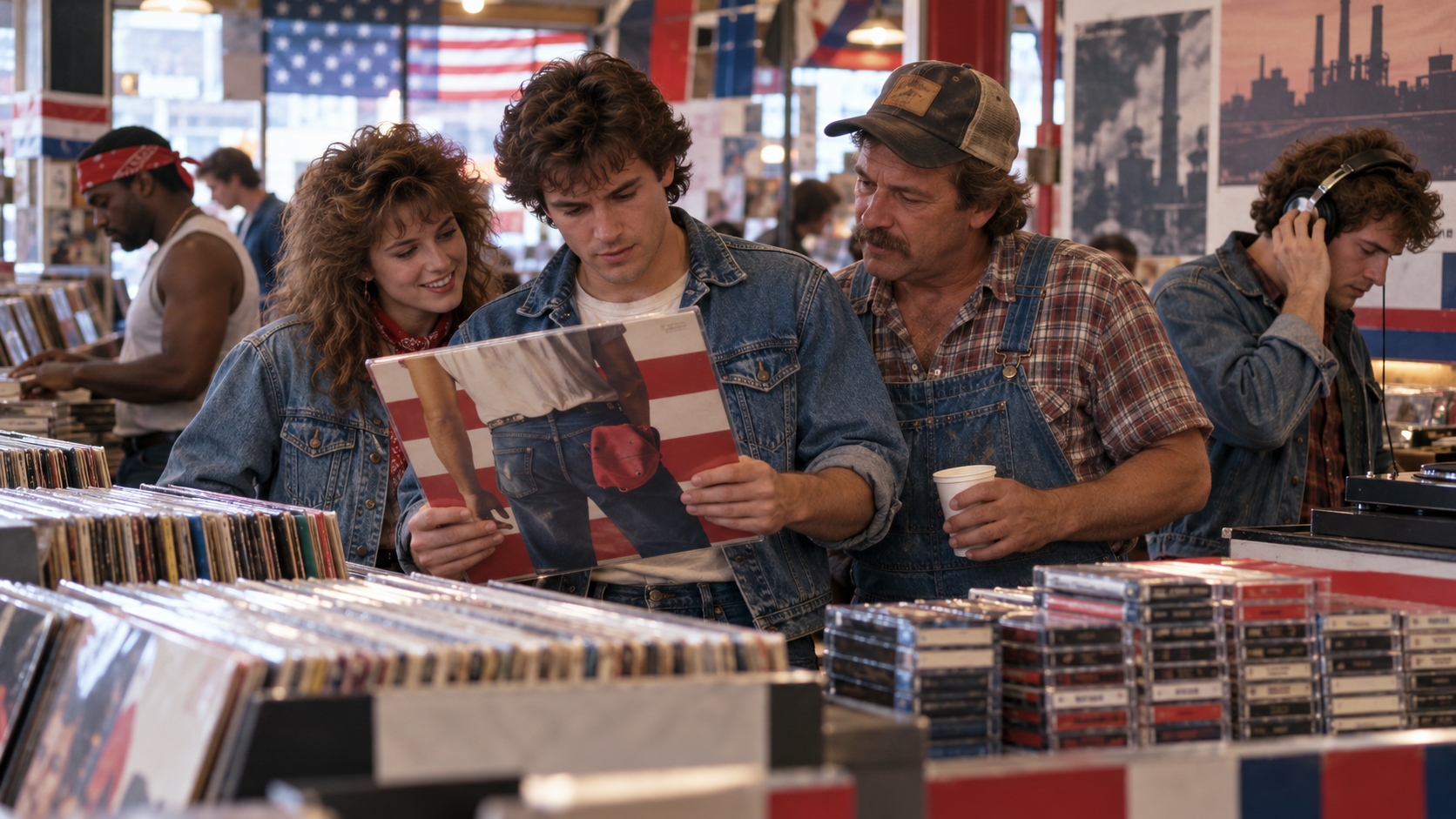
On June 4, 1984, Bruce Springsteen released Born in the U.S.A., the seventh studio album of a career already associated with working-class characters and expansive live shows. The record drew from years of sessions that had also produced the stark acoustic songs on Nebraska, but its finished sound often moved in the opposite direction: bright synthesizers, booming drums, forceful guitars and choruses built for arenas. The title track placed a Vietnam veteran’s disillusionment inside a refrain so commanding that casual listeners could mistake protest for celebration. Elsewhere, Dancing in the Dark, Glory Days, My Hometown and I’m on Fire approached aging, memory, desire and economic strain from different angles. The album’s visual language—denim, flag colors and an unguarded back-cover portrait—made its American setting unmistakable without resolving its arguments about the country.
The release mattered because it turned Springsteen from a major rock artist into a global pop figure while preserving tension inside accessible songs. Seven singles reached the U.S. Top Ten, and the long supporting tour filled stadiums, introduced a broader E Street Band to television audiences and made Springsteen one of the decade’s defining performers. Yet the album’s success also revealed how easily mass culture can detach an image or chorus from the story around it. Politicians and advertisers tried to borrow the title song’s apparent patriotism, prompting Springsteen to stress the veteran, labor and civic failures described in its verses. That conflict did not weaken the record; it showed how popular music can become a contested public object once millions of listeners claim it for different purposes.
Born in the U.S.A. remained central to Springsteen’s catalog, but its legacy is larger than sales. It helped fix the sound of mid-1980s rock—huge drums, polished surfaces and direct melodies—while demonstrating that mainstream production could carry socially complicated writing. The album also became a case study in the power and danger of iconography: a title, a flag and a backbeat can communicate faster than narrative detail. Later acoustic performances of the title song exposed its blues structure and returned attention to the character at its center, allowing audiences to hear the composition anew. Four decades later, the record still feels both triumphant and uneasy, a blockbuster whose scale amplifies rather than erases its questions about belonging, work, memory and the distance between national promise and lived reality.
Remembering bruce springsteen releases born in the u.s.a. on June 4 is valuable because anniversaries turn a familiar cultural object back into a specific decision, release or broadcast. The surrounding technology, business and audience conditions explain why the moment could happen then, while its later uses show that meaning never stops changing. Seen at that scale, the date is not trivia. It is a checkpoint between creation and memory: a place to separate what occurred from the legend accumulated around it and to ask why the work still attracts attention.
Born in the U.S.A. was released on June 4, 1984 as Bruce Springsteen's seventh studio album.
The moment reached audiences through the media and distribution systems of 1984, influencing how the initial response developed.
The album produced seven U.S. Top Ten singles and supported a major international stadium tour.
Its early impact was substantial but not universal, and later retellings sometimes compressed a more complicated contemporary response.
Its title song is narrated by a disillusioned Vietnam veteran despite its frequently misread chorus.
Anniversary coverage continues to place Born in the U.S.A. within the broader history of popular culture while distinguishing documented evidence from later legend.
Explore more of "On This Day ..."
Discover more events from the same date across news, politics, technology, sports, and other fields. Each link highlights significant moments that shaped history on different fronts.