

On This Day in Sports: July 1, 1903
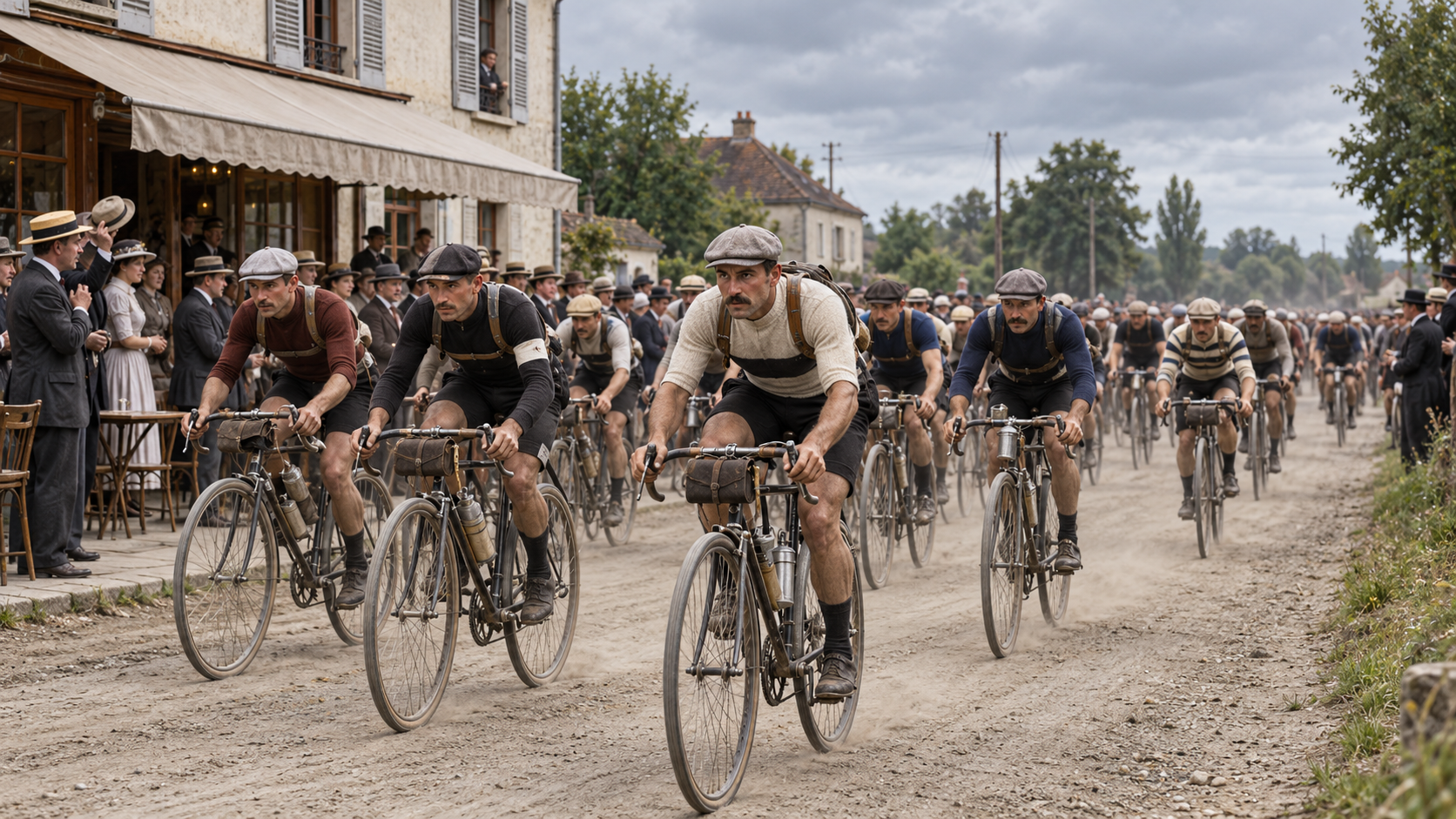
On July 1, 1903, the first Tour de France began when 60 cyclists left the Café Le Réveil-Matin in Montgeron, southeast of Paris. They faced a 467-kilometer opening stage to Lyon, the first part of an experimental six-stage race promoted by the newspaper L’Auto. Maurice Garin reached Lyon first and eventually won the inaugural Tour. The public record fixes the central details with unusual clarity: Sixty riders started the opening stage. The first stage ran 467 kilometers to Lyon. Together, those facts explain why July 1, 1903 stands apart from the ordinary flow of a season and deserves to be remembered as a distinct historical moment.
The event emerged from fierce competition between French sports newspapers. Journalist Géo Lefèvre proposed a race around France to editor Henri Desgrange, who approved a route linking Paris, Lyon, Marseille, Toulouse, Bordeaux and Nantes before returning to the capital. Entry rules and prize money were adjusted when early registration proved weak. Two further details help reconstruct how the achievement unfolded: Géo Lefèvre proposed the race. L’Auto organized and promoted the event. They move the story beyond a headline by showing the pressure, setting and competitive choices that shaped the decisive action in real time.
Riders started in the afternoon on heavy steel bicycles without modern gearing, support cars or paved roads. Night racing, mechanical breakdowns and long stretches without rest made the first edition closer to an endurance expedition than a contemporary stage race. Garin won the opening stage after nearly eighteen hours on the road. The wider context is equally important. Maurice Garin won the first Tour. Only 21 riders completed the entire race. Those points connect one day’s performance to a longer career, institution or rivalry and clarify why the event continued to matter after the immediate celebration had ended.
Only 21 riders completed the full race, but public attention and newspaper sales confirmed that the concept could survive. The Tour became cycling’s most famous annual contest, while its yellow jersey, mountain stages and roadside crowds grew from an experiment that began outside a suburban café. Seen from today, the milestone remains compelling because it joins a measurable result with the uncertainty of live competition. Nothing about the outcome was guaranteed beforehand. That combination of preparation, opportunity and execution transformed the date from another entry on the schedule into lasting sports history. It also reveals how records and championships depend on teammates, opponents, officials, venues and rules that shape the opportunity. Preserving those surrounding details helps explain both the achievement itself and the reason later generations still discuss it. The date therefore offers a useful window into how sporting excellence is created, witnessed and remembered.
Sixty riders started the opening stage.
The first stage ran 467 kilometers to Lyon.
Géo Lefèvre proposed the race.
L’Auto organized and promoted the event.
Maurice Garin won the first Tour.
Only 21 riders completed the entire race.
Explore more "On This Day in Sports"
Discover more landmark games, records, championships, and turning points from sports history. Each day revisits the athletes, teams, and moments that shaped competition and culture.