

On This Day in Sports: July 25, 1992
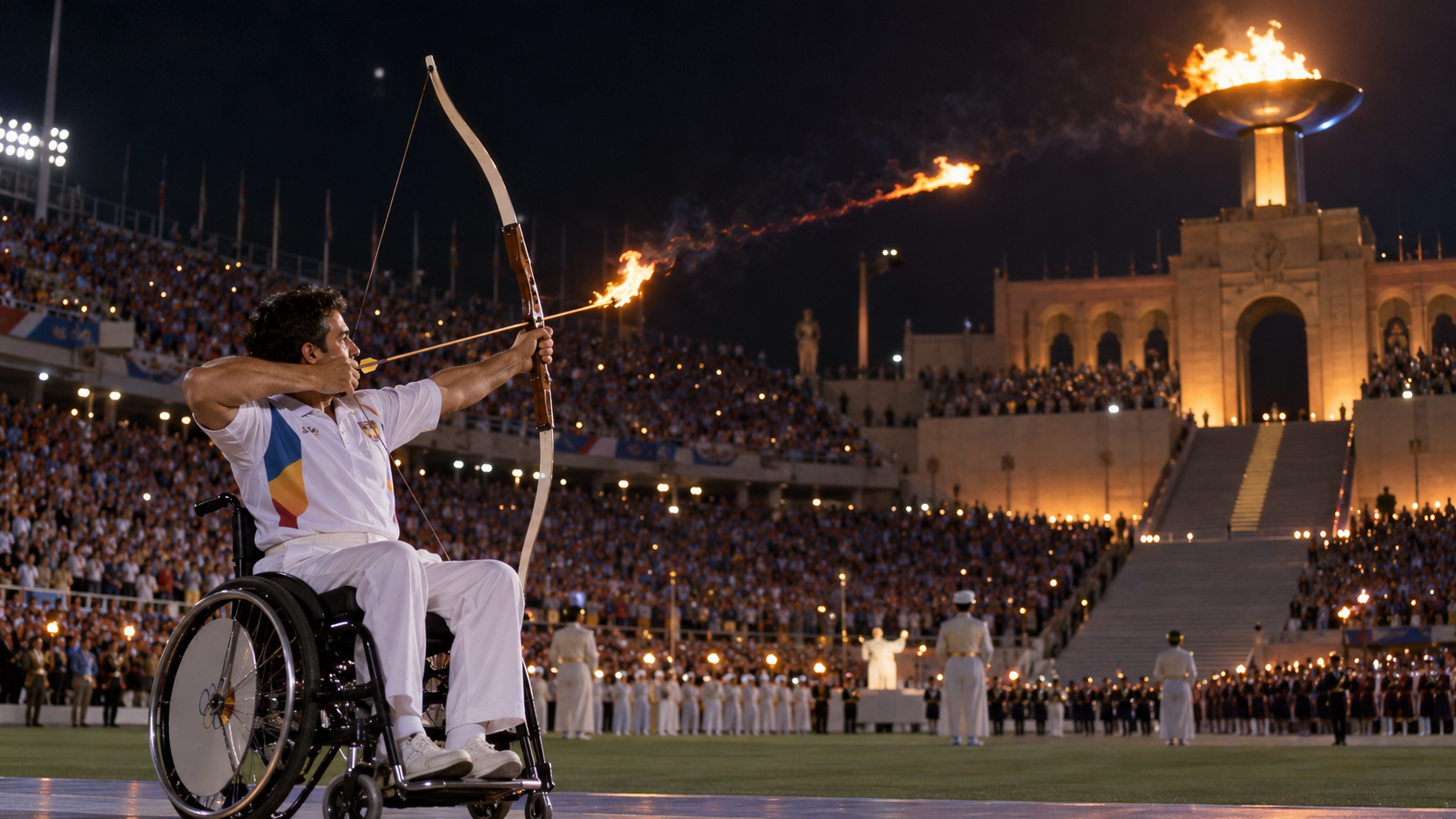
On July 25, 1992, the Barcelona Summer Olympics opened at Montjuïc with a ceremony culminating in a flaming arrow arcing toward the cauldron. Paralympic archer Antonio Rebollo released the arrow as the stadium watched it pass above the structure, triggering the flame. The carefully staged moment became one of the best-known images in Olympic ceremony history. The public record fixes the central details with unusual clarity: The ceremony took place at Montjuïc. Antonio Rebollo fired the flaming arrow. Together, those facts explain why July 25, 1992 stands apart from the ordinary flow of a season and deserves to be remembered as a distinct historical moment.
Barcelona used the Games to accelerate a large urban transformation, reconnecting the city with its waterfront and expanding transportation and public space. The international setting also reflected major political change after the Cold War and the breakup of several states. Two further details help reconstruct how the achievement unfolded: The arrow passed above the cauldron. South Africa returned to Olympic competition. They move the story beyond a headline by showing the pressure, setting and competitive choices that shaped the decisive action in real time.
The ceremony featured Catalan traditions, mass choreography and prominent opera singers before the parade of nations. Rebollo received the flame from basketball player Juan Antonio San Epifanio and took aim from the stadium floor. A gas system ensured the cauldron ignited as the arrow crossed overhead. The wider context is equally important. The Games accelerated waterfront redevelopment. Barcelona hosted 169 national delegations. Those points connect one day’s performance to a longer career, institution or rivalry and clarify why the event continued to matter after the immediate celebration had ended.
The Games welcomed South Africa back after its long exclusion during apartheid and included newly independent delegations. Barcelona’s combination of sports planning and civic redevelopment became a model studied by later host cities. The opening ceremony’s arrow distilled that ambition into a single controlled gesture. Seen from today, the milestone remains compelling because it joins a measurable result with the uncertainty of live competition. Nothing about the outcome was guaranteed beforehand. That combination of preparation, opportunity and execution transformed the date from another entry on the schedule into lasting sports history. It also reveals how records and championships depend on teammates, opponents, officials, venues and rules that shape the opportunity. Preserving those surrounding details helps explain both the achievement itself and the reason later generations still discuss it. The date therefore offers a useful window into how sporting excellence is created, witnessed and remembered.
The ceremony took place at Montjuïc.
Antonio Rebollo fired the flaming arrow.
The arrow passed above the cauldron.
South Africa returned to Olympic competition.
The Games accelerated waterfront redevelopment.
Barcelona hosted 169 national delegations.
Explore more "On This Day in Sports"
Discover more landmark games, records, championships, and turning points from sports history. Each day revisits the athletes, teams, and moments that shaped competition and culture.