

How Soccer Penalty-Kick Double Touches Are Judged Explainer
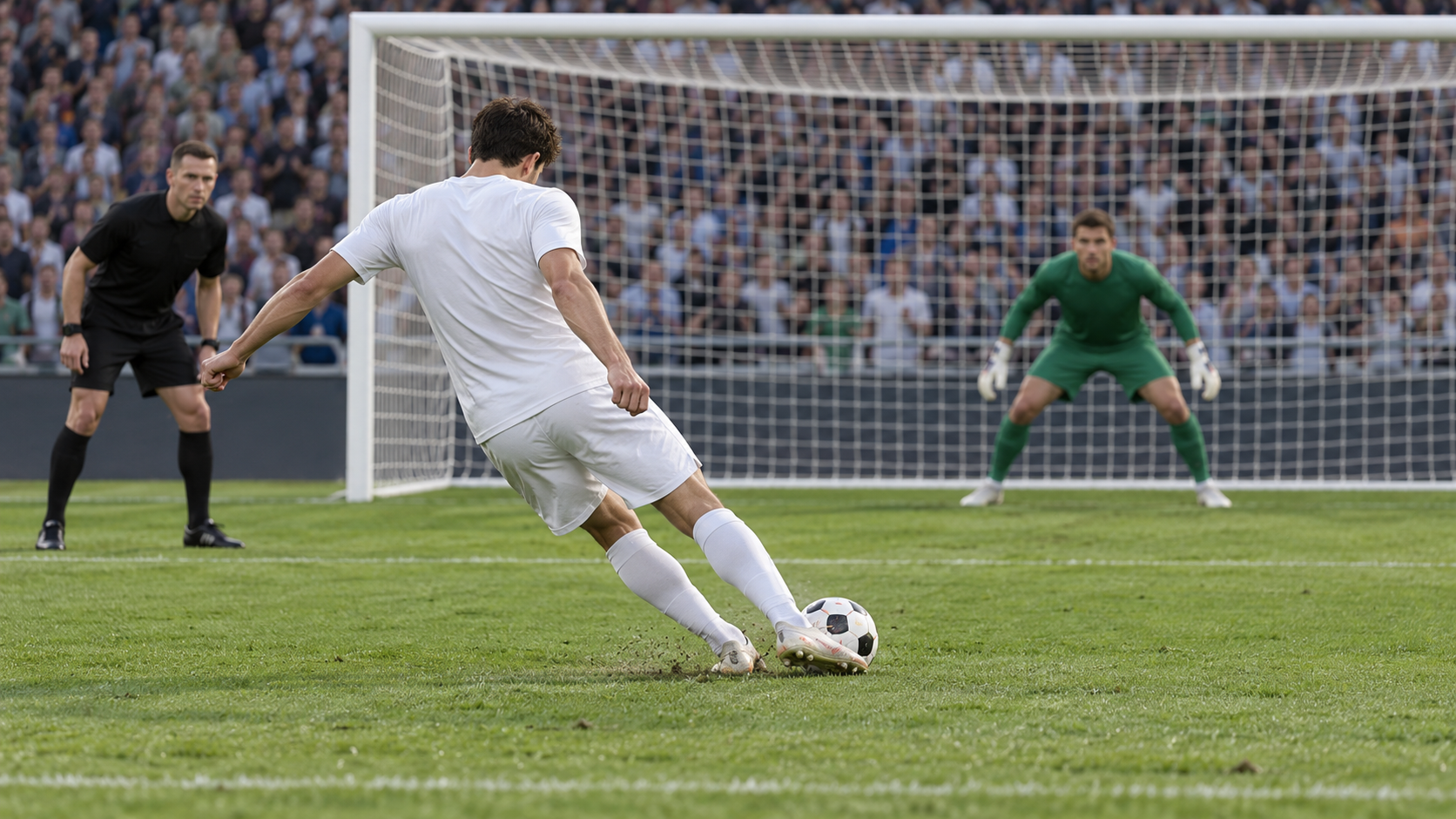
A penalty taker may not play the ball a second time before another player touches it. The restriction covers an ordinary second kick after a rebound as well as an immediate double contact, such as the ball glancing from the standing foot before the kicking foot sends it forward.
Current IFAB law distinguishes an accidental immediate double touch from a deliberate second play. If that accidental contact sends the ball into the goal, the kick is retaken. If it does not result in a goal, the defending team receives an indirect free kick, except in a shoot-out where the attempt is recorded as missed.
A deliberate second touch remains a normal two-touch offence and brings an indirect free kick. If the second touch is a handball, the applicable handball restart and possible discipline can replace that outcome. The goalkeeper still must comply with the separate goal-line requirements.
Officials look for two distinct contacts, the taker's movement, and the ball's path. Video review may clarify a slight deflection in competitions that use it. The special retake prevents an unintended slip from both creating an irregular goal and automatically punishing the taker as though the action were deliberate.
The penalty kick is retaken under the current IFAB procedure.
The defense receives an indirect free kick, or the attempt is missed in a shoot-out.
No. That is a second-touch offence and results in an indirect free kick.
Explore more "Explainers"
Discover additional explainers across politics, science, business, technology, and other fields. Each explainer breaks down a complex idea into clear, everyday language—helping you better understand how major concepts, systems, and debates shape the world around us.