

How Illegal Batting Works in the NFL Explainer
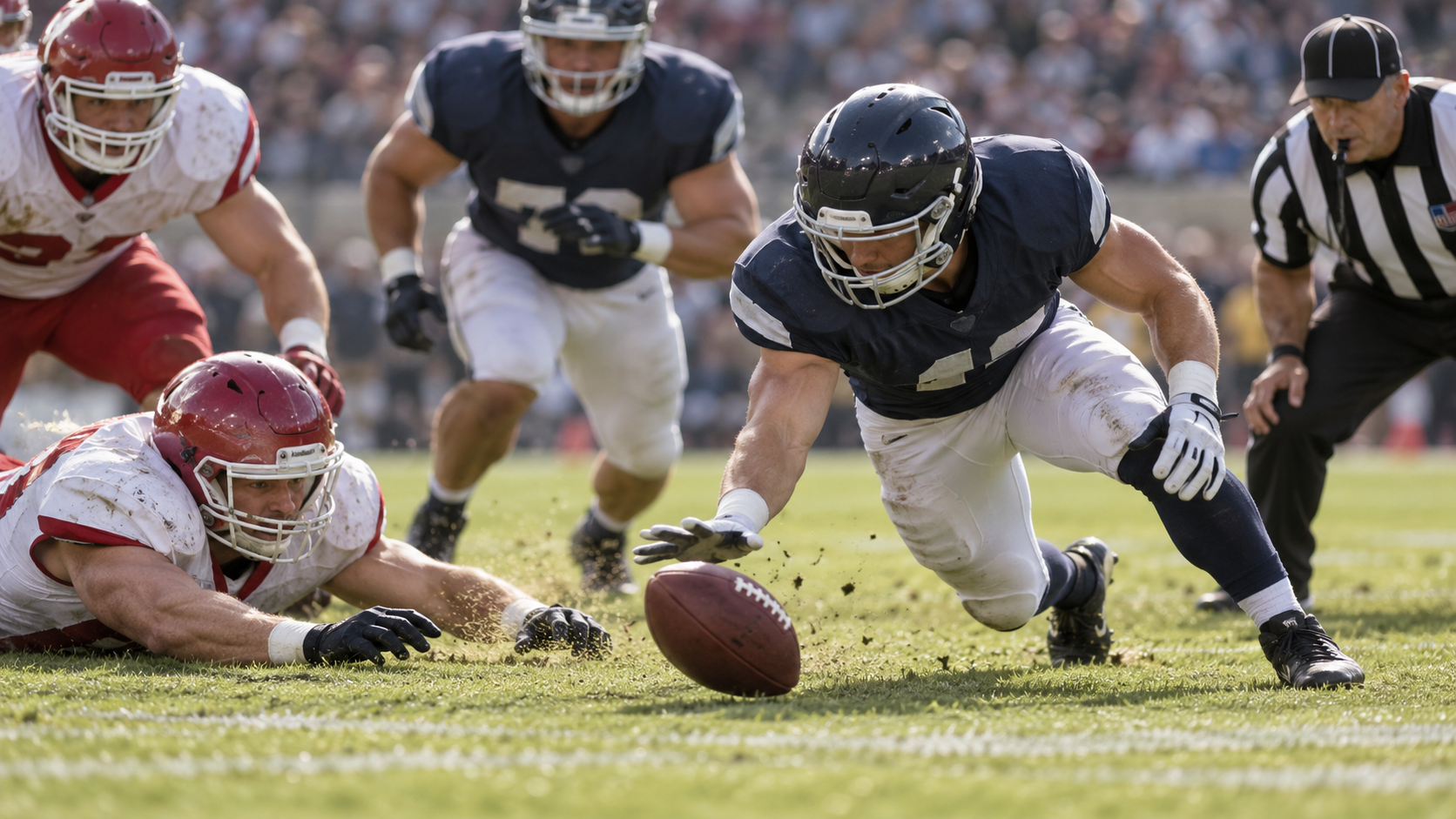
Illegal batting in the NFL means intentionally striking or punching a loose ball in a direction or situation the rules prohibit. A player may legally tip a forward pass while it is in flight if eligible to touch it, but a loose ball on the ground and a backward pass are governed differently.
No player may bat a loose ball toward the opponent's goal line in the field of play. A grounded loose ball may not be batted in either direction in an end zone, and an offensive player cannot bat a backward pass in flight forward. These limits prevent manufactured yardage from a ball nobody possesses.
The basic penalty is 10 yards. When the offense illegally bats a loose ball behind the line of scrimmage, loss of down also applies. Enforcement depends on the spot and the status of the ball, so the same visible swat can have different consequences near a goal line.
Intent separates a bat from an accidental touch or muff. Officials study the player's hand action, the ball's direction, possession, and field location. A receiver merely deflecting an airborne forward pass toward a teammate can be legal; controlling it and intentionally throwing it forward is not.
Yes. A forward pass in flight may generally be tipped or batted by an eligible player.
Ten yards, with loss of down in specified offensive situations behind the line.
No. The prohibited act requires an intentional striking or punching action.
Explore more "Explainers"
Discover additional explainers across politics, science, business, technology, and other fields. Each explainer breaks down a complex idea into clear, everyday language—helping you better understand how major concepts, systems, and debates shape the world around us.