

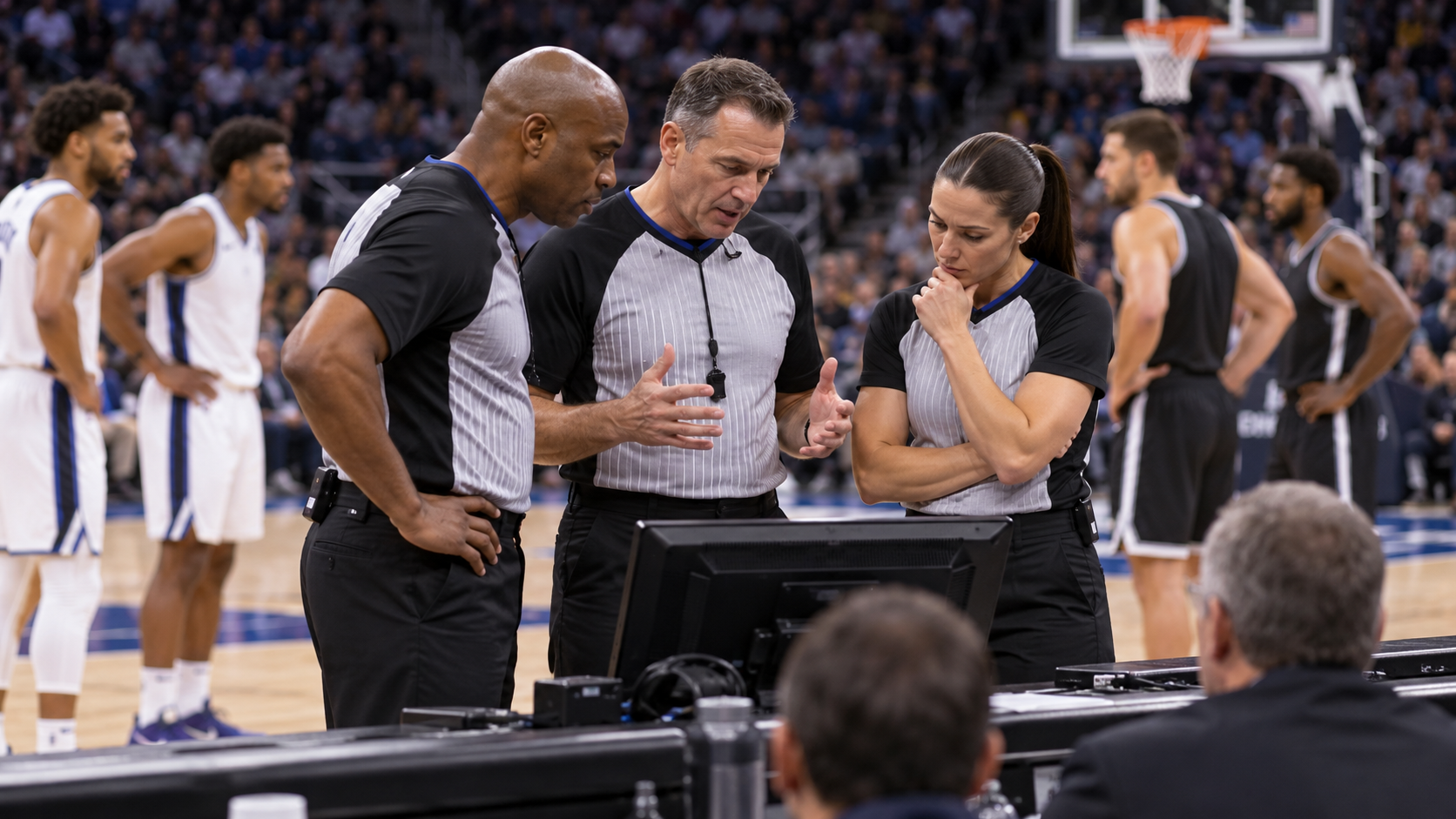
How NBA Correctable Errors Work Explainer
An NBA correctable error is a narrowly defined administrative or officiating mistake that may be repaired after play has moved on. Examples include awarding an unmerited free throw, failing to award a merited free throw, allowing the wrong player to attempt one, or incorrectly counting or cancelling a score.
The error must be discovered within the rule's time limit, generally before the second live ball after the mistake. If officials recognize it in time, they stop play at the first neutral opportunity unless an immediate stoppage would erase a developing scoring chance or unfairly interrupt possession.
The correction depends on what went wrong. An improper free throw and related ordinary activity may be cancelled, a missed free throw may be administered, or the score may be adjusted. Unsportsmanlike acts, flagrant fouls, and points arising from them are not simply erased with routine play.
After the repair, the game returns to the point of interruption with the appropriate possession, clocks, and lineup. The rule is not a general license to reconsider judgment calls. It exists so a limited set of objectively identifiable mistakes can be fixed without endlessly reopening earlier action.
No. Only the specific error categories named in the rule may be corrected this way.
The rule uses a short live-ball deadline, generally before the second live ball after the error.
No. Those acts and their resulting points are preserved under the rule.
Explore more "Explainers"
Discover additional explainers across politics, science, business, technology, and other fields. Each explainer breaks down a complex idea into clear, everyday language—helping you better understand how major concepts, systems, and debates shape the world around us.