

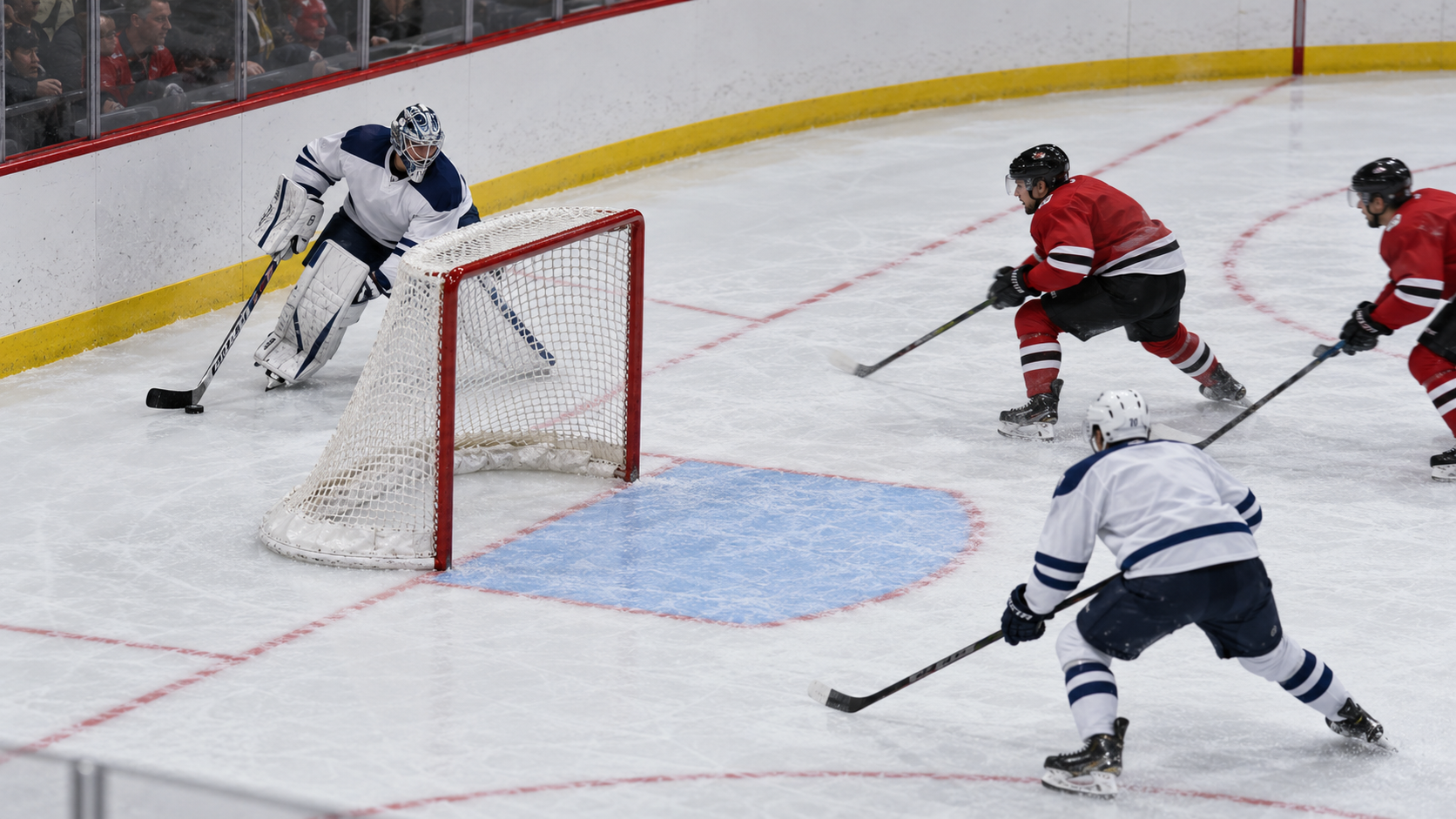
How the NHL Goaltender Trapezoid Works Explainer
The NHL goaltender trapezoid is the marked area behind each net where a goalie may legally play the puck below the goal line. Its diagonal boundary lines extend from the goal line toward the end boards, creating a wider permitted space at the boards than beside the net.
A goalkeeper may handle the puck anywhere in front of the goal line and behind the line inside the trapezoid. Playing it behind the goal line outside that area, including in the corner-side restricted zones, produces a minor penalty for delay of game.
The location of the puck, not merely the goalie's skates, controls the ruling. A goalie can stand partly outside the trapezoid while reaching to a puck that remains legally inside it. Conversely, contact with a puck outside the boundary can be illegal even if the goalie is positioned within the marked area.
The restriction discourages goaltenders from repeatedly stopping dump-ins before forecheckers can compete for them. Officials watch the exact point of contact and whether the puck is below the goal line. The rule affects strategy by making corner retrievals more likely to involve defensemen and pursuing forwards.
Yes, when the puck is inside the marked trapezoid behind the goal line.
The puck's location at contact, rather than only the position of the goaltender's skates.
Illegal handling outside the trapezoid is a minor penalty for delay of game.
Explore more "Explainers"
Discover additional explainers across politics, science, business, technology, and other fields. Each explainer breaks down a complex idea into clear, everyday language—helping you better understand how major concepts, systems, and debates shape the world around us.