

How Standing Counts Work in Amateur Boxing Explainer
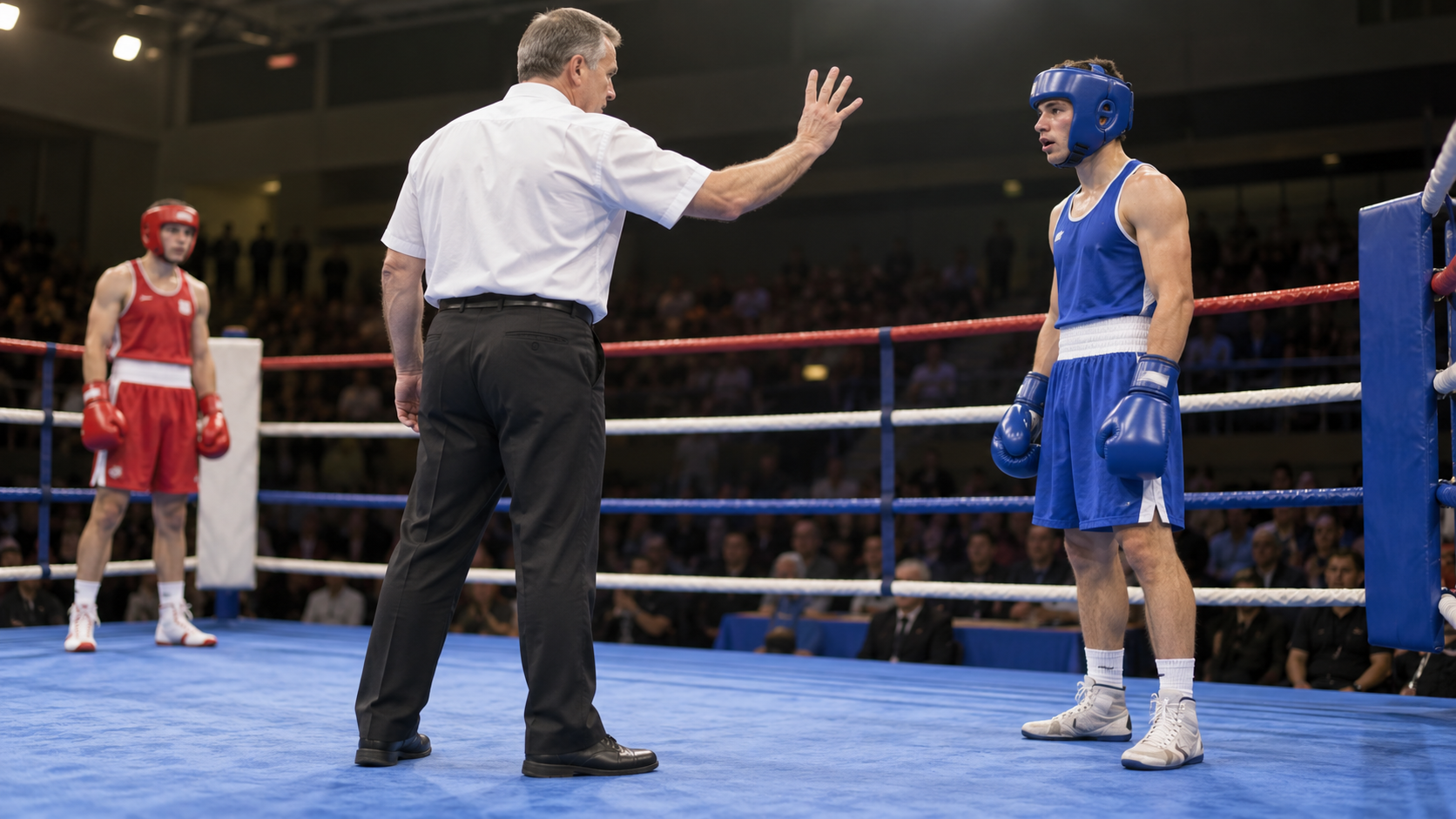
In amateur-style boxing, a referee can give a standing count when a boxer appears seriously affected by legal blows even though no knee, glove, or other body part has touched the canvas. The count pauses the exchange and lets the referee assess whether the boxer can safely continue.
The opponent is directed to a neutral corner while the timekeeper assists with the count. The referee observes balance, focus, responsiveness, guard, and ability to follow instructions. Reaching eight does not automatically end the bout; it creates a structured minimum evaluation period.
If the boxer is fit at eight, action may resume. If the boxer cannot continue safely by ten, or the referee decides continued boxing is unsafe at any point allowed by the rules, the contest ends. Competition rules can also limit the number of counts in a round or bout.
Professional jurisdictions vary and may not use a standing eight count, so the competition's rule set matters. In amateur boxing the device is primarily protective, not a scoring bonus by itself. Judges still score the round under the governing system while the referee controls safety.
Not in amateur-style rules that authorize a standing count for a boxer affected by blows.
No. The referee assesses fitness to continue at that point.
No. Professional rules vary by jurisdiction and sanctioning authority.
Explore more "Explainers"
Discover additional explainers across politics, science, business, technology, and other fields. Each explainer breaks down a complex idea into clear, everyday language—helping you better understand how major concepts, systems, and debates shape the world around us.