

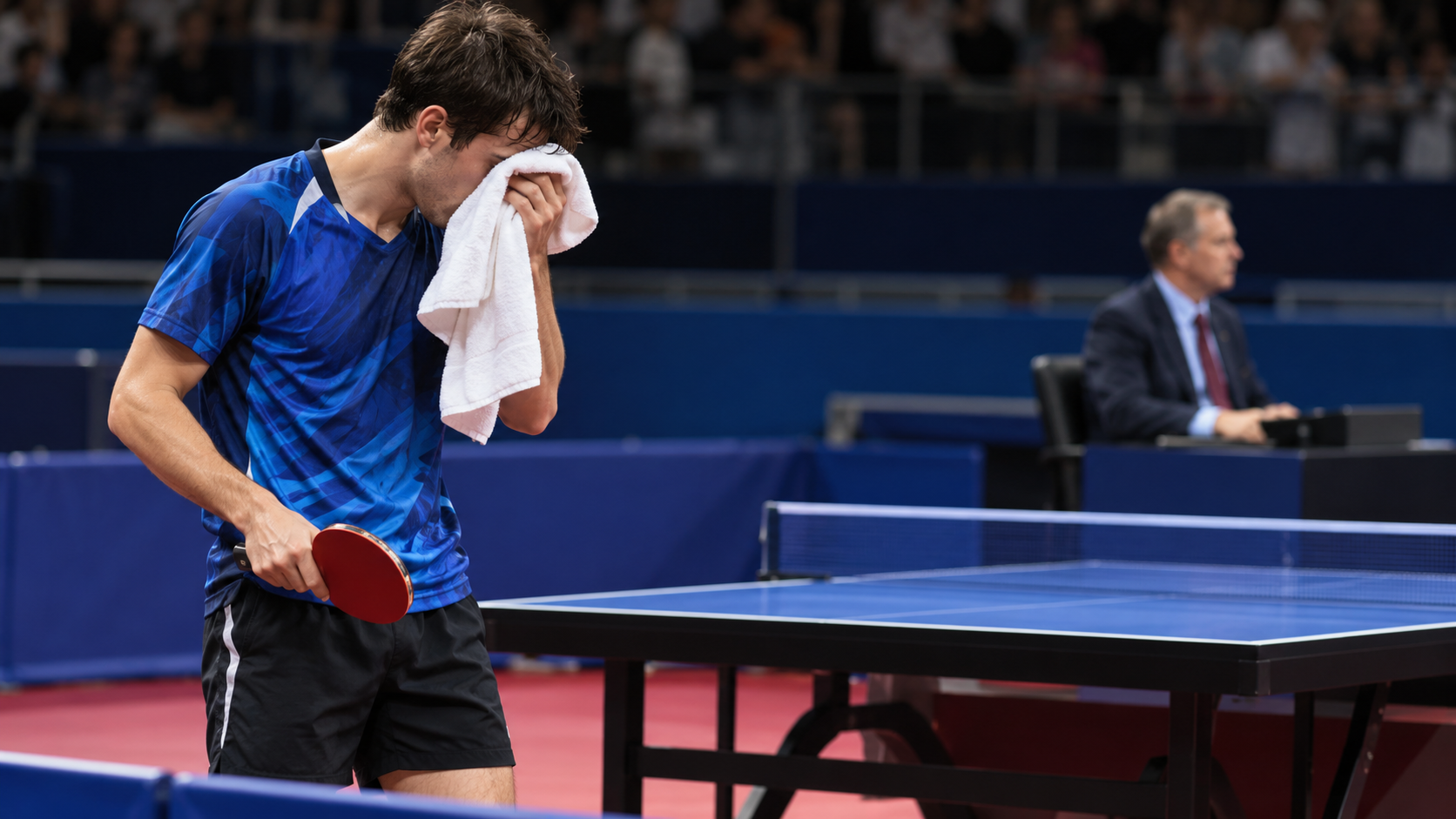
How Towelling Breaks Work in Table Tennis Explainer
Competitive table tennis permits short towelling intervals after every six points from the start of each game. The sequence follows the total points played, so possible opportunities arise at 6, 12, 18, and later multiples, regardless of which player scored them.
Players may also towel at the change of ends in the final possible game of a match. The interval is brief and supervised; it is not an extra tactical timeout. The ball is often left with the umpire or kept visible while the player steps to the court surround.
Outside those moments, a player generally cannot interrupt the rhythm simply to towel. An umpire may allow necessary attention for sweat on equipment or a genuinely unsafe playing surface, but routine comfort does not create an unscheduled break. Separate timeout and injury provisions have their own requirements.
The six-point pattern balances continuous play with grip and safety in a fast indoor sport. Officials track the score, signal readiness to resume, and prevent coaching or delay from extending the pause. Players plan hydration and equipment care around these predictable windows.
After every six points from the start of a game.
No. The interval is based on the combined score.
No. It is a brief scheduled interval with no separate tactical-timeout right.
Explore more "Explainers"
Discover additional explainers across politics, science, business, technology, and other fields. Each explainer breaks down a complex idea into clear, everyday language—helping you better understand how major concepts, systems, and debates shape the world around us.