

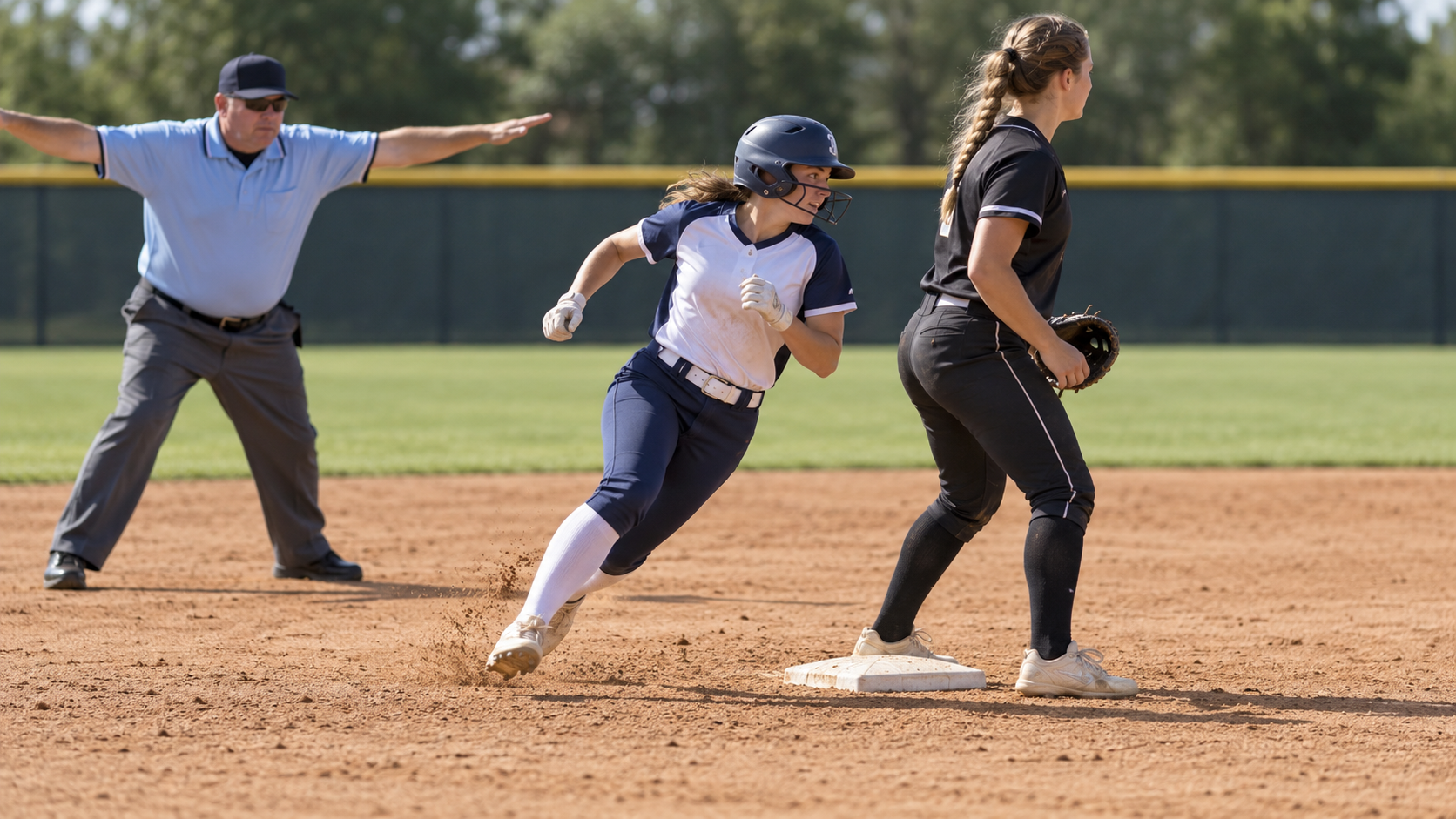
How Obstruction Works in Softball Explainer
Softball obstruction occurs when a defensive player who is not fielding a batted ball and does not possess the ball impedes a batter-runner or runner. Blocking a base, changing the runner's path, or creating hesitation can qualify even when the two players never make physical contact.
The umpire signals obstruction and applies the correct delayed-dead-ball or immediate-dead-ball procedure for the play. When action is allowed to continue, the runner may attempt further bases, while the umpire observes what would likely have happened without the illegal impediment.
At the end of play, the obstructed runner is placed at least on the base the umpire judges would have been reached. Other runners may also be placed to preserve the likely result. A runner who advances beyond that protection can still be put out on a later, unrelated play.
A defender actively fielding a batted ball has priority, so a collision in that situation may instead be runner interference. Umpires evaluate possession, the ball's path, defensive action, and the runner's route. The rule protects access to bases without granting runners unlimited immunity.
No. Forcing a runner to slow, stop, or change path can be enough.
No. The umpire awards the base or bases likely reached without the obstruction.
Yes. A fielder actively fielding a batted ball has priority under the interference rules.
Explore more "Explainers"
Discover additional explainers across politics, science, business, technology, and other fields. Each explainer breaks down a complex idea into clear, everyday language—helping you better understand how major concepts, systems, and debates shape the world around us.