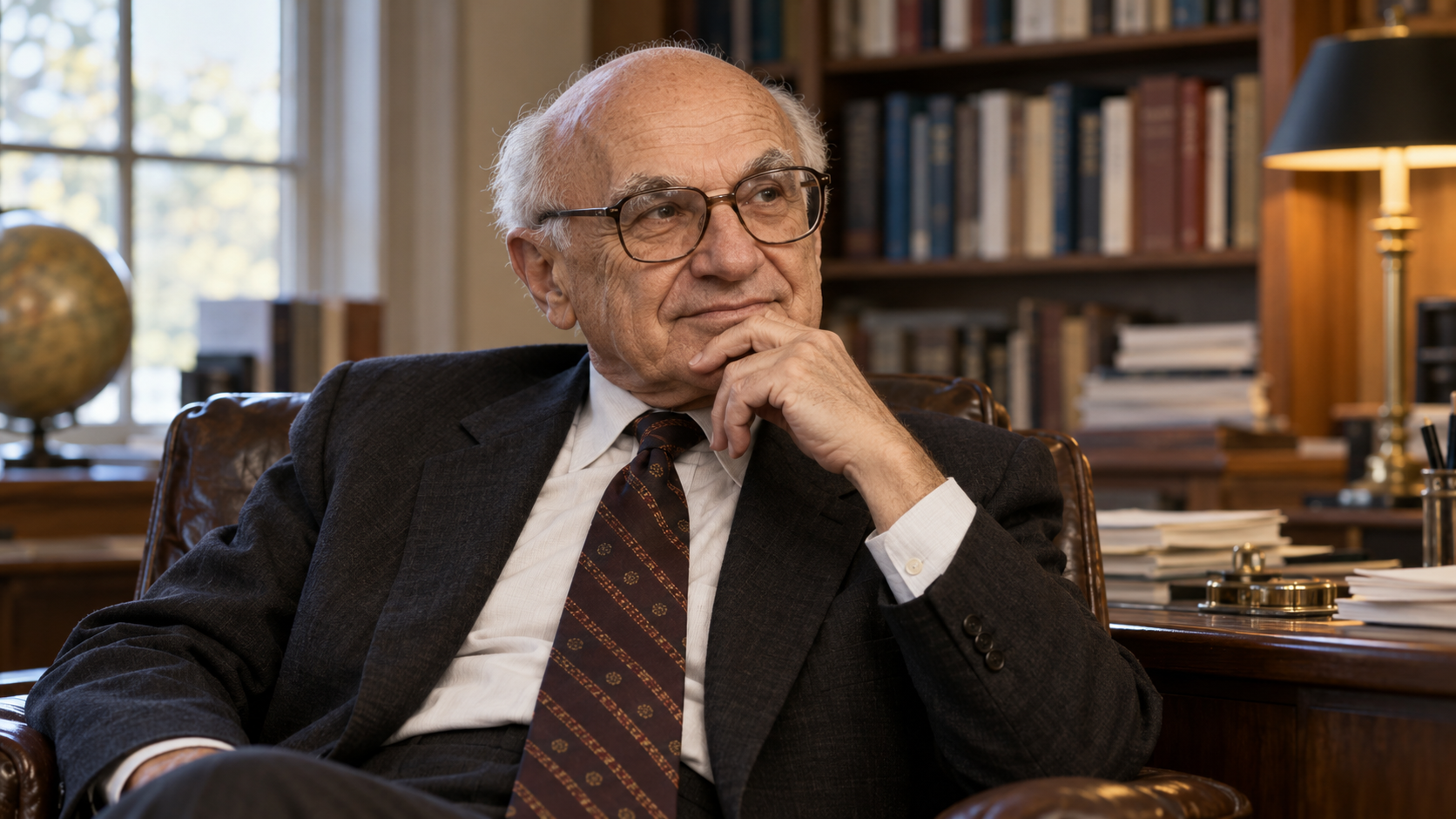
Milton Friedman, 1970
Friedman’s shareholder-centered challenge still tests how companies explain profit, authority, stakeholder duties, and durable value.

Don't Just Read it – Explore It
Friedman’s shareholder-centered challenge still tests how companies explain profit, authority, stakeholder duties, and durable value.
Harris explains why excellent work builds credibility while trusted relationships make advocacy and advancement possible.
Ulukaya’s anti-CEO rule places employee care inside the operating model as the foundation for customer and financial success.
Polman argues that business must help strengthen the social and environmental systems on which enterprise itself depends.
Joly treats profit as essential evidence of viability, but not the answer to why a business deserves to exist.
Andreessen’s thesis made software a strategic force—and today demands equal attention to capability, governance, and human consequence.
Graham’s startup motto directs attention away from performance and toward the only durable evidence: genuine user demand.
Ries defines competitive speed as validated learning: test the riskiest assumption and convert evidence into a decision.
Catmull’s Pixar lesson makes the team—not the pristine starting idea—the real engine of creative quality.
Grove’s strategic paranoia is disciplined vigilance: examine the assumptions that success makes easiest to overlook.
Morita warned that innovation stalls when thought is centralized and frontline knowledge cannot shape decisions.
Inamori’s formula treats performance as the interaction of capability, application, and the direction in which both are used.