

On This Day in AI: January 8, 2019
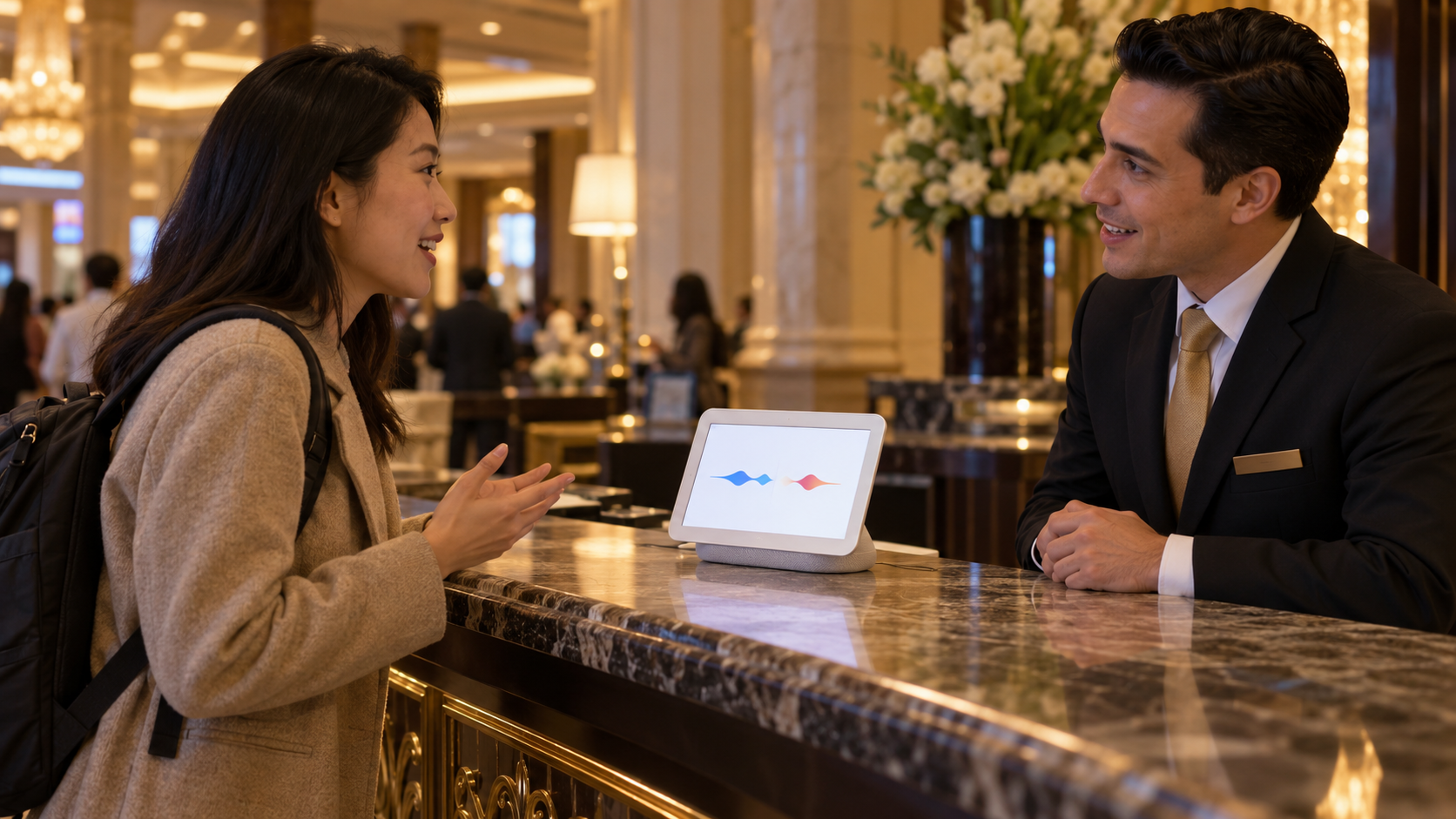
On January 8, 2019, at the Consumer Electronics Show in Las Vegas, Google announced Interpreter Mode for Google Assistant. The feature turned compatible Google Home speakers and smart displays into tools for two-way spoken translation. A user could ask the Assistant to act as an interpreter for a chosen language, speak a sentence, and hear the translation aloud; on a smart display, the translated words also appeared on screen. Google said the initial system would work across dozens of languages, while contemporary reporting described support for 27 at launch. The company demonstrated the service at the concierge desk in Caesars Palace and announced pilots at the Hyatt Regency in San Francisco and Dream Downtown in New York, placing the technology in settings where travelers and staff regularly faced language barriers.
Machine translation was already common in websites and phone apps, and Google Assistant could translate individual words or short phrases. Sustaining a conversation was a different problem. The system had to recognize speech in changing accents and noisy rooms, identify turns between speakers, translate in both directions and produce a response quickly enough to preserve the flow of an exchange. Smart displays added a useful visual channel, allowing participants to read a translation when pronunciation or background noise made the audio uncertain. By presenting the capability through a familiar voice assistant instead of a specialist tool, Google framed language AI as part of ordinary customer service and travel rather than a separate technical task.
The announcement did not make machine interpretation equivalent to a skilled human interpreter. Accuracy could vary with vocabulary, dialect, sound quality and context, and a cloud-connected assistant introduced privacy concerns when sensitive conversations were involved. The first demonstrations were limited pilots, not proof that the service could handle every hotel request or high-stakes exchange. Google later expanded Interpreter Mode to more devices and venues, including phones and airline lounges, while continuing to update language coverage. Its January 8 debut nevertheless marked an important shift in consumer AI: real-time translation moved from a typed utility toward an ambient, multimodal service embedded in rooms people already used. It also tested a social design problem: two people had to understand when to speak, pause and trust the device’s response, so interface cues mattered alongside model accuracy. The feature showed how speech recognition, translation, synthesis and interface design could be combined into one practical interaction, while keeping the need for human judgment clear when precision and confidentiality mattered most.
A user began by asking Google Assistant to interpret a selected language. The system listened to one speaker, translated the utterance, played the result aloud and then handled the reply in the opposite direction.
Smart displays supplemented speech with written translations. That visual feedback helped participants confirm names, numbers and phrases when a noisy lobby or unfamiliar pronunciation made audio alone difficult.
Hotel concierges routinely answer short, practical questions from international travelers. Check-in details, directions and local recommendations offered a clear setting for testing whether conversational translation could reduce friction.
The pilots also exposed real constraints: background noise, proper names, regional accents and requests involving private information. The feature remained an aid, not a substitute for trained interpreters in legal, medical or other high-stakes settings.
Interpreter Mode combined automatic speech recognition, machine translation, speech synthesis and a visual interface. The experience depended on several AI systems working quickly enough to feel like one service.
Later expansion brought the concept to phones, airports and more smart displays. The launch helped establish real-time translation as a mainstream assistant function while highlighting continuing questions about accuracy, connectivity and privacy.
Explore more of "On This Day ..."
Discover more events from the same date across news, politics, technology, sports, and other fields. Each link highlights significant moments that shaped history on different fronts.