

On This Day in AI: January 9, 2018
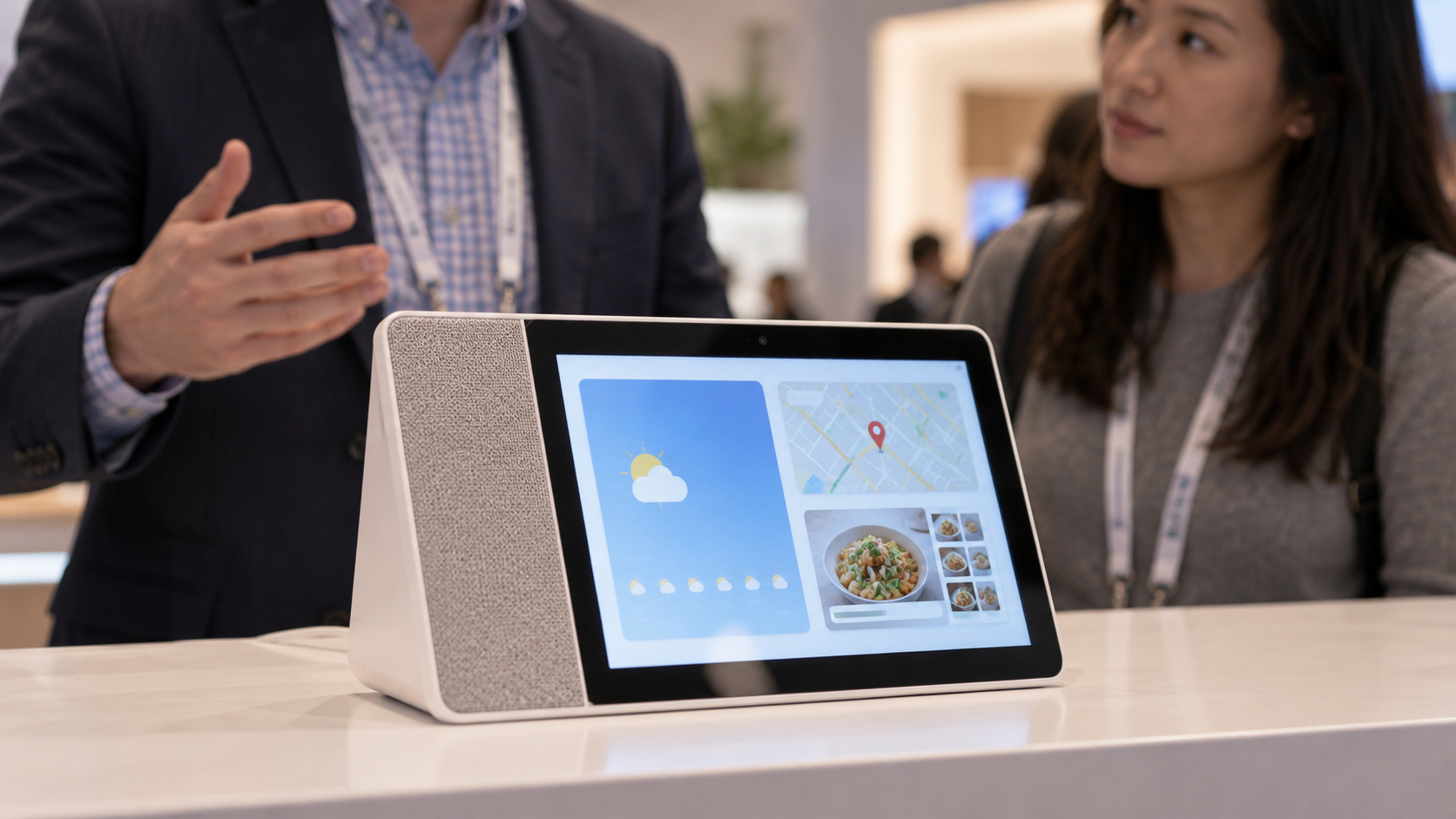
On January 9, 2018, at CES in Las Vegas, Google and several hardware partners introduced a new class of Google Assistant-powered smart displays. Google announced that the Assistant would come to touchscreen devices from JBL, Lenovo, LG and Sony, while Lenovo detailed eight-inch and ten-inch models built on Qualcomm’s Home Hub platform. The products combined the conversational controls popularized by smart speakers with a visual surface for maps, videos, photos, recipes, calendars and video calls. A person could ask a question by voice and receive both a spoken answer and relevant information on screen, or switch to touch when tapping was easier. The announcements made clear that consumer assistants were moving beyond audio-only cylinders into shared household interfaces.
Voice assistants had spread rapidly through phones and speakers, but sound alone imposed practical limits. A recipe is easier to follow when each step remains visible; directions are clearer with a map; a video call requires a camera and screen; and a home-security alert benefits from a live image. Google supplied the Assistant and connected services, while its partners experimented with form, speaker placement and display size. Lenovo’s model used an angled body that could stand on a counter in landscape or portrait orientation, with the speaker beside the screen. The companies presented these devices as command centers for connected lights, thermostats and cameras as well as access points for Google Photos, YouTube, Duo and Maps.
The January announcement was a product introduction, not the moment consumers could immediately buy every model. The first Lenovo Smart Displays reached United States stores in July 2018, and other partner devices followed. Their arrival also sharpened questions about microphones, cameras, account personalization and what should appear on a screen shared by a household. Designers had to decide when a voice request should reveal private calendar information, how multiple family members would be recognized and whether cameras needed visible physical controls. The category faced competition from Amazon’s Echo Show and later from Google’s own Home Hub. Even where individual models changed or disappeared, the interface pattern endured. Smart displays established that an AI assistant could coordinate voice, touch and visual context in one place, anticipating the multimodal systems that now move among speech, images and text. Later household hubs kept refining this balance between convenience, shared access and visible feedback. CES 2018 therefore marked more than another gadget cycle: it made the screen a central part of how conversational AI entered kitchens, bedrooms and shared living spaces.
Smart speakers could answer questions and control connected devices, but a touchscreen added persistent visual context. Maps, recipes, photographs and video calls became practical without requiring a phone in hand.
The interface remained voice-first while allowing touch when it was faster or clearer. That combination made the device a shared household appliance rather than simply a speaker with a decorative screen.
Google supplied Assistant software and services while JBL, Lenovo, LG and Sony developed hardware. Lenovo announced eight-inch and ten-inch models using Qualcomm's Home Hub platform.
The approach let several manufacturers test different shapes, speakers and room placements. It also positioned Google against Amazon's Echo Show without requiring Google to launch its own display at CES.
Retail availability came later in 2018, so January 9 was an introduction rather than a same-day consumer launch. The distinction matters when tracing how quickly a demonstration became a household product.
The category helped normalize assistants that move among spoken requests, visual answers and touch controls. It also made privacy, camera use and shared-account design central parts of consumer AI.
Explore more of "On This Day ..."
Discover more events from the same date across news, politics, technology, sports, and other fields. Each link highlights significant moments that shaped history on different fronts.