

March 10, 2016: AlphaGo Plays Move 37
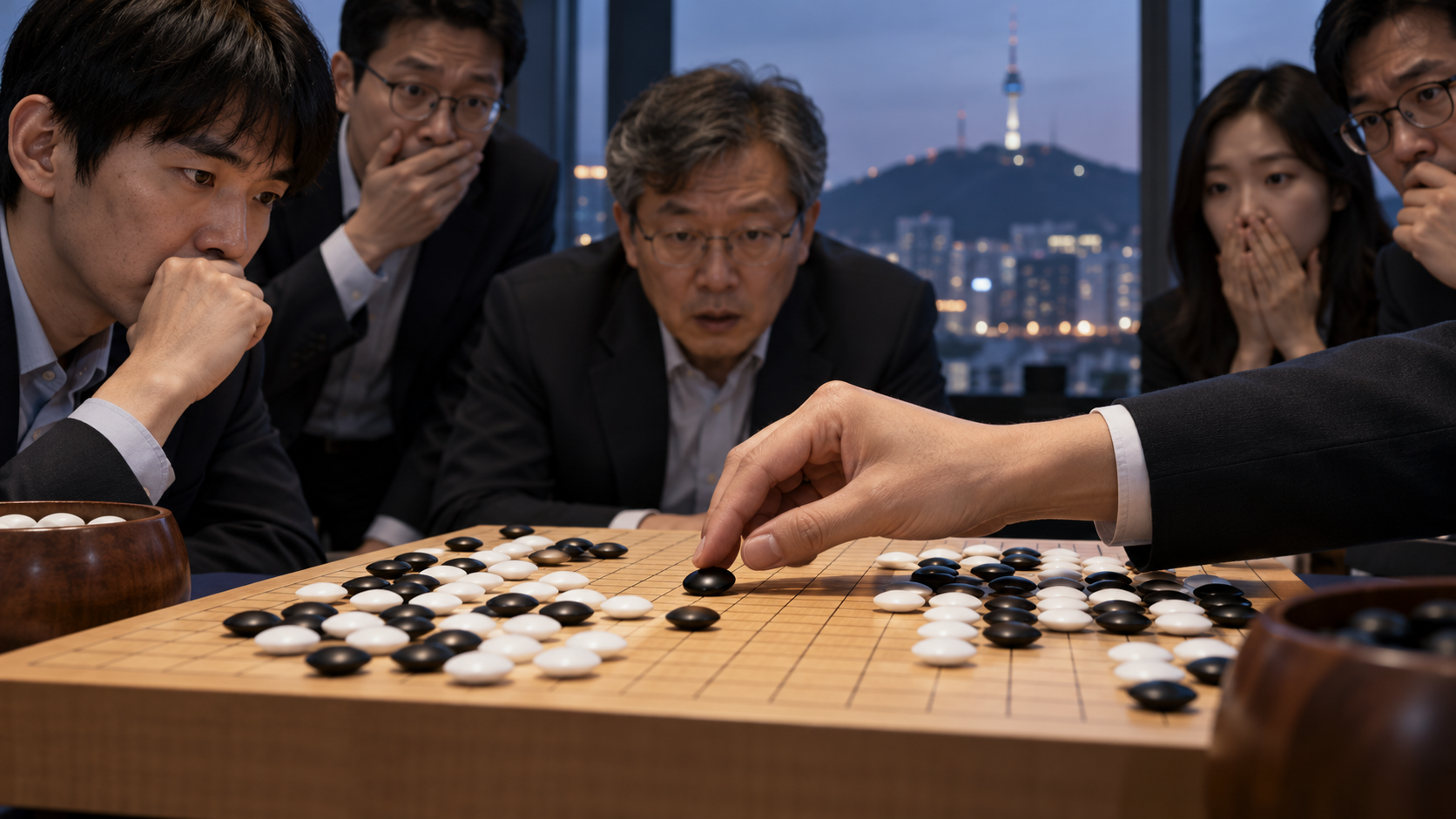
On March 10, 2016, AlphaGo won the second game of its match with Lee Sedol after playing an extraordinary shoulder hit on move 37. Commentators initially considered the placement strange, but it became a decisive example of a machine discovering a strategically powerful idea outside the patterns favored by elite human players. Go expertise is built through generations of studied openings and an intuitive sense of balance across the board. Although AlphaGo had learned from human games, its reinforcement-learning phase also played millions of games against itself, allowing it to explore possibilities that tradition rarely tested. The date matters because it turned a fast-moving technical or policy development into a visible milestone that people, institutions, and researchers could evaluate.
The substance of AlphaGo’s celebrated Move 37 in its second game against Lee Sedol was as important as the headline. The move landed on the fifth line, farther from the edge than professional convention recommended at that stage. DeepMind later estimated that a human would choose it only about once in ten thousand positions. Lee left the room to think, and the game continued for hours before he resigned. Those choices reveal what the people behind the milestone believed was necessary at the time. AI history rarely advances through one breakthrough alone; research, product design, infrastructure, governance, and access all shape what a system can become.
The immediate consequences reached beyond the organization at the center of the event. Move 37 changed the meaning of the match from machine imitation to machine creativity. Players around the world analyzed it, adopted new opening ideas, and reconsidered assumptions once treated as settled. The moment also offered a concrete answer to people who believed learned systems could only repeat patterns in their data. The moment also invited scrutiny, because new capabilities create new dependencies. Reliability, safety, cost, privacy, and human control determine whether an impressive demonstration becomes a trustworthy part of everyday life.
In retrospect, The move remains one of AI history’s most recognizable individual decisions. It showed that systems combining prediction, search, and self-play could produce useful novelty, while reminding researchers that understanding why a model succeeds may lag behind observing that it has found something experts overlooked. Looking back from today’s rapidly changing AI landscape, this event belongs to a larger transition from specialized machine-learning experiments to systems embedded in ordinary products, workplaces, institutions, and public decisions. Its enduring lesson is that technical progress becomes historically significant when it changes what people can do and what society expects next. That connection between capability and consequence gives the milestone its lasting relevance.
AlphaGo won the second game of its match with Lee Sedol after playing an extraordinary shoulder hit on move 37. Commentators initially considered the placement strange, but it became a decisive example of a machine discovering a strategically powerful idea outside the patterns favored by elite human players.
The move landed on the fifth line, farther from the edge than professional convention recommended at that stage. DeepMind later estimated that a human would choose it only about once in ten thousand positions. Lee left the room to think, and the game continued for hours before he resigned.
Move 37 changed the meaning of the match from machine imitation to machine creativity. Players around the world analyzed it, adopted new opening ideas, and reconsidered assumptions once treated as settled. The moment also offered a concrete answer to people who believed learned systems could only repeat patterns in their data.
The event connected a concrete technical, commercial, or policy decision with the wider development of artificial intelligence.
The move remains one of AI history's most recognizable individual decisions. It showed that systems combining prediction, search, and self-play could produce useful novelty, while reminding researchers that understanding why a model succeeds may lag behind observing that it has found something experts overlooked.
Its influence can be traced through later products, research, governance, or industry practice.
Explore more of "On This Day ..."
Discover more events from the same date across news, politics, technology, sports, and other fields. Each link highlights significant moments that shaped history on different fronts.