

On This Day in AI: April 5, 2023
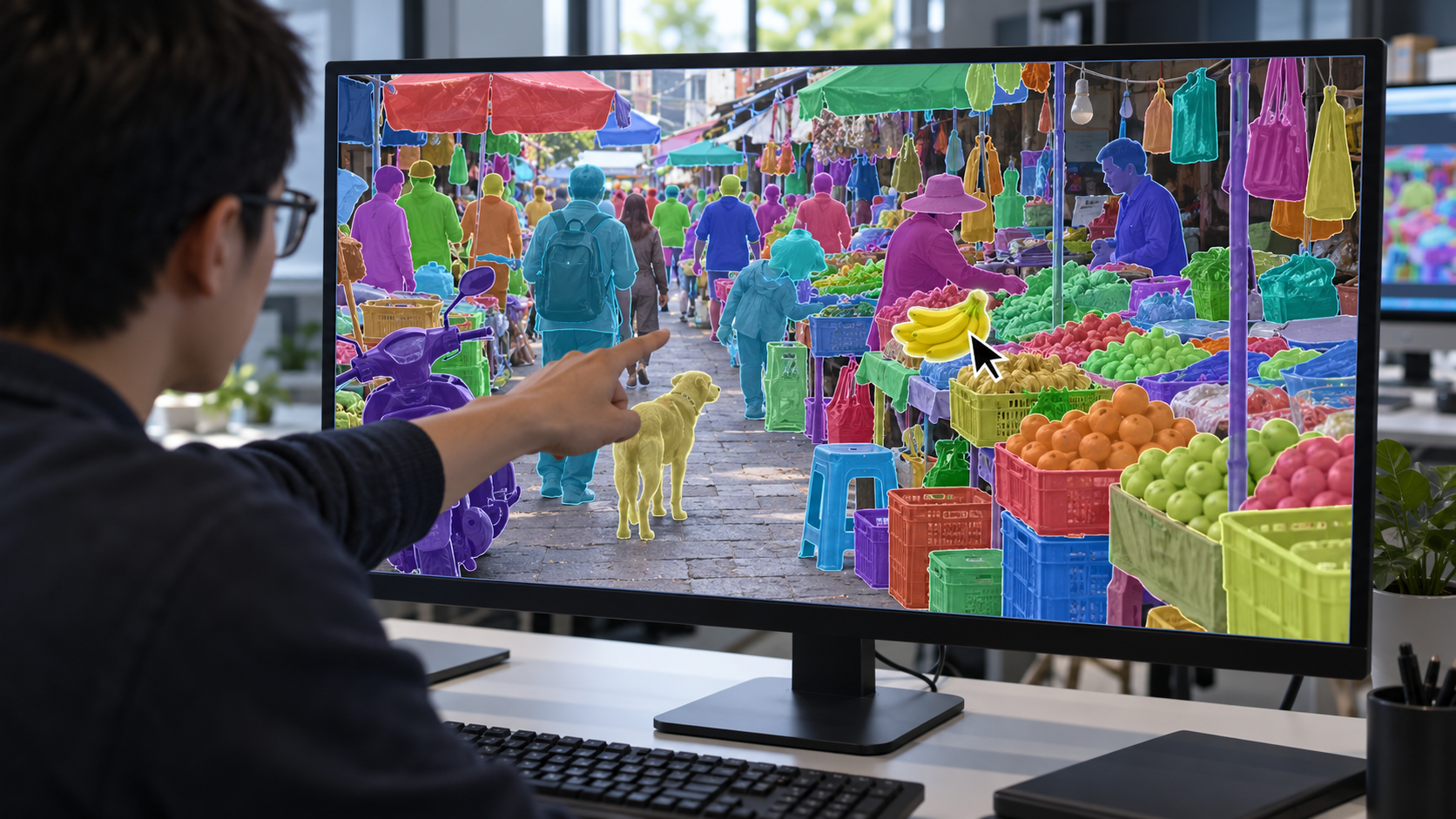
On April 5, 2023, Meta released the Segment Anything Model, or SAM, together with a dataset containing more than one billion masks from eleven million images. The promptable vision system could identify and cut out objects from points, boxes, or rough guidance, often transferring to unfamiliar image types without task-specific retraining. Image segmentation traditionally required specialists to collect labeled examples for each domain and train a dedicated model. That limited the use of precise object masks in creative tools, scientific images, mapping, accessibility, and other settings where annotated data was scarce. The date matters because it turned a fast-moving technical or policy development into a visible milestone that people, institutions, and researchers could evaluate.
The substance of Meta’s release of the Segment Anything Model was as important as the headline. SAM separated image encoding from lightweight prompt-based mask prediction, allowing the expensive visual computation to be reused for many selections. Meta released model code, weights, and the SA-1B dataset, while applying privacy measures and licensing restrictions to the research corpus. Those choices reveal what the people behind the milestone believed was necessary at the time. AI history rarely advances through one breakthrough alone; research, product design, infrastructure, governance, and access all shape what a system can become.
The immediate consequences reached beyond the organization at the center of the event. The model made high-quality segmentation feel interactive and general-purpose. Developers quickly incorporated it into annotation pipelines, photo editing, medical experiments, robotics, and video tools, reducing the manual effort required to turn raw pixels into structured objects. The moment also invited scrutiny, because new capabilities create new dependencies. Reliability, safety, cost, privacy, and human control determine whether an impressive demonstration becomes a trustworthy part of everyday life. Those practical limits are essential to understanding both the achievement and the response it received.
In retrospect, SAM helped establish the idea of a foundation model for computer vision rather than only for language. Later variants expanded speed and video tracking, but the original release remains important for showing how prompts and large-scale data could turn a specialist vision task into reusable infrastructure. Looking back from today’s rapidly changing AI landscape, this event belongs to a larger transition from specialized machine-learning experiments to systems embedded in ordinary products, workplaces, institutions, and public decisions. Its enduring lesson is that technical progress becomes historically significant when it changes what people can do and what society expects next. That connection between capability and consequence gives the milestone its lasting relevance. The anniversary therefore records a turning point, not simply an announcement.
Meta released the Segment Anything Model, or SAM, together with a dataset containing more than one billion masks from eleven million images. The promptable vision system could identify and cut out objects from points, boxes, or rough guidance, often transferring to unfamiliar image types without task-specific retraining.
SAM separated image encoding from lightweight prompt-based mask prediction, allowing the expensive visual computation to be reused for many selections. Meta released model code, weights, and the SA-1B dataset, while applying privacy measures and licensing restrictions to the research corpus.
The model made high-quality segmentation feel interactive and general-purpose. Developers quickly incorporated it into annotation pipelines, photo editing, medical experiments, robotics, and video tools, reducing the manual effort required to turn raw pixels into structured objects.
The event connected a concrete technical, commercial, or policy decision with the wider development of artificial intelligence.
SAM helped establish the idea of a foundation model for computer vision rather than only for language. Later variants expanded speed and video tracking, but the original release remains important for showing how prompts and large-scale data could turn a specialist vision task into reusable infrastructure.
Its influence can be traced through later products, research, governance, or industry practice.
Explore more of "On This Day ..."
Discover more events from the same date across news, politics, technology, sports, and other fields. Each link highlights significant moments that shaped history on different fronts.