

On This Day in Business: January 6, 1926
On January 6, 1926, Deutsche Aero Lloyd and Junkers Luftverkehr were combined in Berlin to form Deutsche Luft Hansa AG. The new company was created at the Hotel Kaiserhof after the German transport ministry pressed for consolidation in a crowded, financially fragile airline market. Both predecessors had developed routes and technical experience, but civil aviation still depended heavily on public support and faced high operating risks. Bringing the two largest German operators together pooled aircraft, staff, route rights and subsidies in a national company. The firm entered Berlin’s commercial register later that month, while January 6 remained the date of the merger and corporate formation.
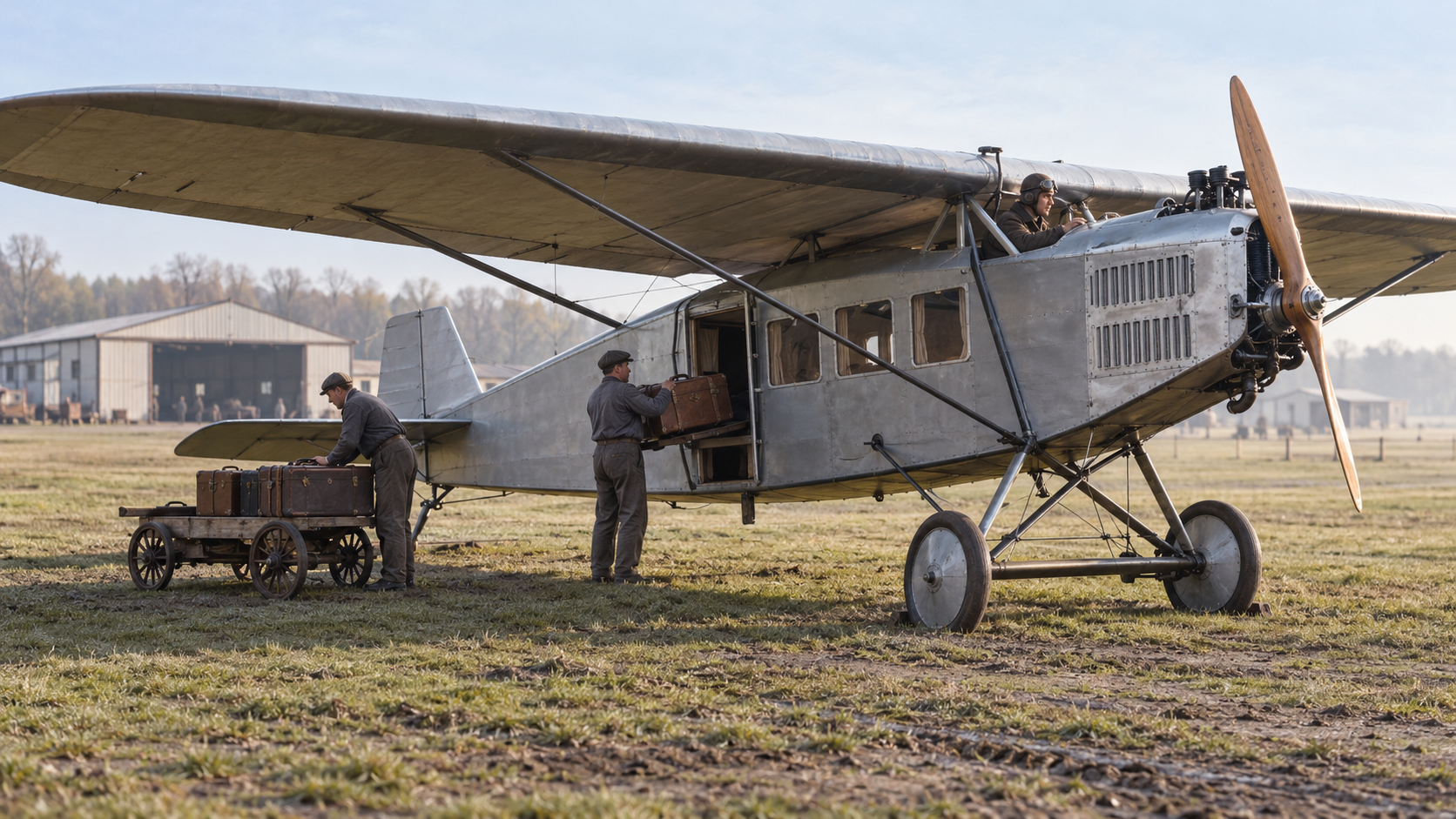
The merged carrier carried visible pieces of both predecessors. It adopted the stylized crane associated with Deutsche Aero Lloyd and the blue-and-yellow colors used by Junkers. Its fleet included a wide variety of small aircraft rather than the standardized jets associated with later airlines. Scheduled operations began on April 6, 1926, from Berlin-Tempelhof, with services toward Cologne and Zurich. The delay between formation and first scheduled flights is important: January 6 established the business, while April 6 began its operating timetable. By summer the company was already running dozens of routes, and its first-year aircraft inventory reflected the scale created by combining the two networks.
The business logic went beyond passenger tickets. Early airlines carried mail and freight, tested new night routes and cooperated with foreign carriers to extend service beyond national borders. Airports, weather information, radio navigation and maintenance systems all had to grow alongside the route map. Consolidation gave Deutsche Luft Hansa a larger platform from which to spread those fixed costs and negotiate with government authorities. It also reduced direct competition between two subsidized firms. The company’s early expansion illustrates how commercial aviation developed through a mixture of private enterprise, industrial manufacturers and state policy rather than through ticket revenue alone.
The name’s later history requires a clear qualification. The first Luft Hansa became closely tied to the Nazi state after 1933, participated in the regime’s aviation and military system and used forced labor during the Second World War. It was grounded, banned and eventually liquidated after Germany’s defeat. The present-day Lufthansa was established in West Germany in 1953 and is not the legal successor of the 1926 company, even though it adopted the name and visual heritage. January 6 therefore marks the creation of the interwar carrier, not an uninterrupted corporation lasting to the present. Its commercial importance lies in the consolidation of German civil aviation and the network model it built; its legacy also includes the institutional break and historical responsibility that followed.
Germany’s young airline market contained many small operators with high costs and substantial reliance on public support. The transport ministry pushed its two largest carriers toward consolidation.
Deutsche Aero Lloyd contributed the crane symbol, while Junkers supplied blue-and-yellow colors and major operating assets. Their merger created Deutsche Luft Hansa AG in Berlin.
The company formed on January 6, 1926, but did not begin scheduled flights until April 6. Its first services departed Berlin-Tempelhof for Cologne and Zurich routes.
Passenger fares were only part of the model. Mail, freight, government support, foreign partnerships and shared technical infrastructure were essential to early commercial aviation.
The first Luft Hansa expanded rapidly, but after 1933 it became involved with the Nazi regime and later used forced labor. The company was liquidated after the war.
Modern Lufthansa was founded in 1953 and is legally separate. The shared name and crane create brand continuity, but they do not make the present company an uninterrupted legal successor.
Explore more of "On This Day ..."
Discover more events from the same date across news, politics, technology, sports, and other fields. Each link highlights significant moments that shaped history on different fronts.