

On This Day in Business: January 20, 2009
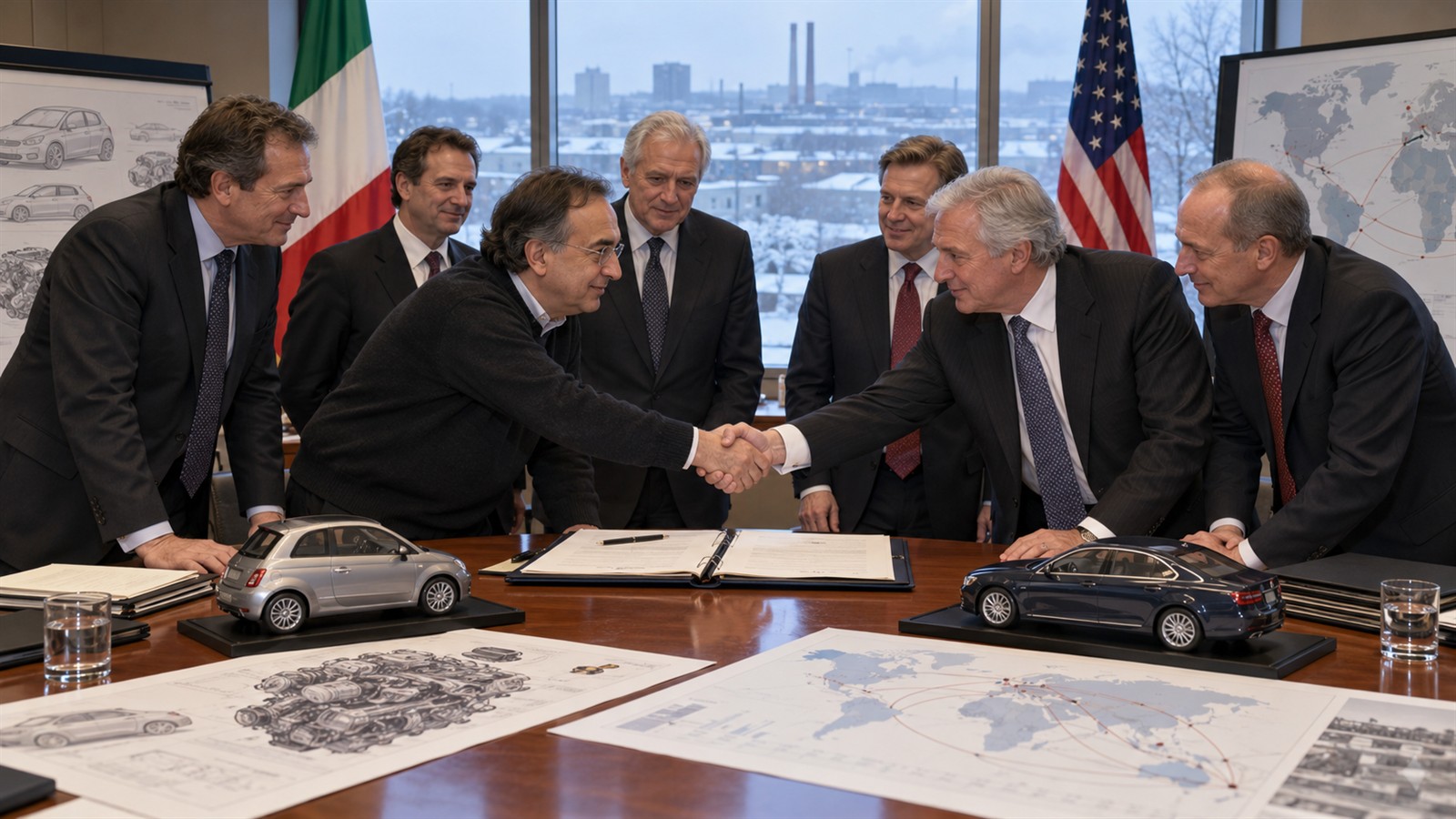
On January 20, 2009, Fiat S.p.A., Chrysler LLC and Chrysler's majority owner, Cerberus Capital Management, announced a nonbinding letter of intent to form a global strategic alliance. The proposal arrived in the depths of the financial crisis, when collapsing vehicle sales and scarce credit threatened Chrysler's survival. Under the plan, Fiat would receive an initial 35 percent equity interest in Chrysler in exchange for technology, products and market access rather than cash. The announcement was not a completed merger. It was a framework for combining complementary assets while Chrysler pursued a broader restructuring and worked to satisfy conditions attached to U.S. government loans.
The industrial logic joined two companies with different strengths. Fiat had competitive small-car platforms, fuel-efficient engines, transmissions and a broad distribution presence in Europe and Latin America. Chrysler had factories, well-known North American brands and an extensive dealer network, but its lineup was heavily exposed to larger vehicles just as fuel economy and emissions were becoming more important. Fiat proposed sharing city- and compact-car architectures and producing some components in Chrysler plants. Chrysler, in turn, could give Fiat a path back into the United States and Canada without building an entire manufacturing and retail system from the ground up.
The proposed terms also revealed the limits of the initial commitment. Fiat was not expected to make a cash payment to Chrysler or assume an obligation to finance the company. That reduced Fiat's immediate risk but meant the alliance alone could not solve Chrysler's liquidity problem. Over the following months, negotiations became part of a government-backed bankruptcy reorganization. When the new Chrysler began operations in June 2009, Fiat initially held 20 percent, with opportunities to increase its stake after meeting technology, distribution and production milestones. The United Auto Workers retiree trust and the U.S. and Canadian governments held most of the remaining equity.
Fiat gradually increased its ownership and took full control of Chrysler in 2014, leading to Fiat Chrysler Automobiles and, years later, the creation of Stellantis through another combination. Those later outcomes can make the January announcement look inevitable, but it was made amid extraordinary uncertainty. Regulators, unions, lenders, dealers and taxpayers all influenced the final structure, and the original 35 percent concept changed before closing. January 20 matters as the first public blueprint for a transatlantic industrial partnership. It shows how an alliance can exchange technology, factories and distribution access when cash is scarce—and how crisis negotiations can turn a tentative letter of intent into a durable reshaping of the global auto industry.
The 2008 financial crisis drove vehicle sales down and tightened credit, leaving Chrysler dependent on government loans and a rapid restructuring plan.
Fiat brought small-car platforms, efficient powertrains and overseas distribution, while Chrysler offered North American factories, brands and dealers.
On January 20, 2009, Fiat, Chrysler and Cerberus announced a nonbinding letter of intent for a global strategic alliance.
Fiat would initially receive 35 percent of Chrysler in exchange for technology and market access, with no planned cash payment or financing commitment.
Bankruptcy negotiations changed the structure: the new Chrysler launched in June with Fiat at 20 percent and government and union stakeholders holding most equity.
Fiat later took full ownership, showing how a crisis-era exchange of capabilities could become a lasting consolidation of the global auto business.
Explore more of "On This Day ..."
Discover more events from the same date across news, politics, technology, sports, and other fields. Each link highlights significant moments that shaped history on different fronts.