

On This Day in Business: January 27, 2010
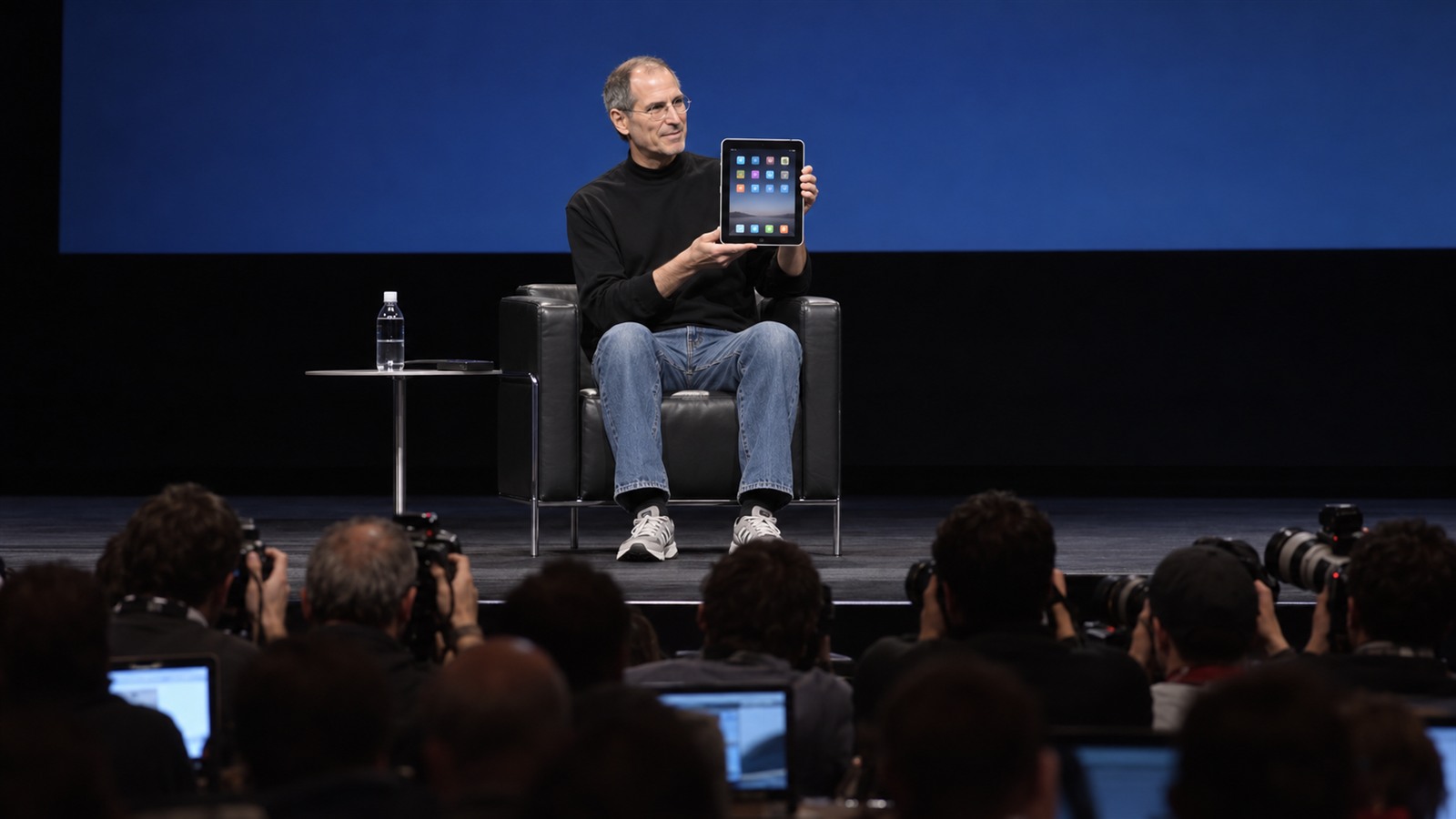
On January 27, 2010, Apple introduced the iPad at the Yerba Buena Center for the Arts in San Francisco. Chief executive Steve Jobs described it as a third category of mobile device positioned between the smartphone and the laptop. The thin slate used a 9.7-inch multitouch display, weighed about 1.5 pounds and started at $499 for a Wi-Fi model with 16 gigabytes of storage. Apple demonstrated web browsing, email, photographs, video, music, games and electronic books while emphasizing that users could hold the screen directly rather than operate through a keyboard and trackpad. The product was scheduled to reach U.S. stores in late March.
Tablet computers were not new, but Apple combined several assets that competitors had struggled to align. The company had already taught millions of iPhone owners to use multitouch gestures, built an App Store distribution channel and negotiated a large digital media catalog. Apple said the iPad would run almost all of the more than 140,000 iPhone applications already available, while developers could build interfaces specifically for the larger display. A custom A4 processor linked hardware performance and battery life to Apple's software design. Optional mobile-data models added connectivity without a conventional carrier contract, broadening the device's use away from Wi-Fi.
The announcement also revealed a content strategy. The new iBooks application and iBookstore placed Apple in competition with electronic readers and book retailers, while the existing iTunes ecosystem supported music, films, television and podcasts. Publishers, game developers and media companies gained another storefront but also became more dependent on Apple's review rules and revenue-sharing model. Skepticism remained: observers questioned the name, the lack of Adobe Flash, the absence of a camera and whether consumers needed a device between a phone and a notebook. The $499 entry price answered one major concern by undercutting many predictions.
Apple sold millions of iPads in the first year and made the tablet a mainstream computing category used in homes, schools, aircraft, hospitals and shops. Competitors quickly introduced alternatives, while software makers redesigned products for touch and larger mobile screens. The January 27 launch matters because Apple did more than reveal a piece of hardware. It activated an integrated system of chips, operating software, applications, digital stores, retail distribution and developer incentives. That combination lowered uncertainty for buyers and creators at the same time. The iPad demonstrates how a platform company can enter a previously uncertain market by carrying existing customer habits and commercial relationships into a device that feels new but arrives with an ecosystem already in motion.
Earlier tablet computers existed, but most were expensive, stylus-oriented or lacked a deep library of software designed for direct touch interaction.
Apple combined a 9.7-inch multitouch screen, custom A4 processor, roughly ten-hour battery target and a thin 1.5-pound enclosure.
On January 27, 2010, Steve Jobs introduced the iPad in San Francisco as a third category between smartphones and laptops.
A $499 starting price and compatibility with almost all 140,000 existing iPhone apps gave buyers immediate utility and developers a ready market.
The iBooks application and store extended Apple's content platform, while optional mobile data made the device useful beyond home Wi-Fi.
Rapid sales established a mass tablet category and showed the strategic advantage of launching hardware together with software, stores and developer distribution.
Explore more of "On This Day ..."
Discover more events from the same date across news, politics, technology, sports, and other fields. Each link highlights significant moments that shaped history on different fronts.