

On This Day in Business: February 11, 1937
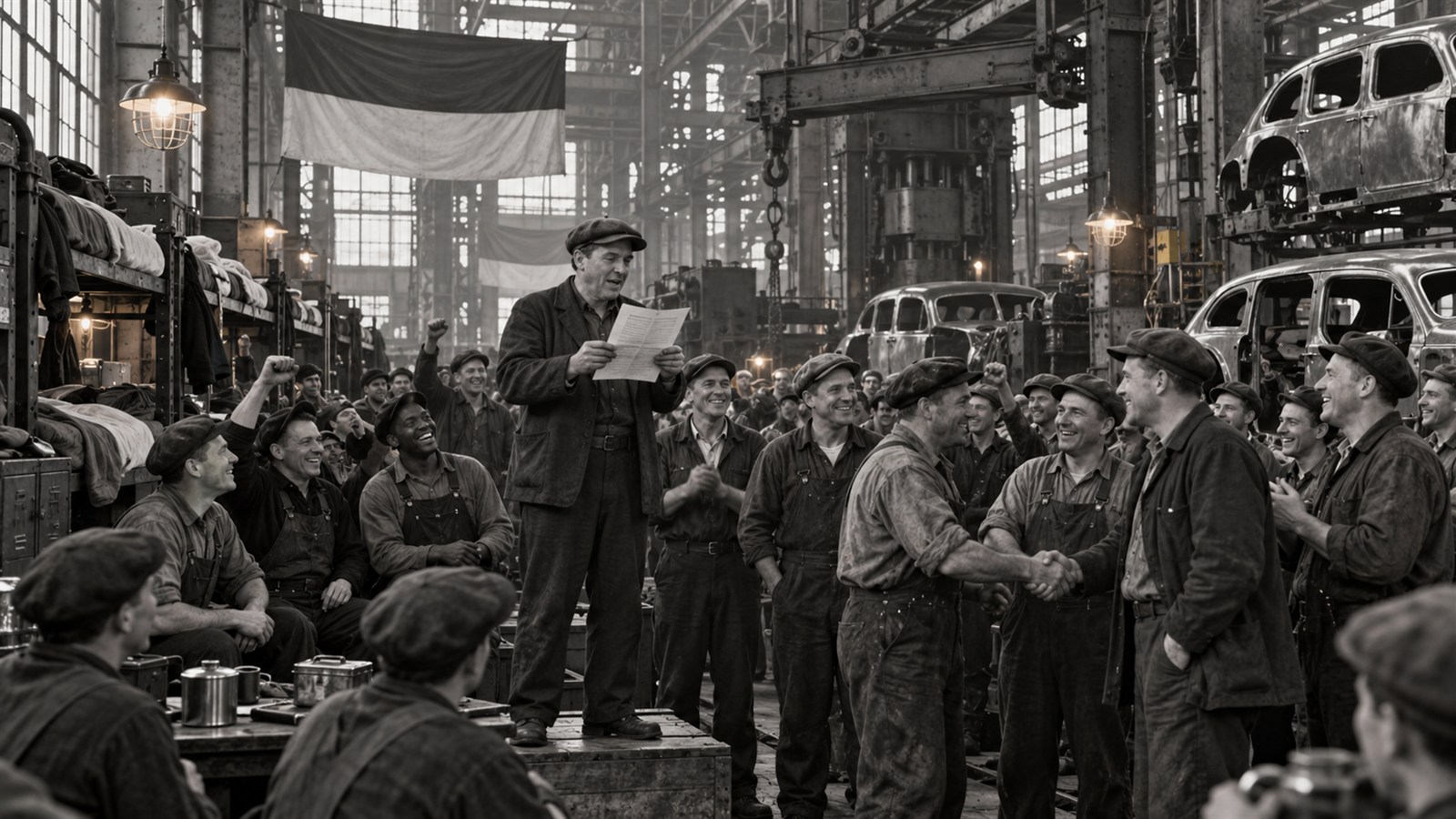
On February 11, 1937, General Motors and the United Automobile Workers reached an agreement that ended the Flint sit-down strike. Workers had occupied key plants beginning on December 30, 1936, halting production while remaining inside the factories. The tactic prevented replacement workers from taking over and protected machinery from damage, but it also created a tense standoff involving courts, police, Michigan officials and GM management. Because the Flint facilities supplied bodies and components to other assembly plants, a relatively concentrated occupation disrupted production across the company's national system.
The conflict arose from rapid industrial expansion and difficult shop-floor conditions. Auto workers faced speedups, layoffs, seasonal insecurity and limited power to challenge foremen. The young UAW sought recognition and a formal channel for grievances, while GM initially resisted dealing with it as a collective representative. Support networks outside the plants delivered food and information, and workers organized internal committees to maintain order. Michigan governor Frank Murphy ultimately helped mediate rather than using the National Guard to force an immediate eviction, allowing negotiations to continue under intense public pressure.
The settlement recognized the UAW as bargaining agent for its members in the affected plants and promised that participants would return without discrimination. It was not full exclusive recognition across the corporation, and many disputes remained unresolved. Even so, the agreement gave the union a foothold at the largest automaker and demonstrated the leverage created by coordinated production bottlenecks. Membership surged, and the victory encouraged organizing throughout mass-production industries. Chrysler reached an agreement soon afterward, while the struggle at Ford continued for several more years.
February 11 became a turning point in the governance of American business. The settlement did not end conflict between labor and management, but it helped institutionalize negotiation over wages, hours, safety and discipline inside firms whose scale had outgrown individual bargaining. For companies, collective agreements introduced new constraints while also creating procedures that could stabilize employment relationships. For workers, recognition converted organization into a durable voice at work. The strike remains a lesson in systems power: participants did not need to occupy every facility when a few indispensable nodes could stop the network. It also shows that an agreement can be strategically important even when its language is narrow, because recognition changes who has standing in every negotiation that follows. The outcome also changed managerial planning. Labor relations could no longer be treated solely as plant-level discipline; contract terms and union strategy became factors in production schedules, capital decisions and companywide risk, giving workforce governance a more formal place in corporate operations.
Auto workers challenged speedups, insecurity and arbitrary supervision while the young UAW struggled to gain a formal place in company decision-making.
Occupying key body plants blocked replacement labor and interrupted components needed by GM assembly operations across the country.
After a forty-four-day confrontation, GM and the UAW signed an agreement on February 11, 1937, bringing the sit-down strike to an end.
GM recognized the union for its members in specified plants and agreed not to discriminate against workers who had participated in the occupation.
The limited settlement nevertheless produced a rapid organizing surge and encouraged union agreements throughout the mass-production economy.
Collective bargaining became a lasting part of corporate governance, creating structured negotiation over compensation, safety, discipline and workplace rules.
Explore more of "On This Day ..."
Discover more events from the same date across news, politics, technology, sports, and other fields. Each link highlights significant moments that shaped history on different fronts.