

On This Day in Business: February 12, 1947
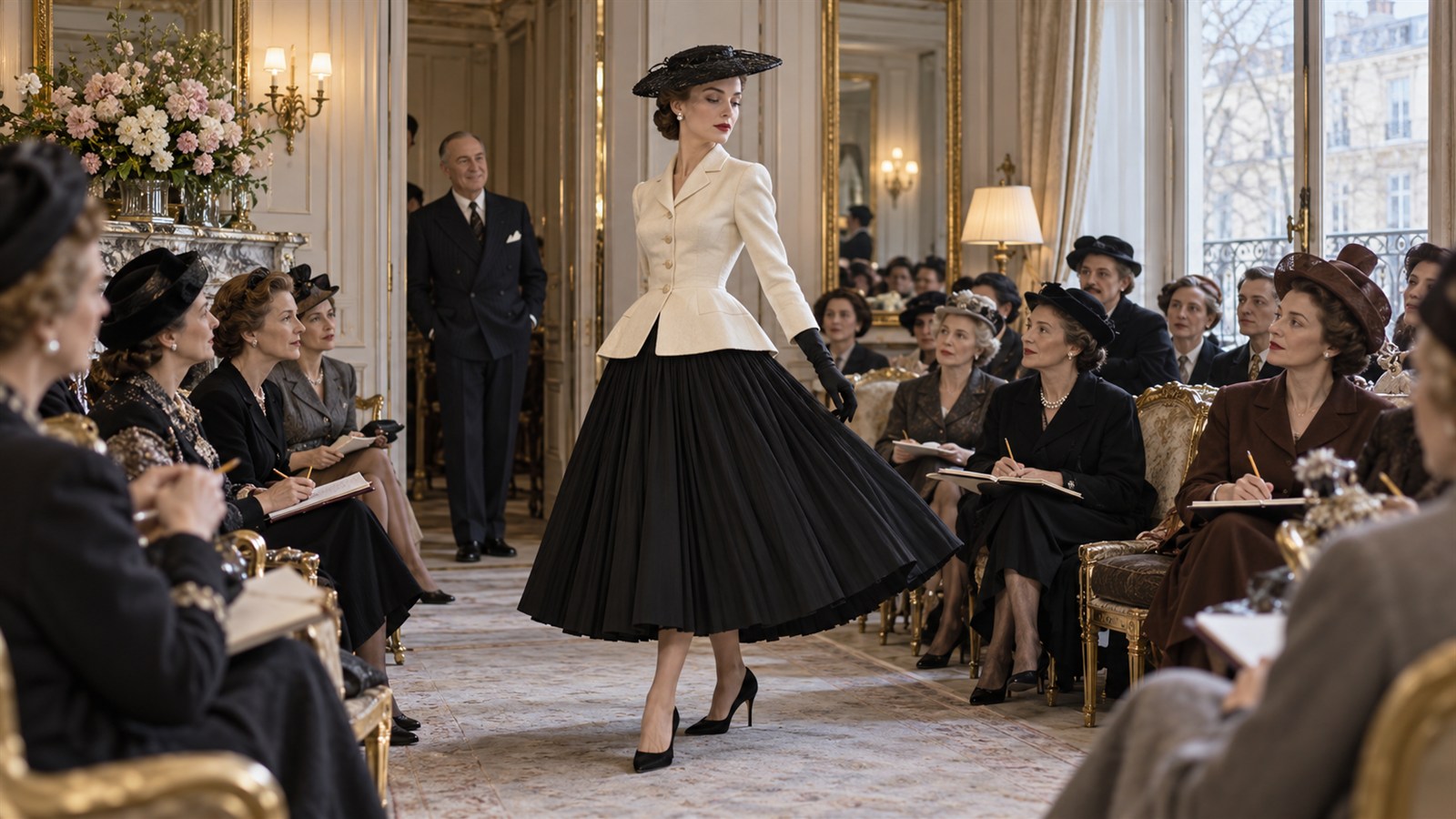
On February 12, 1947, Christian Dior presented his first couture collection at 30 Avenue Montaigne in Paris. The show introduced rounded shoulders, tightly shaped waists and long, voluminous skirts that used far more fabric than wartime clothing restrictions had permitted. Carmel Snow, editor in chief of Harper's Bazaar, described the silhouette as a "new look," and the phrase became its enduring name. The collection's most famous ensemble paired an ivory jacket with a wide black pleated skirt, offering an immediately recognizable image of postwar abundance.
The house existed because textile industrialist Marcel Boussac financed Dior's plan. Boussac controlled fabric production and saw couture as both a prestige investment and a way to stimulate demand for French textiles. Dior in turn built a disciplined luxury operation around design, fittings, skilled ateliers and carefully managed presentation. The debut was not universally welcomed. Some observers criticized the amount of cloth required, and women accustomed to practical wartime dress sometimes resisted the restricted waist and heavy skirt. Controversy increased publicity and helped distinguish the house from competitors.
The commercial model quickly extended beyond made-to-measure gowns. Dior licensed perfumes, stockings, accessories and later numerous product categories, allowing customers who could not buy couture to purchase a connection to the brand. International publicity and export sales helped revive Paris's authority in fashion after occupation and wartime disruption. The house also used seasonal collections to create a recurring news cycle in which editors, buyers and clients returned for the next silhouette. Design became a platform around which manufacturing, media, retail and licensing could be coordinated.
The February show matters because it joined a creative shock with a scalable brand system. The New Look supplied a clear visual proposition, while Boussac's capital, textile capacity and Dior's organization converted attention into products for several markets. Its gender ideals and material excess remain open to criticism, yet the collection demonstrated how luxury businesses manufacture desire through controlled scarcity, narrative and repeated renewal. Modern fashion houses still follow the architecture: a costly runway collection establishes authority, publicity enlarges its cultural reach and accessories or licensed goods broaden revenue. On one winter morning, Dior did more than change hemlines; he helped formalize a postwar business model in which a designer's name could organize a global portfolio. The collection also made shortage itself part of the story. After years of conservation, visible fabric volume communicated confidence and renewal, proving that material use, silhouette and social mood could combine into a commercial message before a customer examined construction details.
Wartime rationing had encouraged narrow, economical clothing, leaving postwar designers an opportunity to make abundance itself feel novel and desirable.
Textile manufacturer Marcel Boussac supplied the capital and fabric-industry support for Christian Dior to establish an independent Paris couture house.
On February 12, 1947, Dior's first collection presented rounded shoulders, fitted waists and dramatically full skirts at 30 Avenue Montaigne.
Fashion editor Carmel Snow's phrase "New Look" gave the silhouette a concise identity that international newspapers and magazines could repeat.
Perfume, hosiery and accessory licensing carried the brand beyond a small couture clientele and turned prestige into a wider revenue base.
The launch helped restore Paris fashion leadership and established the modern pattern of runway spectacle supporting a diversified global luxury business.
Explore more of "On This Day ..."
Discover more events from the same date across news, politics, technology, sports, and other fields. Each link highlights significant moments that shaped history on different fronts.