

On This Day in Business: February 13, 1914
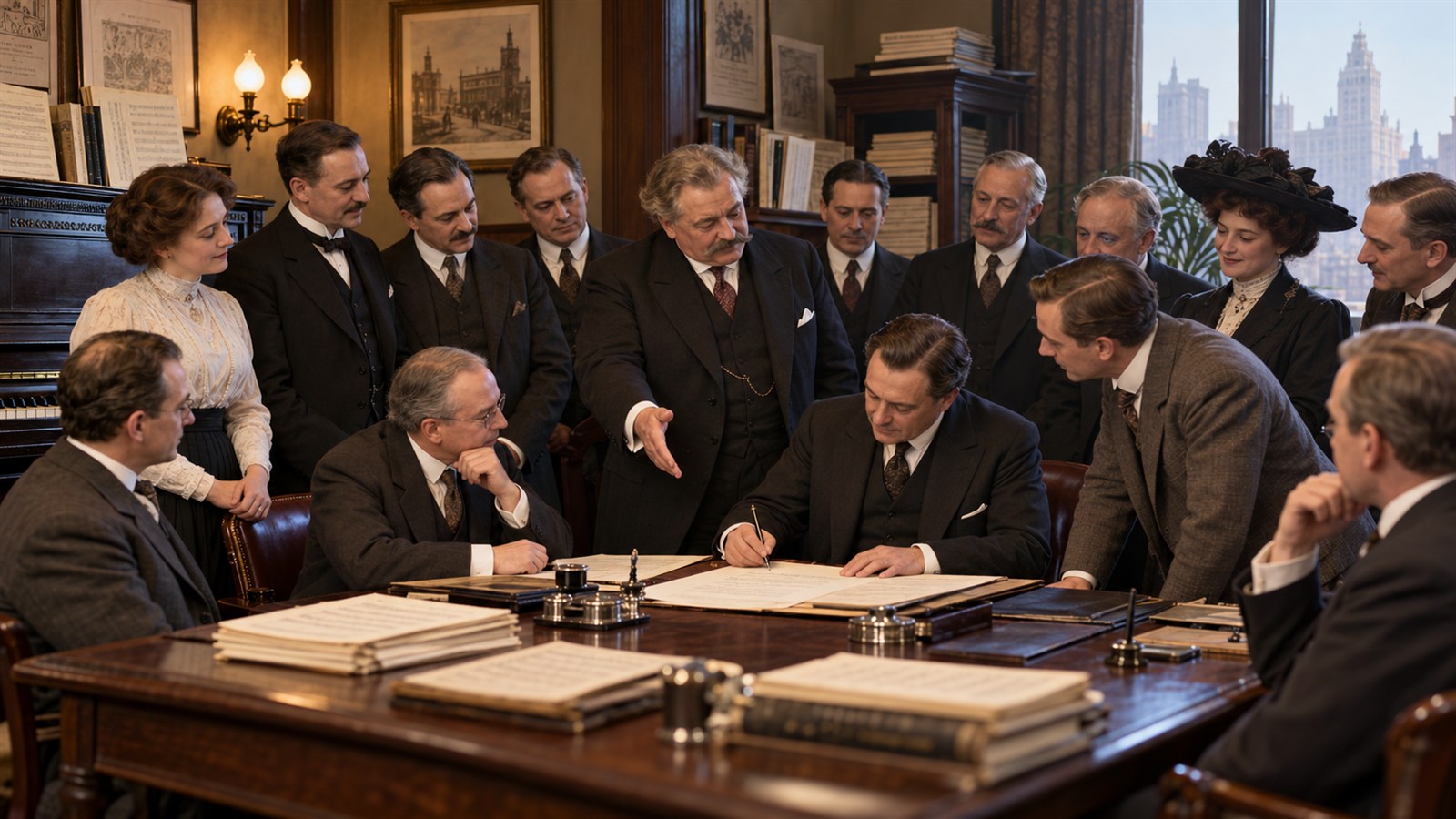
On February 13, 1914, composers, lyricists and music publishers gathered in New York to found the American Society of Composers, Authors and Publishers. Composer Victor Herbert was a leading organizer and became the new society's first vice president and director. The problem was straightforward but difficult for an individual creator to solve: restaurants, theaters and other businesses could profit from music performed for customers, yet a songwriter could not personally monitor thousands of venues or negotiate a separate license with each one.
ASCAP created a collective solution. Members transferred authority to license public performances of their works, and the society offered businesses access to a large repertory through common agreements. It then distributed royalties to writers and publishers according to measured or estimated use. Pooling reduced transaction costs on both sides. A venue could secure broad permission instead of tracing every copyright owner, while creators gained an organization able to monitor markets, negotiate rates and pursue legal enforcement. The approach turned performance rights into an administrable product.
The society's authority was strengthened by the Supreme Court's 1917 decision in Herbert v. Shanley Co. A New York restaurant had argued that it did not charge patrons specifically for music, but the Court concluded that performances contributed to a profit-making dining experience. That principle expanded the practical licensing market. Radio later created a much larger source of use and conflict, leading broadcasters to form a competing rights organization, BMI, in 1939. Competition, regulation and antitrust consent decrees shaped how performing-rights organizations operated, but collective licensing remained central to the music economy.
February 13 matters because the founders built infrastructure around an intangible asset. A song could be used repeatedly in many places without transferring physical ownership, so the business required records, standardized permissions and a trusted mechanism for dividing revenue. The same challenge now appears across broadcast, streaming, short-form video and global digital services. Modern data systems count more uses than the founders could imagine, yet disputes over transparency, valuation and creator payment persist. ASCAP's founding demonstrates that copyright alone does not create a market. Rights become economically useful when an institution can identify works, aggregate permission, collect payment and return proceeds to the people whose creations generated the demand. Collective administration also created its own governance burden. The organization had to decide how to measure performances and divide money fairly, making data quality and distribution rules nearly as important to member trust as the licensing revenue itself.
Individual songwriters could not efficiently identify and negotiate with every restaurant, theater or venue that used music to attract customers.
Victor Herbert and fellow creators proposed pooling performance rights so one organization could license a broad repertory and distribute royalties.
On February 13, 1914, composers, authors and publishers formally founded ASCAP in New York City.
Blanket licensing reduced transaction costs for businesses while giving creators collective bargaining, monitoring and legal enforcement capacity.
A 1917 Supreme Court decision confirmed that music performed in a profit-making restaurant could require payment even without a separate admission fee.
Radio, television and digital streaming expanded the market, making rights data and distribution methods increasingly important and contested.
Explore more of "On This Day ..."
Discover more events from the same date across news, politics, technology, sports, and other fields. Each link highlights significant moments that shaped history on different fronts.