

On This Day in Business: February 18, 1930
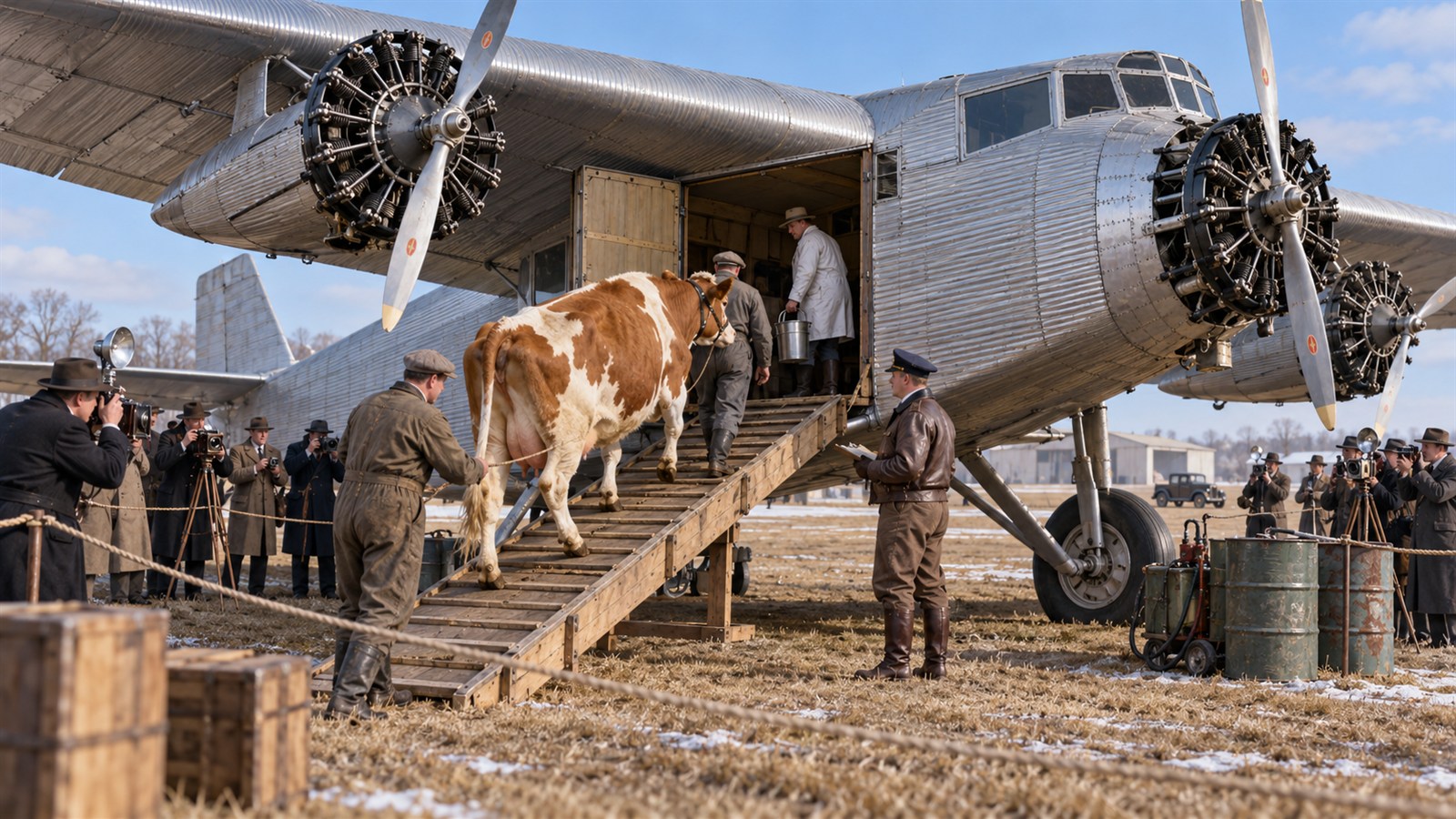
On February 18, 1930, a Guernsey cow known as Elm Farm Ollie flew from Bismarck, Missouri, toward St. Louis aboard a Ford Tri-Motor. The unusual passenger was headed for the International Aircraft Exposition, where organizers wanted publicity and data about moving livestock by air. Ollie was reportedly selected for a calm temperament and high milk production. During the journey, dairyman Elsworth Bunce milked her, becoming the first person known to perform that task in flight.
The spectacle joined two businesses seeking attention. Aviation promoters needed the public to see airplanes as reliable commercial tools at a time when safety concerns and the Depression weighed on the industry. Dairy interests could display modern husbandry and gain publicity from a story impossible to ignore. Reports said Ollie produced 24 quarts of milk, some packaged into small containers and dropped by parachute to spectators. The details became embellished in later retellings, including doubtful claims about Charles Lindbergh drinking the milk, but the core flight and milking were widely reported.
The Ford Tri-Motor was itself a symbol of practical aviation. Its corrugated metal body, three engines and enclosed cabin made it a prominent early passenger and cargo aircraft. Carrying a thousand-pound animal dramatized payload and stability more effectively than a technical lecture. The stunt also anticipated a serious logistics market. Air transport would later move breeding animals, veterinary supplies and time-sensitive agricultural products, although routine livestock shipment remained constrained by cost, space and animal welfare considerations.
February 18 matters because the flight shows how a publicity stunt can communicate a product capability in one unforgettable image. The cow was not merely entertainment; she was a living demonstration of load, calm flight and possible agricultural use. Yet the event also reveals the risk of publicity history: striking claims can be repeated long after evidence becomes uncertain. For businesses, the best demonstrations unite novelty with a credible operational benefit and document results carefully enough to survive retelling. Elm Farm Ollie gave the aircraft exposition worldwide attention and became a durable piece of aviation folklore, proving that a strange but legible story can carry a technology far beyond the audience present at the event. The event succeeded because spectators could grasp the claim instantly. An aircraft carrying a cow communicated stability, payload and novelty without charts, while the milking story added a human task that made the technical accomplishment easier to remember and retell. That clarity gave newspapers a headline, promoters a crowd and manufacturers a demonstration people could describe accurately after leaving.
Aviation promoters in 1930 needed vivid evidence that airplanes could carry useful loads safely and serve industries beyond passenger sightseeing.
Organizers selected a calm, productive Guernsey cow for a Ford Tri-Motor flight connected with the International Aircraft Exposition in St. Louis.
On February 18, Elm Farm Ollie flew from Bismarck, Missouri, and was milked aloft by dairyman Elsworth Bunce.
Milk packaged or displayed for spectators turned a technical payload demonstration into a humorous story that newspapers could easily repeat.
The event advertised both commercial aviation and modern dairy production while hinting at later markets for time-sensitive agricultural air cargo.
Its enduring folklore demonstrates the promotional power of a concrete spectacle, as well as the importance of separating documented facts from later embellishment.
Explore more of "On This Day ..."
Discover more events from the same date across news, politics, technology, sports, and other fields. Each link highlights significant moments that shaped history on different fronts.