

On This Day in Business: February 19, 1878
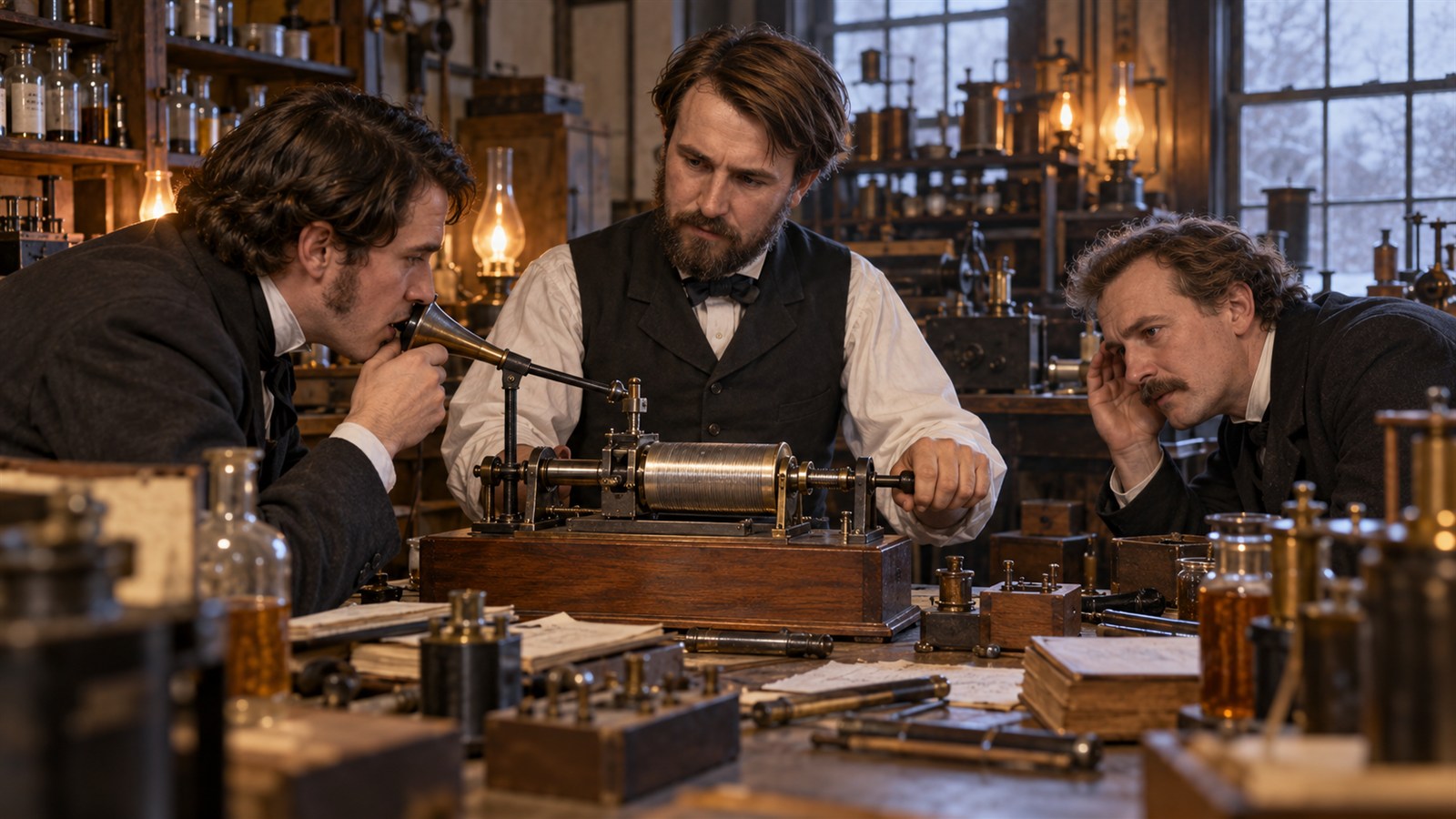
On February 19, 1878, Thomas Edison received U.S. Patent No. 200,521 for the phonograph or speaking machine. His early apparatus used a stylus to indent sound vibrations into tinfoil wrapped around a grooved cylinder. Turning the cylinder back under a second stylus reproduced a faint version of the recorded voice. The result amazed audiences because sound, previously experienced only as a live event, could apparently be captured and heard again. Edison quickly became known as the Wizard of Menlo Park.
The patent described a mechanism, but the commercial possibilities were still uncertain. Edison proposed dictation, talking books, language instruction, music and preservation of famous voices. Early tinfoil recordings were fragile, difficult to duplicate and inconsistent in quality. Exhibition agents made money demonstrating the machine to paying audiences, turning wonder into the first revenue stream. Edison then shifted attention to electric lighting, while competitors including Alexander Graham Bell's Volta Laboratory team improved recording media with wax and developed the graphophone.
When Edison returned to recorded sound in the late 1880s, he built companies, improved cylinders and pursued office dictation and entertainment markets. The industry eventually moved toward prerecorded music sold at scale, creating relationships among inventors, performers, publishers, equipment makers and retailers. Flat discs and gramophones gained advantages in duplication and storage, and record labels learned to market artists as recognizable consumer brands. The patent therefore sits near the beginning of a long transition from selling machines to selling catalogs and repeat listening.
February 19 is significant because the phonograph created a separable sound asset. A performance could be fixed, transported, replayed and eventually copied in large numbers. That technical change supported entirely new businesses in recording, distribution, rights management and home entertainment. The path was not direct, and Edison did not control every crucial improvement, but the early patent gave form to the central transaction. Consumers could purchase access to a voice or song independent of the performer being present. Streaming services now deliver sound through networks rather than cylinders, yet their economics still depend on the same break between performance and place. Recorded sound became inventory, and the patent helped show that time itself could be packaged for repeated sale. Once recordings could be copied, a performance acquired a long commercial tail. The same session could reach audiences in many cities and years, encouraging investment in catalogs whose value depended on ownership, preservation and the repeated discovery of older material. Catalog management therefore became an enduring business capability rather than an incidental archive.
Before practical recording, spoken words and music disappeared when a performance ended, limiting distribution to live presence or written notation.
Edison's tinfoil cylinder converted sound vibrations into physical indentations that a stylus could trace again for audible playback.
U.S. Patent No. 200,521 was issued on February 19, 1878, protecting the early phonograph or speaking machine.
Paid public demonstrations generated immediate income, even though fragile recordings and inconsistent reproduction limited the device's first practical uses.
Wax cylinders, flat discs and mass duplication later shifted the market from exhibiting machines toward selling music catalogs and branded performers.
The phonograph established recorded sound as a durable asset, laying foundations for the recording, broadcasting and streaming industries.
Explore more of "On This Day ..."
Discover more events from the same date across news, politics, technology, sports, and other fields. Each link highlights significant moments that shaped history on different fronts.