

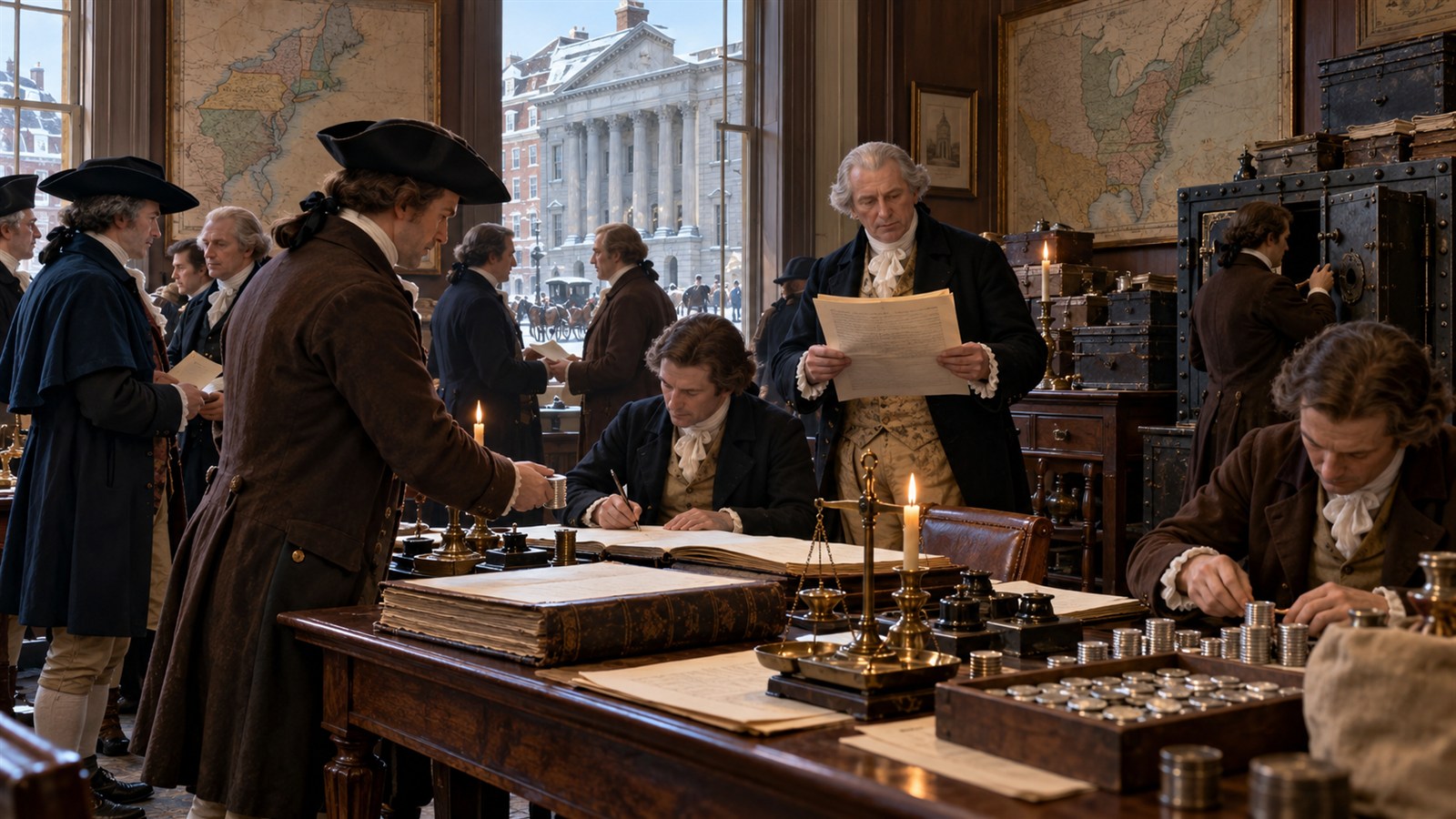
On This Day in Business: February 25, 1791
On February 25, 1791, the United States chartered the Bank of the United States for a twenty-year term. Treasury secretary Alexander Hamilton had argued that a national bank would improve public credit, hold government funds, make loans and support a more reliable payments system. Congress authorized capital of $10 million divided into shares subscribed by the federal government and private investors. The scale was extraordinary for the young republic, whose Revolutionary War debts and uneven state currencies complicated trade and government finance.
The proposal triggered a foundational constitutional dispute. Thomas Jefferson and James Madison argued that the federal government lacked authority to create a corporation and feared concentrated financial power. Hamilton answered that the powers to tax, borrow and manage national finances implied authority to choose useful means. President George Washington accepted that reasoning and signed the measure. The debate established competing interpretations of federal economic power that would influence American politics far beyond the bank itself.
Headquartered in Philadelphia, the bank opened branches and circulated notes accepted for federal payments. Its capital and geographic reach helped connect regional markets, discipline state-chartered banks and provide the government with a fiscal agent. The institution was privately owned but publicly chartered, creating a hybrid structure designed to combine commercial incentives with national purposes. Critics continued to see favoritism and elite control, and Congress allowed the charter to expire in 1811. Financial strain during the War of 1812 contributed to creation of a second national bank in 1816.
February 25 matters because the charter treated financial infrastructure as a deliberate institution rather than a collection of local arrangements. A national economy required trusted notes, government cash management and credit that could cross state lines. The bank provided those services while raising lasting questions about who should control money, who benefits from public backing and how concentrated risk should be governed. Modern central banking differs substantially, but the same tensions remain visible in debates over independence, access and emergency support. Hamilton's plan demonstrates that markets depend on legal architecture and confidence as much as coins or ledgers. By chartering the bank, the new government created a financial platform intended to make both public administration and private commerce more predictable. Share subscriptions also linked private investors to public fiscal capacity. That mixture promised discipline and capital, but it made conflicts of interest and unequal access unavoidable political concerns, issues that followed every later American debate over national banking.
Revolutionary debt, varied state currencies and fragmented credit made it difficult for the new federal government and interstate merchants to manage payments.
Alexander Hamilton proposed a $10 million national bank that would hold public funds, issue notes, make loans and strengthen government credit.
On February 25, 1791, the Bank of the United States received a twenty-year federal charter after a sharp constitutional debate.
Washington accepted Hamilton's argument that enumerated fiscal powers implied authority to create a useful financial corporation.
The Philadelphia headquarters and branches connected regional markets, served the Treasury and influenced the practices of state-chartered banks.
Expiration in 1811 and later creation of a second bank showed that national financial infrastructure remained both economically valuable and politically contested.
Explore more of "On This Day ..."
Discover more events from the same date across news, politics, technology, sports, and other fields. Each link highlights significant moments that shaped history on different fronts.