

On This Day in Business: February 29, 2012
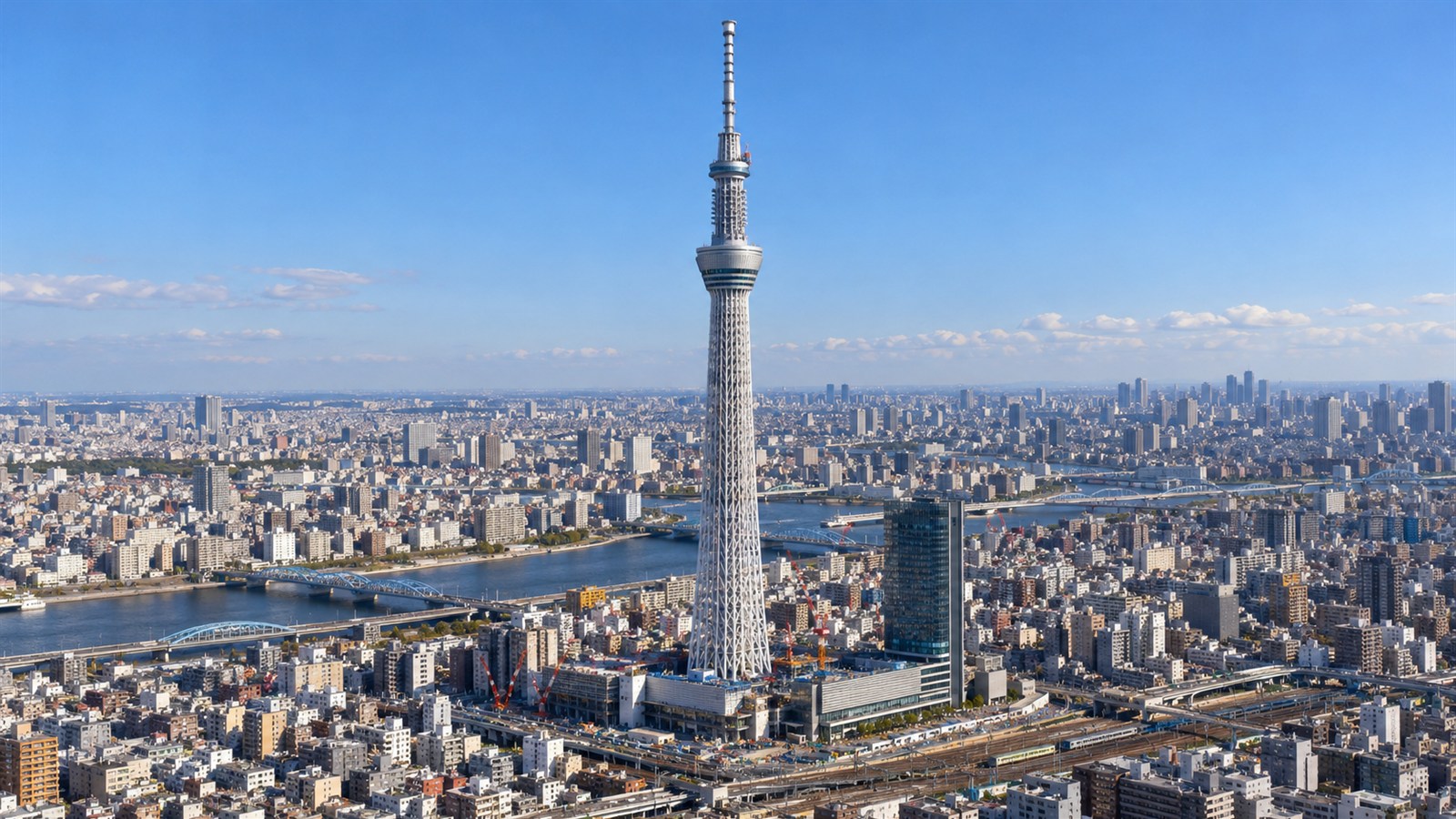
On February 29, 2012, construction of Tokyo Skytree was completed. Rising 634 meters above the Sumida district, it became the world's tallest freestanding broadcasting tower. The project had begun in July 2008 and required about forty-four months of construction by Obayashi Corporation. Broadcasters needed a structure high enough to transmit digital terrestrial signals over and around the dense cluster of skyscrapers that had grown through central Tokyo. The tower also became the centerpiece of a much larger commercial development.
Engineering the height required methods designed for earthquakes, wind and a constrained urban site. A triangular base gradually transitions to a circular form, while an internal reinforced-concrete core is partly separated from the surrounding steel frame. The arrangement echoes the vibration control of traditional five-story pagodas, allowing the core and outer structure to counter one another's movement. Crews assembled enormous steel members with tight tolerances and raised a broadcast mast from within the completed tower rather than relying only on external cranes at extreme height.
The business case extended beyond transmission. Tobu Railway led the project as part of Tokyo Skytree Town, which combined observation decks, a shopping complex, aquarium, offices and transport connections. The tower created a global landmark for an area east of the city's traditional commercial core and gave visitors reasons to spend time and money around the station. Admission, retail, leases and tourism supported an asset whose technical function alone would not capture all the value created by its visibility.
February 29 matters because completion joined critical communications infrastructure with place branding and real-estate development. Like earlier landmark terminals and towers, Skytree became both a utility and a destination. That combination diversified revenue but also raised the execution stakes: engineering reliability, visitor circulation, tenant mix and neighborhood access all had to work together. The tower opened to the public in May 2012 and quickly became a recognizable part of Tokyo's skyline. Its leap-day completion offers a modern lesson in infrastructure finance: a large project can support its cost and reshape a district when technical necessity is integrated with transportation, tourism and commercial uses rather than planned as an isolated structure. The project also made the skyline a marketing surface. Long before visitors purchased a ticket, the tower's visibility advertised the district and the complex below, allowing a structural requirement to generate attention continuously without a conventional media placement. Its silhouette therefore worked simultaneously as infrastructure, wayfinding and a permanent brand asset for the neighborhood.
Tokyo broadcasters needed greater height because dense high-rise development increasingly obstructed digital terrestrial signals from the older Tokyo Tower.
Tobu Railway and project partners combined a broadcasting tower with a station-centered shopping, office, aquarium and tourism development.
On February 29, 2012, Tokyo Skytree reached formal completion at 634 meters after about forty-four months of construction.
A separated reinforced-concrete core, tapering steel frame and specialized mast-raising process addressed earthquake, wind and urban-site constraints.
Observation admissions, tenant leases, retail spending and global tourism captured economic value beyond the tower's essential communications role.
The completed complex became an anchor for eastern Tokyo, showing how infrastructure can operate simultaneously as utility, landmark and redevelopment platform.
Explore more of "On This Day ..."
Discover more events from the same date across news, politics, technology, sports, and other fields. Each link highlights significant moments that shaped history on different fronts.