

On This Day in Business: March 6, 1899
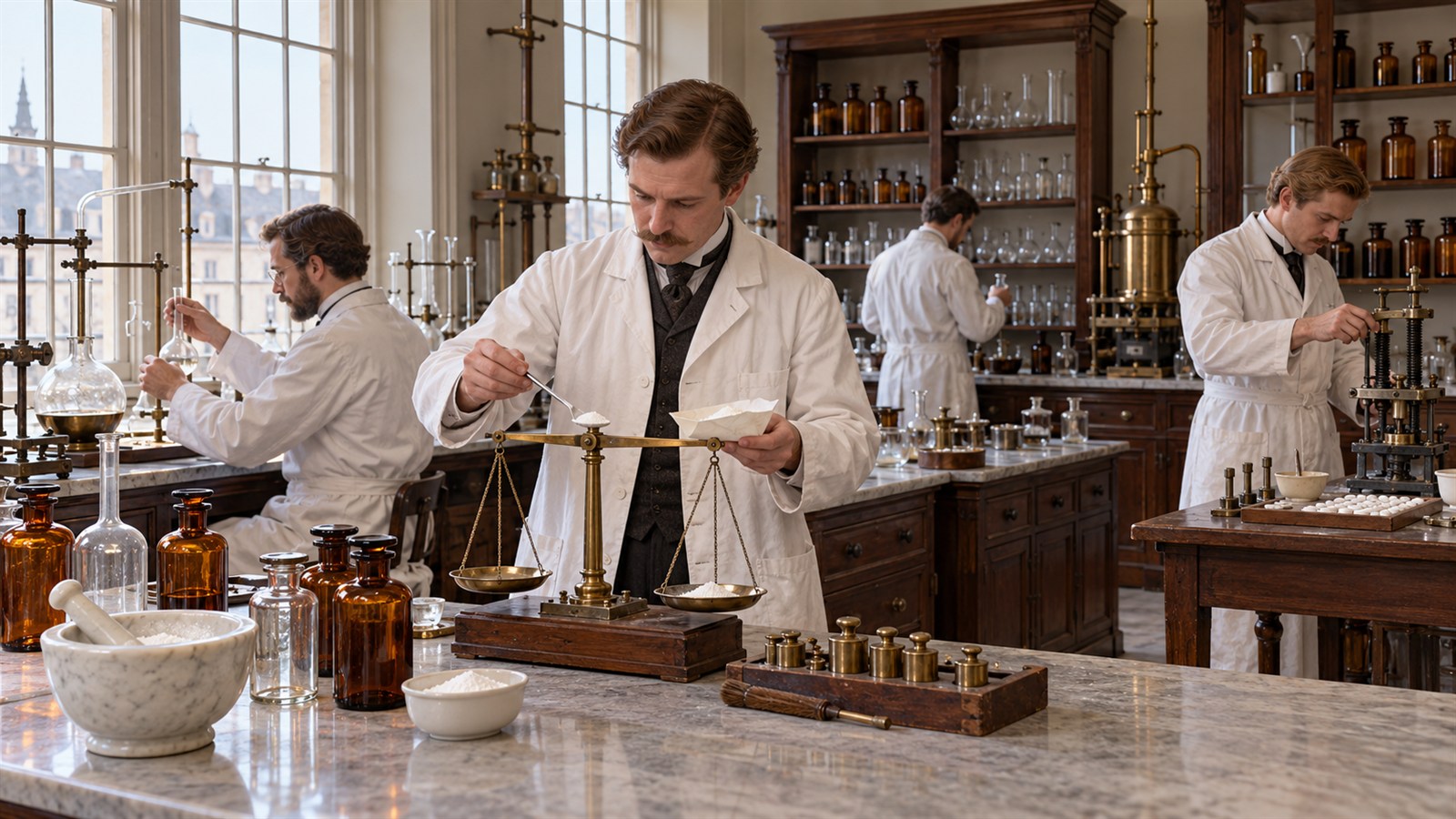
On March 6, 1899, the Imperial Patent Office in Berlin entered Aspirin as a registered trademark for Bayer. The company had developed a method for producing a stable form of acetylsalicylic acid, a compound related to the pain-relieving substance in willow bark. Chemists, physicians, laboratory testing, and manufacturing all contributed to the product's emergence. The trademark gave the medicine a short, distinctive name that could travel more easily than its chemical description. Bayer initially supplied it as a powder before tablets made dosage and distribution more convenient.
Aspirin showed how branding could organize trust around an industrial product that consumers could not readily evaluate by sight. Patients and doctors needed confidence in purity, dosage, and consistency, while pharmacists needed dependable supply. A recognizable name linked those expectations to a manufacturer. Bayer supported the launch with samples and information for physicians, using professional recommendation as a path to the wider market. The strategy combined chemical production with packaging, medical communication, and distribution, creating value beyond the molecule itself.
The brand's legal history became unusually complicated. During and after the First World War, Bayer lost trademark rights to Aspirin in several countries, including the United States, where the word became generic. In other markets, the company retained protection. That split demonstrates that a brand is not a single worldwide asset; its status depends on national law, ownership, use, and public language. The product nevertheless became one of the most familiar medicines of the twentieth century, and later research expanded scientific understanding of how it worked and where it might be useful or risky.
The 1899 registration connects research, regulation, and marketing in the rise of modern pharmaceuticals. A successful medicine needs more than discovery: it requires repeatable manufacturing, evidence, professional acceptance, clear instructions, and careful management of safety. A trademark can help a company communicate consistency, but it can also become so widely used that the name loses exclusivity. Aspirin's history therefore captures both the strength and fragility of brand equity. It turned a technical term into a consumer promise while reminding companies that reputation must be supported by quality, evidence, and responsible use. The product further illustrates how a scientific name and a commercial name do different work. Chemistry identifies a substance precisely, while a brand helps buyers locate one supplier's version in a crowded market. Maintaining that distinction requires disciplined trademark use and education. When the public begins using the brand as the category name, popularity can undermine legal exclusivity. Aspirin became famous enough to demonstrate both outcomes, an achievement and a strategic vulnerability created by the same broad recognition.
Bayer chemists developed a stable manufacturing process for acetylsalicylic acid as industrial pharmaceutical research was becoming more systematic.
The company needed a memorable name that doctors, pharmacists, and patients could distinguish from a long chemical description.
Aspirin was registered as a trademark in Berlin on March 6, 1899, and was first distributed in powdered form.
Medical adoption still depended on consistent dosage, professional confidence, manufacturing quality, and clear communication about appropriate use.
The medicine achieved worldwide recognition, although wartime asset seizures and generic use weakened or ended trademark protection in some countries.
Its history shows how science, production, professional channels, and intellectual property combine to create—and sometimes transform—a global brand.
Explore more of "On This Day ..."
Discover more events from the same date across news, politics, technology, sports, and other fields. Each link highlights significant moments that shaped history on different fronts.