

On This Day in Business: March 25, 1911
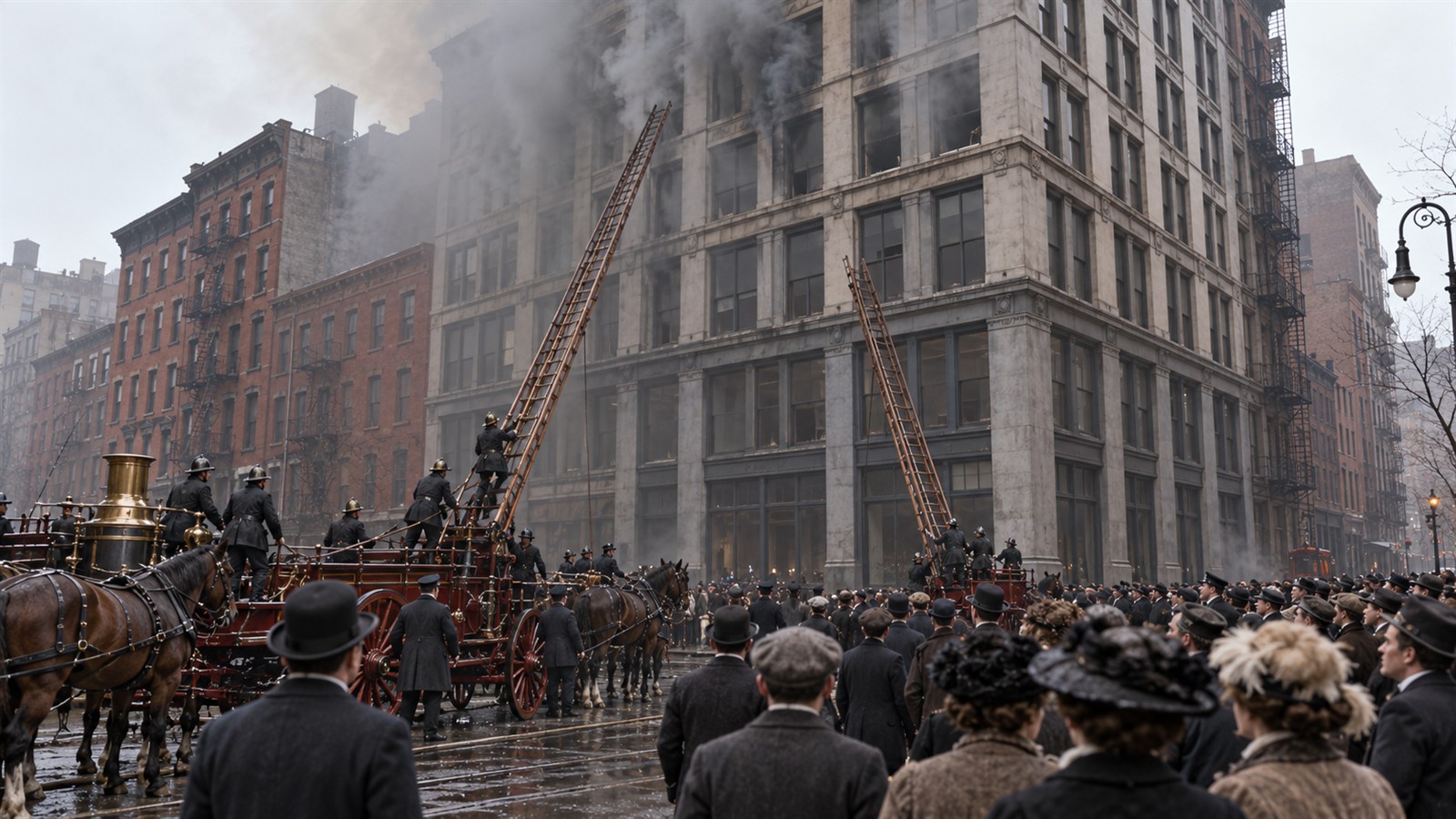
On March 25, 1911, fire swept through the Triangle Shirtwaist Factory on the upper floors of New York's Asch Building. One hundred forty-six workers died, most of them young immigrant women and girls. Flames spread rapidly among fabric and paper patterns. Exit failures, including a locked door, inadequate escape routes, and a fire escape that collapsed, left many workers trapped. The tragedy exposed the human consequences of production systems that prioritized output and control while failing to provide safe egress and effective emergency protection.
Triangle operated in a competitive garment industry built on seasonal demand, low margins, subcontracting, and a large immigrant workforce. Managers feared theft and unauthorized breaks, and workplace control could override safety. Workers had already organized and struck for better conditions, but the factory resisted some union demands. The fire demonstrated that labor practices, building design, and regulation were inseparable. A profitable order book did not make the operation sound if routine conditions could turn a small ignition into mass death.
Public grief and outrage fueled investigations and reform. New York created a Factory Investigating Commission that examined workplaces across the state and recommended changes to fire safety, exits, sanitation, hours, and building rules. Labor organizers, survivors, journalists, and civic reformers kept attention on the victims and the conditions they faced. The resulting laws did not end unsafe work, but they strengthened the principle that owners and managers owe enforceable duties to employees, not merely wages.
The Triangle fire must be remembered first as a preventable loss of life. Its business lesson follows from that fact: worker safety is not an optional expense to be traded away for convenience or control. Leaders shape risk through staffing, housekeeping, exits, equipment, training, and whether employees can report hazards without retaliation. Regulations often embody lessons purchased through earlier suffering, but compliance alone is a floor. March 25, 1911, stands as a lasting demand that organizations design operations around human dignity and ensure every person can leave work safely. Procurement and customer pressure can extend that duty through a supply chain. A brand that buys from contractors may benefit from low prices while remaining distant from factory conditions, but distance does not remove moral or reputational responsibility. Modern audits, worker channels, and contractual standards are imperfect responses to the same structural problem. Triangle's legacy asks buyers and investors to examine how price and speed demands shape safety in workplaces they do not directly manage.
New York's garment trade relied heavily on immigrant labor, crowded production floors, combustible materials, and intense pressure to control costs.
At Triangle, inadequate exits, a locked door, poor emergency preparation, and a weak fire escape turned a factory fire into catastrophe.
The March 25 blaze killed 146 workers, devastating families and making dangerous industrial conditions impossible for the public to ignore.
Firefighters' ladders and equipment could not reach the upper floors effectively, and rescue efforts could not overcome the building's failures.
Investigations and organizing helped produce stronger New York requirements for fire protection, building access, sanitation, and factory oversight.
The victims' legacy reinforces that employers have a fundamental duty to prevent hazards and protect every worker's life and dignity.
Explore more of "On This Day ..."
Discover more events from the same date across news, politics, technology, sports, and other fields. Each link highlights significant moments that shaped history on different fronts.