

On This Day in Business: March 26, 1931
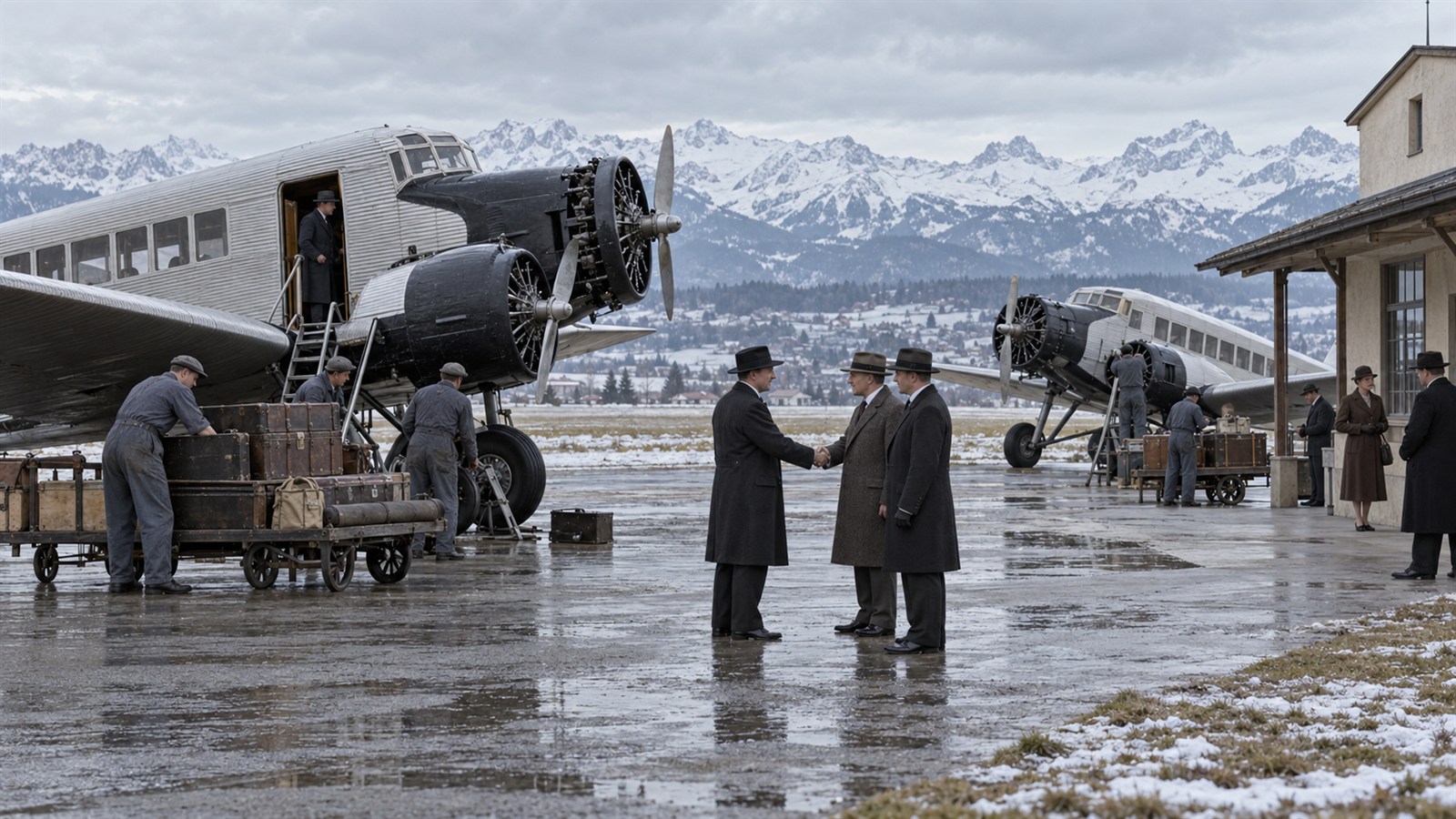
On March 26, 1931, the Swiss airlines Balair and Ad Astra Aero merged to create Swissair. The combination brought together aircraft, routes, employees, and experience at a time when commercial aviation remained young and the world economy was contracting. Switzerland's small domestic market and mountainous geography made scale and international connections especially important. A consolidated national carrier could coordinate schedules, concentrate capital, and present a single identity to passengers and foreign partners rather than supporting two fragile rivals.
Air transport demanded heavy investment before passenger demand was secure. Aircraft, maintenance, trained crews, navigation, airports, and weather services all carried high fixed costs. Safety and reliability were essential to persuade travelers who regarded flying as risky. Swissair pursued technical quality and international routes, using Switzerland's location to connect European cities. The company also transported mail and freight, combining revenue sources while the passenger market developed. Standardized operations and a reputation for precision became commercial assets in a service customers could not fully evaluate before takeoff.
The airline grew for decades and came to symbolize Swiss competence, but its history did not end in steady ascent. Deregulation, alliance pressures, costly expansion, and strategic errors weakened the company in the 1990s. After the September 2001 travel shock and a severe liquidity crisis, Swissair grounded its fleet and collapsed. A successor carrier, Swiss International Air Lines, emerged from regional airline Crossair and later joined the Lufthansa Group. The fall showed that national prestige and a respected brand cannot substitute for financial resilience or disciplined strategy.
Swissair's founding illustrates why consolidation can make sense in network industries. Routes become more useful when they connect, and fixed assets are easier to support across a larger customer base. Yet scale also creates complexity and can encourage expansion beyond managerial or financial capacity. The merger on March 26, 1931, built an airline that endured for seventy years and helped link Switzerland to the world. Its full history offers a balanced lesson: operational reputation can be earned over generations, but liquidity, governance, and strategic focus must be renewed continuously. Aviation also makes reputation unusually interdependent. Passengers judge a carrier, but safe and reliable service depends on manufacturers, airports, air-traffic systems, maintenance organizations, and regulators. Swissair's standing rested on coordinating that network consistently. Its collapse likewise affected employees, suppliers, travelers, and national identity beyond shareholders. Network businesses therefore need resilience plans that recognize how quickly one participant's financial distress can interrupt services and transmit harm across the wider system.
Switzerland's early airlines operated in a small market with expensive aircraft, uncertain demand, and a growing need for international connections.
Combining Balair and Ad Astra Aero promised stronger routes, shared resources, a unified identity, and less destructive competition.
The merger formed Swissair on March 26, 1931, during a global depression that made disciplined use of capital especially important.
The carrier still had to establish safe operations, reliable schedules, maintenance capability, and customer confidence in the young aviation market.
Swissair became a respected international airline but collapsed in 2001 after expansion, financial strain, and a severe liquidity crisis.
Its story shows both the network benefits of consolidation and the enduring need for governance, cash discipline, and strategic restraint.
Explore more of "On This Day ..."
Discover more events from the same date across news, politics, technology, sports, and other fields. Each link highlights significant moments that shaped history on different fronts.