

On This Day in Business: March 28, 1964
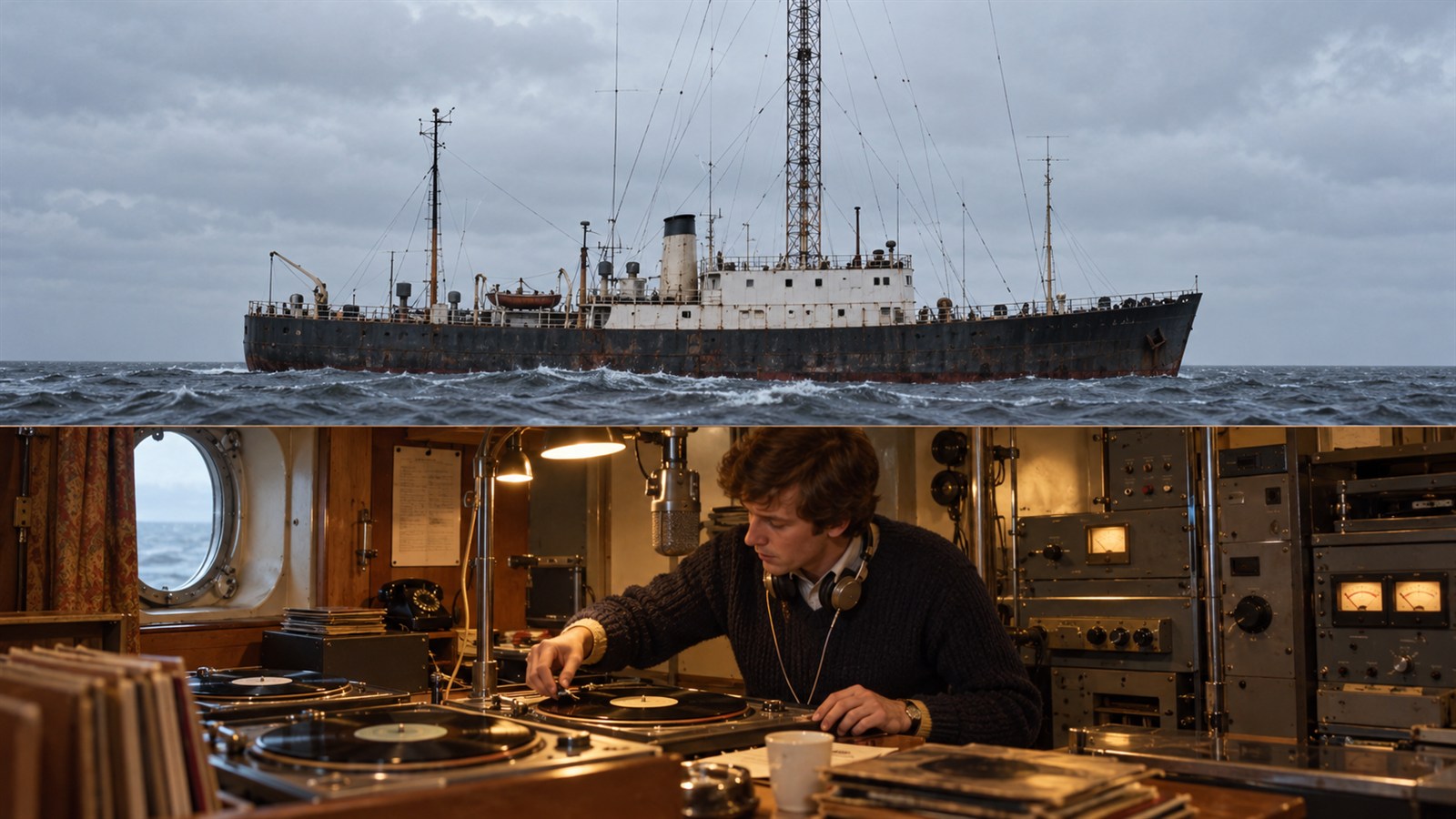
On March 28, 1964, Radio Caroline began regular broadcasts from a ship anchored outside British territorial waters. Commercial radio was not legally available on land in Britain, and the BBC offered limited airtime for the pop records attracting young audiences. Operating offshore allowed Caroline to exploit a gap in jurisdiction and beam music, personalities, and advertising toward millions of listeners. The station's signal turned a ship into a mobile media platform and made regulatory scarcity visible to the public.
The commercial proposition joined an underserved audience to advertisers that wanted to reach it. Popular records kept listeners tuned in, disc jockeys created a friendly identity, and repeated promotions gave brands access to a national youth market. Offshore operation was expensive and awkward: the company needed a vessel, transmitters, generators, studios, supplies, crews, tender boats, and sales offices on land. Weather and technical failures threatened continuity. Yet the regulatory barrier that created those costs also protected the station from ordinary domestic competition.
Radio Caroline inspired or competed with other offshore stations and pressured the broadcasting establishment. The British government responded with legislation that restricted citizens and businesses from supplying or working with unauthorized marine broadcasters. Most stations closed when the Marine Broadcasting Offences Act took effect in 1967, although Caroline continued in changing forms. The BBC simultaneously launched Radio 1, employing several personalities associated with offshore radio and providing a legal pop service. The challenger had helped prove demand even when regulation constrained its business.
Caroline's launch is a classic example of market creation at the edge of existing rules. It found customers that an incumbent system had under-served and used available technology to reach them from outside the conventional boundary. The model carried legal, safety, and operational risks, so its romantic image should not obscure the difficulty of running it. Still, March 28, 1964, demonstrated that audience behavior can force institutional change. When listeners and advertisers move toward a substitute, regulators and incumbents must decide whether to suppress, absorb, or learn from it. The station also changed the economics of music promotion. Record labels could reach young consumers through repeated airplay, while announcers and station identity influenced which songs became familiar. This gatekeeping power attracted advertisers and controversy. When legal broadcasters later adopted the format, the offshore model's programming logic migrated onshore even as its original regulatory advantage disappeared. Caroline's most durable product was therefore not the ship but evidence that continuous popular music could assemble a commercially valuable audience.
Britain lacked legal domestic commercial radio, while young listeners wanted more recorded pop music than existing BBC schedules provided.
An offshore transmitter could reach the British market while operating beyond the ordinary territorial reach of broadcasting licenses.
Radio Caroline began regular service on March 28, 1964, combining popular music, disc-jockey personality, and commercial advertising.
The ship-based model faced storms, maintenance, supply costs, weak legal certainty, and dependence on shore-based advertisers and staff.
Offshore radio demonstrated a mass market for pop programming and helped prompt both restrictive legislation and the BBC's Radio 1.
Caroline's story shows how regulatory gaps can support challengers long enough to reveal demand and reshape an established media market.
Explore more of "On This Day ..."
Discover more events from the same date across news, politics, technology, sports, and other fields. Each link highlights significant moments that shaped history on different fronts.