

On This Day in Business: March 29, 1999
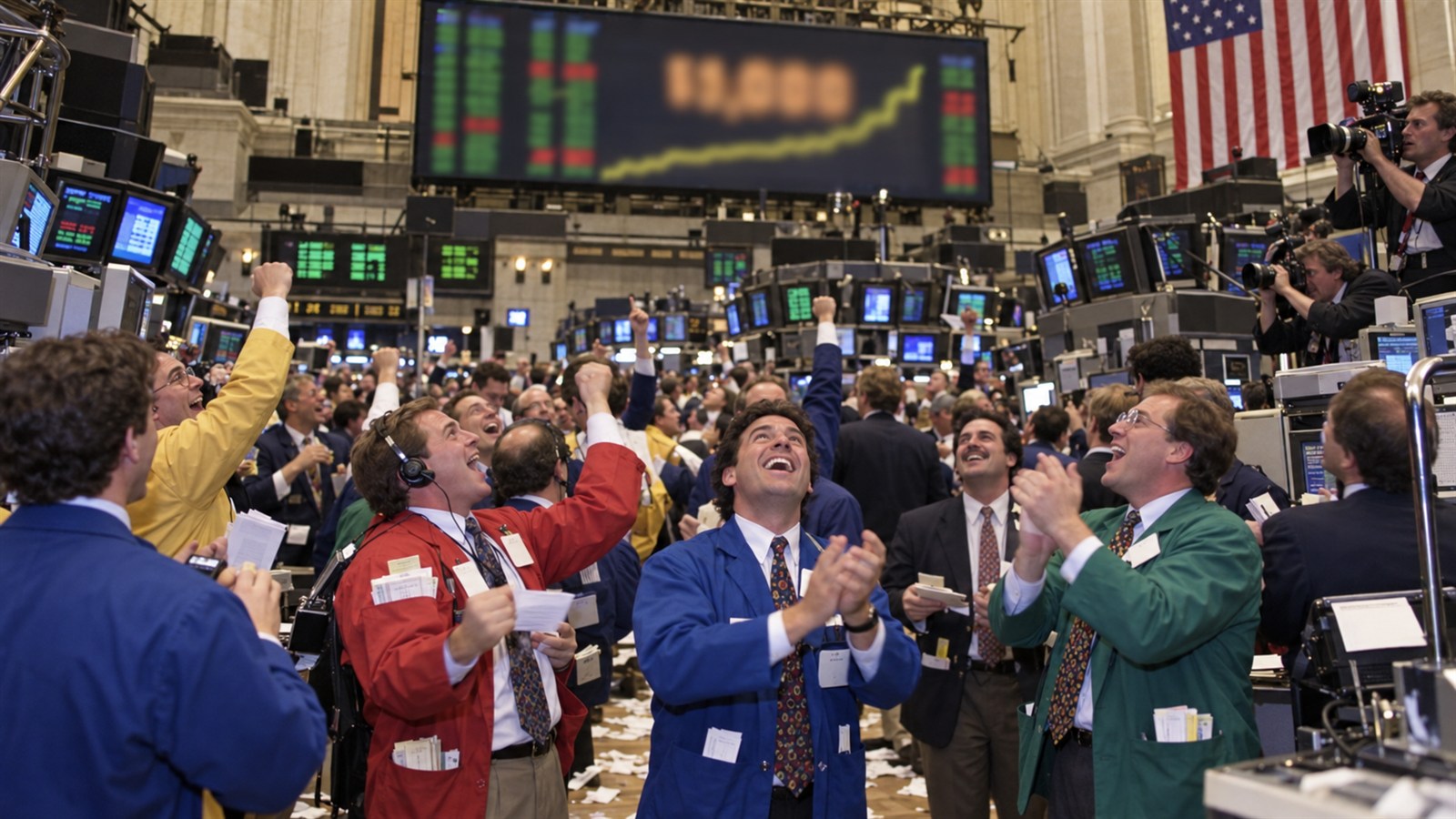
On March 29, 1999, the Dow Jones Industrial Average closed above 10,000 for the first time, finishing at 10,006.78. The five-digit close carried psychological weight far beyond the small fraction separating it from the previous session. Years of economic expansion, productivity optimism, lower inflation, and strong corporate earnings had lifted U.S. equities. Financial television and newspapers treated the round number as a national event, giving a mathematical threshold the force of a public scoreboard.
The Dow is a price-weighted index of thirty large companies, not a direct measure of every firm, household, or worker. Its composition changes over time, and a higher-priced component can influence the average more than a lower-priced company of greater total value. Even so, the index's long history and simple headline number made it a widely understood proxy for blue-chip market confidence. Crossing 10,000 therefore affected sentiment, marketing, and media attention even though no fundamental business changed at the instant of the close.
The milestone arrived during the broader technology and internet boom. The Dow differed from the Nasdaq, but enthusiasm and easy access to financial information drew more households toward equities and retirement accounts. Less than a year later, technology valuations began a severe decline, and the Dow also experienced volatility. It would cross the 10,000 line in both directions many times. The episode reminds investors that a landmark number can be memorable without being a reliable forecast of near-term returns.
For businesses and markets, Dow 10,000 illustrates the economic power of benchmarks. Indexes compress many security prices into a signal that guides conversation, products, performance comparisons, and investment flows. That convenience can hide methodology and encourage people to treat a symbolic threshold as analysis. The first close above 10,000 reflected real confidence and a long rise in corporate value, but it also arrived amid conditions that supported speculation. March 29, 1999, is best understood as a milestone in market perception—important because millions of people agreed to notice it. Index milestones also support products built around passive investment. Once a benchmark is trusted, funds and derivatives can track it, companies can compare results with it, and news outlets can organize daily coverage around its movement. That usefulness increases the index provider's responsibility for transparent rules and maintenance. The Dow's fame preceded modern index funds, but the 10,000 celebration demonstrated how deeply a benchmark can enter public culture and influence attention even among people who own no component shares directly.
A long U.S. expansion, strong profits, subdued inflation, and enthusiasm for productivity helped lift major equity indexes through the 1990s.
Media coverage turned the round 10,000 level into a shared target even though the Dow represents only thirty price-weighted stocks.
On March 29, 1999, the average finished at 10,006.78, securing its first daily close above the five-digit threshold.
The number did not alter company cash flows, and its symbolic force could distract investors from valuation, diversification, and index construction.
Markets soon entered a more volatile period, and the Dow crossed 10,000 repeatedly before later advances made the level ordinary.
The milestone shows how benchmarks simplify markets for public use while requiring careful interpretation of what they do and do not measure.
Explore more of "On This Day ..."
Discover more events from the same date across news, politics, technology, sports, and other fields. Each link highlights significant moments that shaped history on different fronts.