

On This Day in Business: April 15, 1955
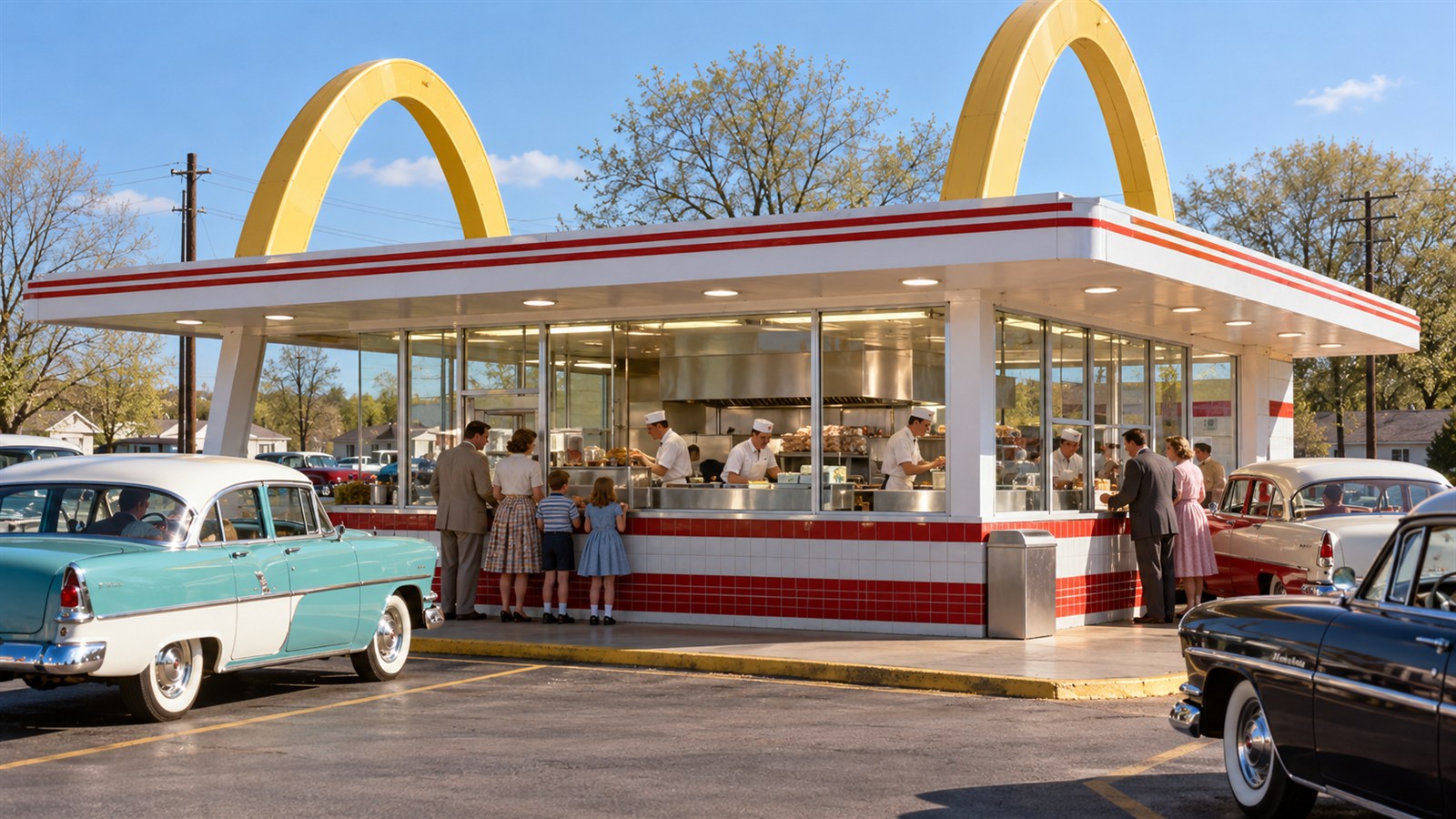
On April 15, 1955, Ray Kroc opened a McDonald's restaurant in Des Plaines, Illinois. Richard and Maurice McDonald had already created their Speedee Service System in California, using a limited menu, specialized tasks, and an efficient kitchen to serve hamburgers, fries, and drinks quickly. Kroc, a milkshake-machine salesman, saw that the concept could be reproduced across many locations. He became their franchising agent and built the Des Plaines restaurant as a showcase for prospective operators. Bright arches, a visible kitchen, and standardized equipment made the building both a restaurant and a demonstration of the business system behind it.
Kroc's central challenge was consistency. A franchise network can grow with other people's capital and local effort, but a weak operator can damage the shared brand. McDonald's therefore specified ingredients, preparation times, cleanliness, equipment, and service routines. Franchisees received training and a proven layout while accepting limits on how they ran the restaurant. The focused menu simplified purchasing and made employee tasks easier to measure. High volume and quick turnover supported low prices. The model converted kitchen operations into a repeatable process without eliminating the need for supervision and local management.
The relationship between Kroc and the McDonald brothers later deteriorated over control and expansion. In 1961, Kroc acquired their interest and accelerated growth. Real estate became another strategic layer: the corporation or an affiliate often controlled restaurant sites and leased them to franchisees, creating revenue and leverage over standards. Advertising, recognizable characters, drive-through service, and global localization followed. The chain created opportunities for many operators and workers while also drawing criticism over wages, nutrition, environmental impact, and the homogenization of local food culture.
The Des Plaines opening demonstrates that franchising sells an operating method as much as a product. Customers bought meals, but franchisees bought access to a brand, supply system, training program, and accumulated knowledge about site selection and throughput. The corporation's value came from making thousands of independently operated restaurants feel reliably familiar. That requires a delicate allocation of control, risk, and reward. April 15 marks the moment Kroc began turning one efficient restaurant idea into an institution whose standards and scale would reshape food service, commercial real estate, and consumer expectations around the world. Site economics reinforced the operating system. A restaurant with excellent service may still fail if traffic, access, rent, or local competition is wrong. By learning from many locations, the chain could improve forecasts and standardize building choices that an independent owner made only once. Scale converted scattered experience into institutional knowledge. Franchise fees purchased access to that learning, while the franchisor's reputation depended on applying it carefully rather than expanding at any cost.
The McDonald brothers had simplified restaurant work in California through a small menu, specialized stations, and rapid counter service.
Kroc recognized that the operating system could be franchised and used Des Plaines as a visible model for prospective owners.
His first restaurant opened on April 15, 1955, with standardized equipment, prominent arches, and procedures designed for speed and cleanliness.
Expansion required strict quality control because every franchisee operated independently while sharing one brand reputation.
Training, supply coordination, advertising, and real-estate control helped McDonald's scale nationally and then internationally.
The restaurant became a landmark example of franchising as a business that packages routines, support, and brand trust for local operators.
Explore more of "On This Day ..."
Discover more events from the same date across news, politics, technology, sports, and other fields. Each link highlights significant moments that shaped history on different fronts.