

On This Day in Business: April 22, 1970
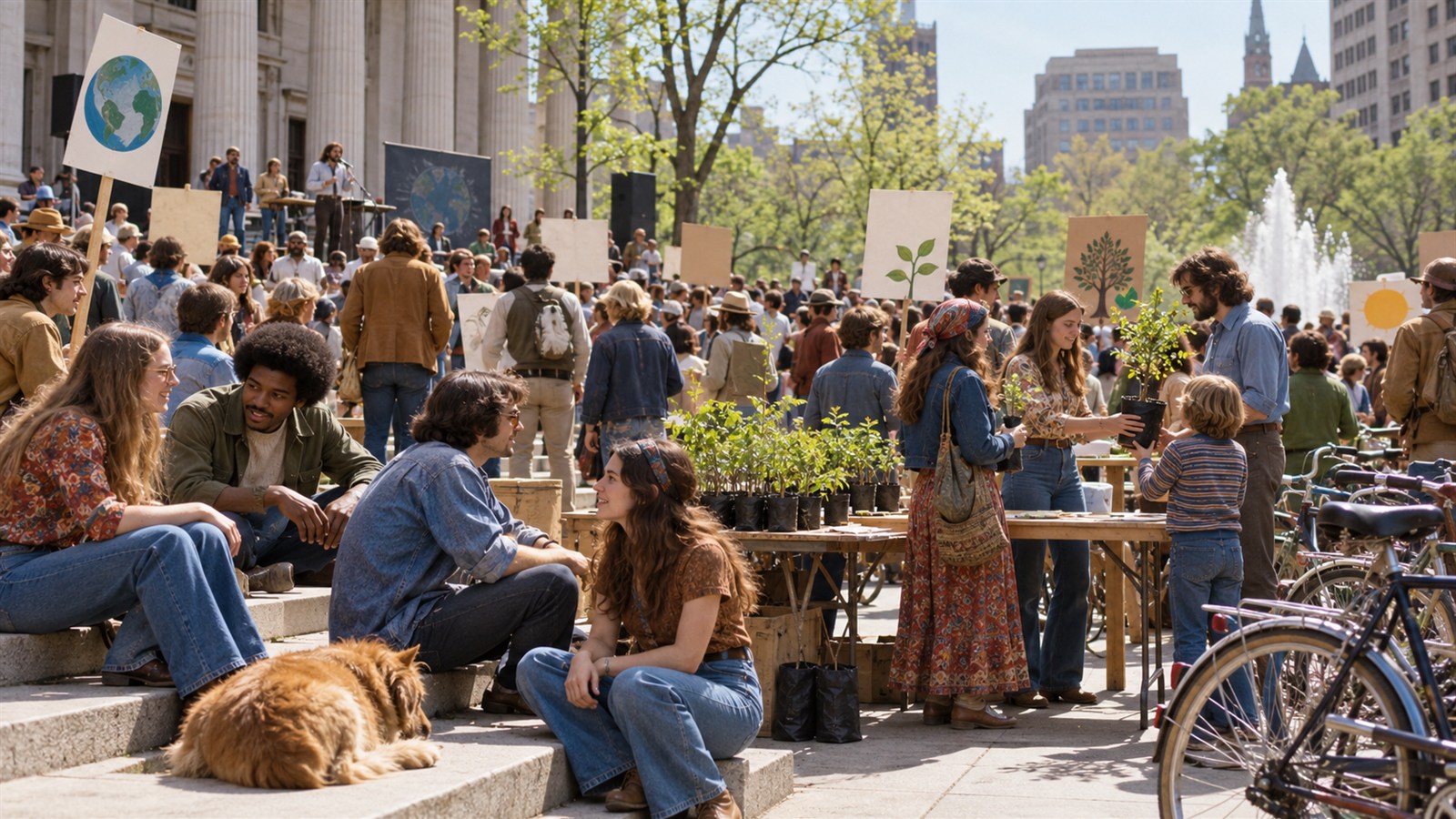
On April 22, 1970, the first Earth Day brought rallies, teach-ins, marches, and local events to communities across the United States. Senator Gaylord Nelson promoted a national environmental teach-in, and organizer Denis Hayes helped coordinate a decentralized movement that joined concerns about polluted air and water, pesticides, oil spills, waste, and disappearing habitats. Participation reached schools, universities, city streets, and civic groups. The scale demonstrated that environmental quality had become a mass political issue rather than a specialist concern. Businesses that had treated pollution as an external cost faced a public demanding clearer accountability.
The day occurred amid visible industrial and urban damage. Smog harmed health, rivers carried untreated waste, and incidents such as the Santa Barbara oil spill had shown the consequences of weak safeguards. Activists connected those conditions to production, transportation, consumption, and government enforcement. That connection changed the business environment. Companies could no longer assume that emissions, disposal, and chemical risks would remain outside product cost or corporate reputation. Consumers, employees, investors, and communities began asking who benefited from an activity and who absorbed its environmental burden.
Earth Day helped build momentum for a wave of federal action, including the creation of the Environmental Protection Agency in 1970 and major laws addressing air, water, species, and hazardous substances. Compliance required monitoring, permits, control equipment, reporting, and new professional expertise. Some industries resisted costs and challenged rules; others developed cleaner processes and markets for environmental technology. Regulation also reduced the advantage of firms that could compete by shifting pollution costs onto the public. The resulting system remained contested and incomplete, but environmental performance became a continuing operational and strategic issue.
The first Earth Day shows how public attention can redefine business risk. A factory may meet current rules yet remain vulnerable if its practices conflict with changing social expectations or emerging science. Environmental decisions affect supply chains, insurance, access to capital, community trust, and the long life of assets. They also create opportunities in efficiency, remediation, renewable energy, and circular design. April 22 marks a moment when citizens made the natural environment a central stakeholder in economic debate, forcing managers and policymakers to account for costs that conventional prices had often ignored. Measurement became a bridge between values and management. Once emissions, water use, waste, and exposure were monitored, executives could set targets, compare facilities, price improvements, and report performance. Weak metrics could still hide harm or invite greenwashing, so independent science and enforcement remained necessary. Environmental management became credible when claims were tied to physical results. The movement's lasting business influence lay partly in making previously invisible flows measurable and therefore harder to ignore.
Air pollution, water contamination, pesticides, oil spills, and visible waste had made environmental harm an everyday public concern by 1970.
Nelson, Hayes, educators, and local organizers used a decentralized teach-in model to unite issues across communities and institutions.
Millions participated on April 22, demonstrating a national constituency for stronger environmental responsibility and enforcement.
Companies faced new pressure because the public increasingly connected pollution with production decisions, products, and corporate accountability.
The EPA and major environmental laws expanded compliance duties while creating markets for monitoring, control, remediation, and cleaner technology.
Earth Day illustrates how civic mobilization can move previously external costs into regulation, reputation, investment, and operating strategy.
Explore more of "On This Day ..."
Discover more events from the same date across news, politics, technology, sports, and other fields. Each link highlights significant moments that shaped history on different fronts.