

On This Day in Business: April 24, 1913
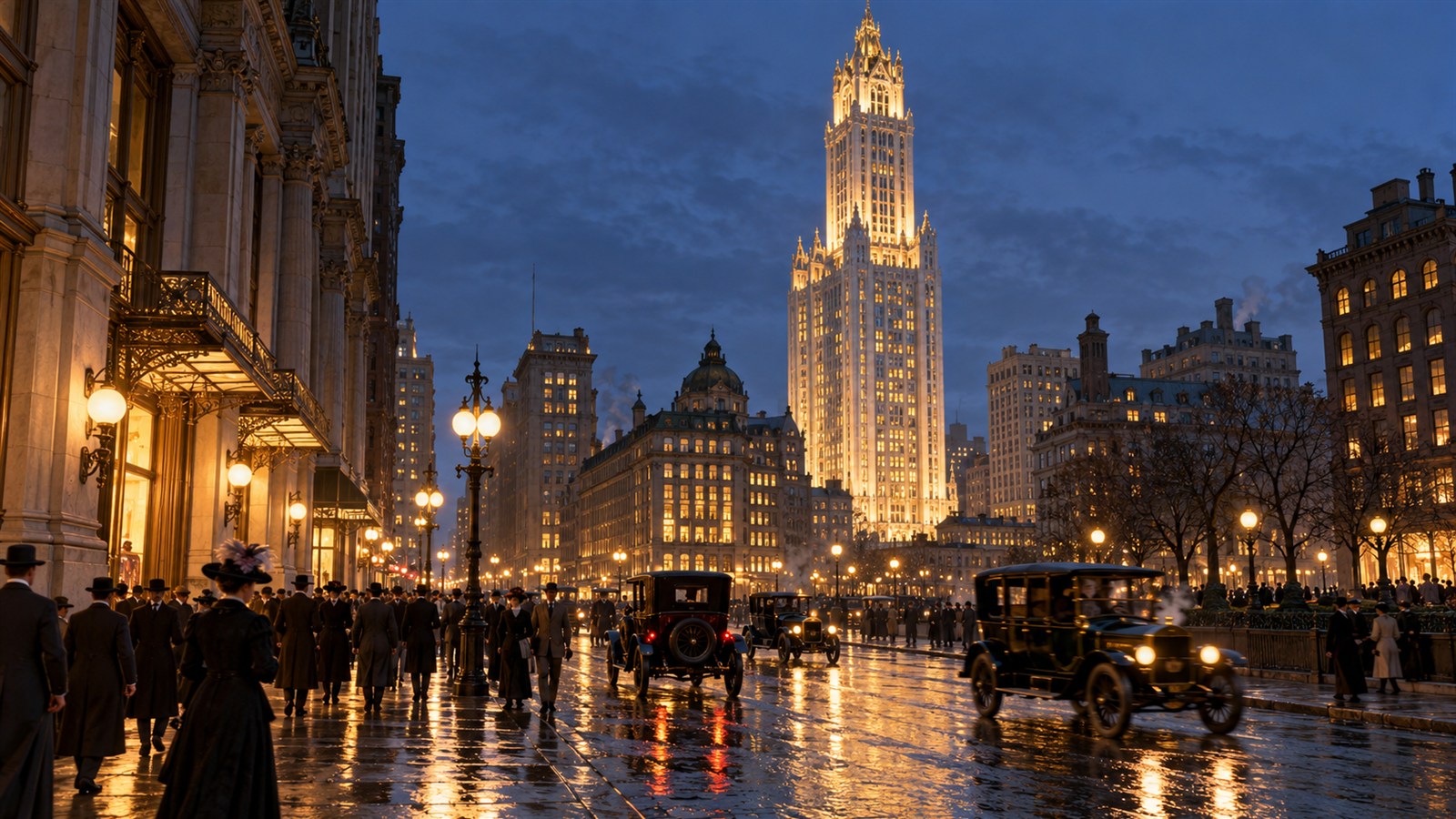
On April 24, 1913, the Woolworth Building formally opened in lower Manhattan. President Woodrow Wilson activated its lights from Washington during an elaborate evening ceremony. Financed by five-and-dime retailer Frank W. Woolworth and designed by architect Cass Gilbert, the tower rose 792 feet and was the world's tallest occupied building. Its Gothic exterior earned comparisons to a cathedral, while its steel frame, high-speed elevators, mechanical systems, and office floors represented advanced commercial construction. The building turned wealth created through mass retail into a highly visible real-estate and corporate asset.
Woolworth paid for the project largely in cash, avoiding a conventional mortgage and making the skyscraper a statement of financial strength. The site near City Hall and transportation links offered prestigious access for tenants. Rental offices supplied income beyond the company's own occupancy, while the observation deck attracted visitors. Ornament and engineering worked together: the façade communicated permanence and status, but the business case depended on moving thousands of people safely and making upper floors desirable. Elevators converted height from a practical disadvantage into rentable space.
The tower emerged during intense competition in New York's skyline. Advances in steel, foundations, fireproofing, and building services allowed land value to be stacked vertically. Skyscrapers concentrated workers near financial and civic institutions, shaping transit and neighborhood development. The Woolworth Building remained an important office address for decades and later underwent changes in use, including residential conversion of upper floors. Landmark protection preserved its exterior and celebrated interiors even as owners adapted the asset to new market demand.
The opening demonstrates how corporate identity can be embedded in real estate. A headquarters may provide workspace and rental income, but it also communicates ambition to customers, employees, investors, and rivals. That symbolic value can justify extraordinary design, though it must coexist with operating costs and changing occupancy needs. Woolworth built a monument with profits from inexpensive consumer goods, linking small transactions nationwide to a singular urban object. April 24 marks the moment that relationship became visible in electric light: mass-market retail financing a skyscraper that sold both square footage and prestige. Construction also assembled a temporary enterprise of financiers, engineers, contractors, craftspeople, suppliers, and regulators. The finished tower concealed that network behind one address and one name. Successful delivery required sequencing materials and labor within a dense city where delays were expensive. Skyscrapers are therefore operating achievements before they become investment assets. The opening ceremony celebrated architecture, but the enduring value depended on thousands of coordinated decisions that made the building safe and usable.
Frank Woolworth's national chain converted countless low-priced retail sales into the capital behind an exceptionally ambitious headquarters project.
Cass Gilbert combined Gothic imagery with a modern steel frame, elevators, foundations, and building systems needed for profitable height.
The tower opened on April 24, 1913, when President Wilson remotely illuminated it during a ceremonial dinner in New York.
Prestige alone could not support the investment; rental offices, access, efficient circulation, and long-term maintenance determined its business performance.
Later owners adapted the landmark to changing office and residential demand while preservation rules protected defining architectural features.
The Woolworth Building shows how a corporation can turn operating profit into real estate that produces income and expresses institutional identity.
Explore more of "On This Day ..."
Discover more events from the same date across news, politics, technology, sports, and other fields. Each link highlights significant moments that shaped history on different fronts.